

Is Silver a Good Investment? Jonathan Wellum
Key Takeaways
Wellum is bullish on silver and commodities, but disciplined. He argues the sector is short of supply and under-owned, yet warns that "the story is not going to make you money," only the metal actually coming out of the ground does.
He thinks mining stocks are undervalued relative to the metal. Wellum says major miners and royalty companies are generating strong free cash flow, with one large gold miner's margin running above $3,000 an ounce, while their shares are priced as if gold were far lower than it trades.
Shortages plus debasement underpin the case. He points to supply deficits in silver and copper, surging demand from digitization, data centers and defense, and heavy government debt as reasons the metals trade should return to favor.
Discipline matters more than the narrative. Wellum insists on ticking specific boxes, from infrastructure to quality, before buying, and stresses patience and proper allocation given the volatility.
He is cautious on the AI capex boom. Wellum warns the economics are unknown, that spending may not earn its cost of capital, and that "there will be a lot of companies that disappear and go bankrupt."
Key Moments
00:58 - Trump's push to revive U.S. mining Why Wellum welcomes a renewed focus on domestic metals and minerals.
03:14 - Silver and copper shortages are growing The supply deficits he says are already showing up in prices.
04:29 - Are mining stocks still undervalued? Strong free cash flow versus lagging share prices.
06:20 - Gold and silver as protection against financial risk The debasement and hedging case, in his words.
07:43 - Debt, AI spending and stress on the financial system Why he thinks investors will want hard collateral.
08:55 - Mining investing: why the story isn't enough His discipline for separating a good tale from a good investment.
09:57 - The reshoring and infrastructure opportunity Finding businesses that benefit from data centers and reshoring.
13:41 - The big risk behind the AI capex boom Why Wellum expects fallout and bankruptcies.
Is Silver a Good Investment? Why Jonathan Wellum Says Gold and Commodities Could Surge
Silver sits at the crossroads of a precious metal and an industrial input, which is why the question of whether it is a good investment ties directly to supply shortages and the health of the financial system. Jonathan Wellum, CEO and chief investment officer of RockLinc, told Wealthion in August 2026 that silver, gold and commodities more broadly could surge, driven by underinvestment, surging demand and heavy debt, though he pairs that bullishness with strict discipline. Wellum's firm is part of Wealthion's advisor network, and he discusses positions his firm holds; the views below are his, are not personalized advice, and specific holdings are generalized.
Is silver a good investment?
Wellum's answer is a disciplined yes. He argues the world is "demanding more silver than we're producing," and that years of underinvestment have left the sector short of supply just as demand accelerates. But he is emphatic that being right on the thesis is not enough: "the story is not going to make you money. The silver coming out of the mine is going to make you the money." His guidance is to be patient, buy quality, and use proper asset allocation, because the trade is volatile. This is his attributed view, not a recommendation.
Why does Wellum think gold and commodities could surge?
Because supply and demand are pulling apart. He argues "we've underinvested in the commodity space" while demand climbs from digitization, data centers, robotics and defense, all of which require far more metals and minerals. At the same time, heavy government debt and concern about purchasing power keep what he calls the debasement trade alive; even after gold and silver came off their highs, he says the longer-term trends are intact. Add dependence on rival nations for critical minerals, and he sees a durable opportunity. A more aggressive version of this thesis runs through Jeff Currie's gold and silver supercycle.
Is the US serious about reviving mining?
Wellum thinks so, and welcomes it. He points to a White House roundtable with mining executives as a sign of going "back to basics," noting that no industrialized, technology-driven economy can function without metals and minerals, from data centers to defense systems. His broader point is strategic rather than partisan: he argues the Western world has become over-dependent on China for rare earths and critical minerals, which he views as a national-security risk, and notes Canada is also freeing up more mining and resource development. For the policy backdrop, see the White House pivot to domestic copper.
Are mining stocks undervalued?
In Wellum's view, yes, and starkly so. He says second-quarter results show major gold miners and royalty companies his firm owns generating substantial free cash flow, yet their shares are still priced as if gold were far below where it trades. As an example, he cites one premier gold miner whose margin was running above $3,000 an ounce, roughly what gold itself traded at only about a year and a half earlier. That gap between cash generation and share price, he argues, is the opportunity. (Specific holdings are generalized here; these are Wellum's figures and portfolio examples.)
Why have mining stocks lagged?
Wellum attributes the lag to flows and psychology. Much money is passive and flows into indexes dominated by the tech and AI story, he says, while investors burned in commodities before remain hesitant, leaving the sector underweight and shadowed by skepticism. People also want fast returns, and worrying about gold and silver "seems so old school." But he argues that with very high debt-to-GDP, a US deficit above $2 trillion before unfunded liabilities, aging demographics and a capital-hungry AI buildout all stressing the system, investors will eventually want hard collateral. He notes central banks' largest reserve asset is now gold, ahead of the US dollar, which he reads as a signal that the current arrangement is unsustainable and some kind of reset lies ahead.
What discipline does Wellum use for mining investments?
He treats a compelling narrative as a warning as much as a lure. "There's some amazing stories," he says, "but the story is not going to make you money. The silver coming out of the mine is going to make you the money." Before he will "back up the bus" on any project, specific boxes must be ticked, practical items like whether there is even a road into the site, alongside management quality and financial strength. The lesson he keeps returning to is that discipline, not lore, protects capital.
Where are the reshoring and AI opportunities beyond the obvious names?
Wellum looks below the surface, at businesses that benefit from the data-center and reshoring buildout without being chip makers. He describes a Canadian logistics and facilities-management company, majority-owned by a disciplined value investor, that is growing organically around 10%, carries a free cash flow yield near 9%, and has sticky multi-year contracts with high switching costs, an example of a durable franchise with a moat. His point is that "you don't always have to buy Nvidia" or the other mega-caps to participate, and he cites Apple's more cautious, wait-and-see approach to AI spending as potentially wise. (This is an illustrative example his firm does not currently own.)
How risky is the AI capex boom?
Very, in Wellum's assessment, which is why he does not want portfolios wholly dependent on it. He assumes only about half of the predicted data centers may actually get built, which would still be a major trend, and stresses that the economics are unknown: spending more than a trillion dollars a year while targeting a 15% return implies enormous profits that no one can yet source. He attributes the pace to "fear of missing out when it comes to the hyperscalers," warns that AI-service pricing is still unsettled, and concludes there will be real fallout, "a lot of companies that disappear and go bankrupt," even as AI genuinely changes how business is done. For a related view, see Peter Boockvar on the AI spending boom cracking.
What Investors Should Watch
- Silver and copper supply deficits: the shortages Wellum says are already showing up in prices.
- The gap between miners and the metal: strong free cash flow versus share prices set as if metal prices were lower.
- Central bank gold buying: which he cites as evidence of a shift away from the dollar as the top reserve asset.
- Discipline markers: infrastructure, management quality and cash flow, his boxes to tick before buying.
- AI capex follow-through: how many data centers are actually built and whether the spending earns its cost of capital.
FAQ
Is silver a good investment? Jonathan Wellum is bullish, arguing silver demand exceeds production after years of underinvestment. But he stresses discipline over narrative, patience, quality and proper allocation, because "the story is not going to make you money." This is his attributed view, not advice.
Why could gold and commodities surge? Wellum points to underinvestment in commodities colliding with rising demand from data centers, robotics and defense, plus heavy government debt and currency-debasement concerns, and dependence on rival nations for critical minerals.
Are mining stocks undervalued? In Wellum's view, yes. He says major miners and royalty companies are generating strong free cash flow, citing one gold miner with a margin above $3,000 an ounce, while their shares trade as if gold were far below its current price.
Why have mining stocks lagged the metals? He blames passive flows into tech and AI, lingering skepticism from past commodity busts, and a preference for fast returns, but expects investors to seek hard collateral as debt and AI spending stress the financial system.
How risky is the AI spending boom? Wellum warns the economics are unproven, that a trillion-dollar-plus annual spend may not earn its cost of capital, and that there will be significant fallout, including companies that go bankrupt, even as AI reshapes the economy.
Which expert and interview does this article reference? This article draws on Wealthion's interview with Jonathan Wellum, CEO and CIO of RockLinc: "The Financial System Is Cracking: Why Gold & Commodities Could Surge."
Full Transcript (cleaned)
Speakers: Maggie Lake (Wealthion host) and Jonathan Wellum (CEO and CIO, RockLinc). ASR errors corrected and filler removed; meaning preserved. An opening membership and portfolio-review message has been noted rather than reproduced, and a couple of politically loaded asides have been softened to their substantive point.
Jonathan Wellum (cold open): The story is not going to make you money. The silver coming out of the mine is going to make you the money. We've underinvested in the commodity space, and I think that's a divergence people can make a lot of money off of going forward. But there will be fallout, and there will be a lot of companies that disappear and go bankrupt too.
Maggie Lake: Hello and welcome to Wealthion. I'm Maggie Lake. Joining me today to discuss the investment opportunities in commodities and mining is Jonathan Wellum, CEO and CIO of RockLinc. [Membership and portfolio-review message noted.] Jonathan, it's great to see you again.
Jonathan Wellum: Good to speak with you, Maggie. Hard to believe we're getting close to the end of summer, but there's a lot of activity in the market.
Maggie Lake: It has not felt like a quiet summer. President Trump held a roundtable with mining executives and said, in vintage fashion, that he's making mining great again. How closely are you watching that, and should investors take it seriously?
Jonathan Wellum: A couple of things. It's good to have a president going back to basics, because you can't have an industrialized economy, or the technology we want to keep developing, without mining; you need the metals and minerals that support the technology. So there's a vertical-integration logic to making sure the country is well positioned across the whole spectrum. With deglobalization, the Western world has become far too dependent on China for a lot of rare earths, minerals and metals, and I'd frame that dependence as a real strategic risk, even though up here in Canada our government seems inclined to do more with China. Look at the military and armaments; they require tremendous metals, minerals and rare earths, and there seem to be shortages even in things like missiles, which are full of these materials. So it makes complete sense not to depend on rival nations, but on your own and a handful of friendly countries, for your resources. Even in Canada more money is going into mining and minerals, because there's so much demand and not enough supply. Everybody knows we're demanding more silver than we're producing, and copper is in imbalance; even with the pullback in gold and silver, copper barely pulled back and is near record highs, because there are shortages. So this is a good opportunity for commodities, driven by digitization, data centers and robotics, all of which need far more metals and minerals. At the same time you have a massive amount of debt and concern about purchasing power in the debasement trade, which hasn't gone away. Even though gold and silver came off their highs, the longer-term trends are very much intact. We've underinvested in commodities, we're now demanding them heavily, and we have dependencies on nations we don't want to rely on, all of which feeds into good opportunities.
Maggie Lake: Is that reshoring bid reflected in the mining equities?
Jonathan Wellum: Not really. Look at the second-quarter results: the majority of the companies we own are making a lot of money, with tremendous free cash flow and fantastic year-over-year growth, and yet they're priced as if gold were far lower than it trades. Even when gold spiked, the companies were priced back-of-the-envelope as if gold were in the mid-3,000s, while gold has been trading well above that. To use one premier company we own as an example, when they reported, their margin was running over $3,000 an ounce. Gold itself was only trading around $3,000 about a year and a half ago, so their margin now is roughly what the metal cost back then. Those are fantastic cash-flow margins. And when you factor in the debt problems, the tension in the yen carry trade, Japan's indebtedness and rising rates there, you realize the global arrangements are unsustainable, so you look for something to hedge your risk and protect purchasing power. I think the gold and silver trades come back into vogue and do quite well, if you're patient. There's lots of volatility, you have to buy quality and have proper asset allocation, but the opportunities will be there.
Maggie Lake: Why the continued lag, even with prices well above where they were? What's the catalyst?
Jonathan Wellum: It's a great question, and hard to say. A lot of money is passive and goes into indexes, and into the tech and AI phenomenon that drives the news. People have been burned in commodities before and are hesitant; there's an underweight across the whole sector and a skepticism hanging over it, which I think will fade over time. People want faster returns, and it seems old school to worry about gold and silver. But I think they're missing the boat. When you have very high debt-to-GDP, a US deficit above $2 trillion that doesn't even include unfunded liabilities, a Western world trying to spend more on defense that it doesn't have, aging demographics, and this rush into AI amid a shortage of capital, it's all stressing the global financial system. People will wake up and want collateral, want to protect themselves. Central banks' largest reserve asset is now gold, ahead of the US dollar, which tells you the sustainability of the current situation isn't there; there's going to be some kind of reset, and you need to be prepared. All of this is happening while enormous capital goes into AI and we've underinvested in commodities, and that divergence is where people can make a lot of money.
Maggie Lake: It has such an appealing narrative, all the lore of a mining story, but you have a framework, and you're not in until certain boxes are checked.
Jonathan Wellum: There are amazing stories, and the story behind these can be fascinating, but the story is not going to make you money. The silver coming out of the mine is going to make you the money, so you have to actually get the silver out of the mine. It can look like a fantastic opportunity, but there are boxes to tick first, practical things, before you back up the bus.
Maggie Lake: That brings up the adjacent opportunity, all the infrastructure and services around reshoring, not just the projects themselves.
Jonathan Wellum: Exactly. Just before this call I was looking at a Canadian logistics and facilities-management company, with over a billion in revenue and about 9,000 employees, majority-owned by a disciplined value investor who bought it out of near-bankruptcy several years ago and turned it into a very profitable, cash-generative business. It benefits from reshoring and data centers: companies can outsource facilities management and hiring to it, and its organic growth in the US is around 10%, which is high. It's an example of a durable franchise with a moat, sitting below the surface of the hyperscaler spending, with high switching costs and multi-year contracts that tend to become long-term relationships. We don't own it right now, but it's the kind of business we look for, and it shows you don't always have to buy Nvidia or the other mega-caps to participate. Its free cash flow yield is around 9%, whereas a lot of the fashionable names are barely generating cash and it remains to be seen how profitable their growth will be.
Maggie Lake: Is the reshoring and mining trade dependent on the AI capex story staying intact, or does the national-security angle buffer it?
Jonathan Wellum: Great question. We try hard not to be completely dependent on the AI trade in our valuations. When people talk about the data centers, we assume that even if only half of what's predicted gets built, that would still be a major trend and opportunity. We don't really know the full economics of AI: when you're spending a trillion dollars a year and trying to earn, say, a 15% return, where does that scale of profit come from? Nobody knows. It's fear of missing out when it comes to the hyperscalers; they all want to be in a leadership position and not fall behind their competitors, so it's pedal to the metal. But it's very hard to believe these high rates of return will materialize. There will be fallout, and returns too, don't get me wrong, and it will change how we do business, but people should take a deep breath and be careful. We've already seen the repricing of a lot of these language models, and we don't yet know how AI services will be priced or what people will pay. That's one reason Apple has done well by taking a wait-and-see approach, participating without spending all that money. So be careful and patient. AI will change a lot, probably not to the extent people think, and there will be a lot of companies that disappear and go bankrupt. That's just part of building out a new technology.
Maggie Lake: Which is why you have to make thoughtful decisions and stay nimble. Jonathan, great conversation. Thank you so much.
Jonathan Wellum: Thank you very much, Maggie.
What Serious Investors Are Watching
Dive into expert interviews, market analysis, and long-form content built to help serious investors think long-term.
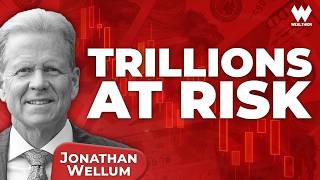
Is Silver a Good Investment? Jonathan Wellum
Key Takeaways Wellum is bullish on silver and commodities, but disciplined. He argues the sector...

Why Are Oil Prices Rising? Art Berman
Key Takeaways Markets are watching tankers while missing collapsed production. Berman's central point is that...

THE AMERICAN EXCEPTION, PART IV
FROM THE DESK OF STEVEN FELDMAN OPEN POSITION Chips Off the Table American capitalism is...
Enjoyed This? Get More Insights
Expert insights and curated opportunities, delivered to your inbox.
Ready to Position for What's Coming?
Whether you're still learning or ready to act, your next step starts here.
- Independent
- Macro-Informed
- Real Asset Focused

The Wealthion Network
Stay ahead of the curve. Subscribe to Wealthion’s newsletter and get timely videos, articles, and alerts featuring insights from the world’s leading experts in investing and wealth-building.
Network Discussion
Sign in to share your thoughts and connect with other readers.
Join the Wealthion Network to Comment