

Macro Bites – US Budget Deficit Widens as Debt Interest Costs Climb
President Trump blocked several Russian sanctions two days before they would have taken effect, as a rift with Ukrainian President Zelensky deepens. Congress had previously passed the Russian sanctions and they had been signed into law by Trump in Sept., but Trump signed an E.O. Friday night suspending the sanctions in the U.S. national interest, prompting immediate backlash from Congress. Zelensky stated it was unfortunate the U.S. chose to "completely disregard" the sanctions, while Russian envoy Kirill Dmitriev said Trump's order was "an important and truly historic moment,” and suggested the sanctions would have inflicted "serious damage" on global markets.
The U.S. Treasury reported Friday that the ’26 U.S. budget deficit rose $217B billion (from $1.78T in ’25 to $1.99T in ’26), fueled largely by an eye-popping $1.36T in interest outlays on the now $40T outstanding U.S. debt total (and to a lesser degree by tariff refunds). Continued increases in spending for social benefits programs like Social Security and Medicare and a $48 billion jump in defense spending also factored into the increase. The ’26 deficit was the largest since ‘21's $2.77T deficit (which of course was fueled by emergency Covid spending) and is the 3rd largest deficit on record. Fiscal ’26 receipts rose $169B y/y to a record $5.4T (+3%), but fiscal outlays rose $386B y/y to a record $7.40 trillion (+6%).
We cannot emphasize enough that the reason the U.S. deficit is becoming such a critical issue for global markets is that U.S. administrations are now normalizing emergency levels of Covid spending in non-emergency economic conditions. Coupled with the absurd but still rising interest burden on outstanding U.S. debt, we believe a generational (upward) inflection point for gold is approaching. Stay tuned…
What factors have driven Indian President Modi’s recent crusade to restrict gold imports to address India’s surging trade deficit and slumping rupee? Well, India’s Oil Ministry Petroleum and Planning Cell reported Monday that India paid $15.4B on crude oil imports in Sept., up 46% y/y from last Sept.’s $10.5B. Specifically, India (world’s 3rd largest crude importer) saw its crude imports rise by 7% in Sept. y/y, but the crude oil import price soared 46%.
AI watch: "There is a global fight for money," ECB policymaker Martins Kazaks told Reuters. "Investment in AI is one of the key factors driving up the cost of money." That pressure is being amplified by governments borrowing heavily for defense, industrial policy and energy projects. For central bankers, the implication is that the level of interest rates needed to keep economies on an even keel may be rising.
What Serious Investors Are Watching
Dive into expert interviews, market analysis, and long-form content built to help serious investors think long-term.
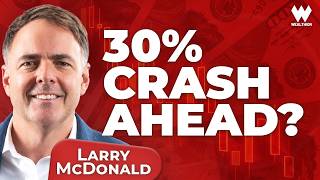
S&P 500 Concentration Risk: Larry McDonald’s Warning
Larry McDonald explains S&P 500 concentration risk, his 30% decline forecast, and why he sees opportunities in selected bonds, stocks and hard-asset businesses.

Are Home Prices Dropping? Nick Gerli Explains the Divide
Are home prices dropping? Nick Gerli explains the regional divide, why lower mortgage rates may not revive demand, and where real estate risks are building.

Macro Bites – US Budget Deficit Widens as Debt Interest Costs Climb
President Trump blocked several Russian sanctions two days before they would have taken effect, as...
Enjoyed This? Get More Insights
Expert insights and curated opportunities, delivered to your inbox.
Ready to Position for What's Coming?
Whether you're still learning or ready to act, your next step starts here.
- Independent
- Macro-Informed
- Real Asset Focused


The Wealthion Network
By subscribing, you agree to receive Wealthion emails. Unsubscribe anytime.
Network Discussion
Sign in to share your thoughts and connect with other readers.
Join the Wealthion Network to Comment