

Macro Bites – Tariff Plans, Copper Trade and Inflation Watch
The Trump administration is preparing a new wave of tariffs under Section 301 of the Trade Act of 1974 targeting 16 major economies over excess manufacturing capacity. These new duties are expected to stack on top of existing 10% to 12.5% Section 301 forced-labor tariffs implemented in July ‘26, serving as a legal replacement for the sweeping "Liberation Day" tariffs that the U.S. Supreme Court struck down in Feb. ‘26. Launched by USTR on 3/11/26, the investigation covers 16 major economies accused of subsidized production and excess industrial capacity: China, the European Union, Japan, South Korea, India, Vietnam, Taiwan, Thailand, Indonesia, Malaysia, Cambodia, Bangladesh, Singapore, Switzerland, Norway, and Mexico.
Final rates and exact start dates have not yet been formally released, though reports indicate duties will be tailored by country rather than set as a single blanket rate. Sources report the administration expects to honor existing trade deal caps—such as up to 15% for the EU, Japan, and South Korea, and 19% for Malaysia—while keeping a 20% cap on China's second-term tariffs contingent on extending a trade truce set to expire on 1/10/27. Mexico and Norway are reportedly unlikely to face immediate levies under this probe.
Chile’s state-owned miner Codelco is offering more favorable and flexible commercial terms to Chinese copper buyers as it seeks to rebalance its sales book back toward Asia after selling huge volumes to the US this year. Codelco has struck verbal agreements with some Chinese and Korean buyers at a premium of $268/t, according to one person with direct knowledge of the matter. That’s down from a record premium of $350/t offered to Chinese buyers for ‘26, when the prospect of US tariffs fueled a rush to ship copper into the American market.
The Democratic Republic of the Congo (DRC) announced $965M in new financing commitments at the Makutano Mining Forum in Kinshasa, including $700M earmarked for the mining value chain and $265M via the International Finance Corporation (IFC) for private-sector businesses. The funding targets domestic mineral processing, mining subcontractors, small and medium-sized enterprises, and trade finance as the government pushes for greater local value addition.
Day ahead: Bloomberg lists 24 U.S. economic data points to be released this morning. Among the clutter, all eyes will be on the Oct. PCE (est. +0.3% m/m & +3.8% y/y).
What Serious Investors Are Watching
Dive into expert interviews, market analysis, and long-form content built to help serious investors think long-term.
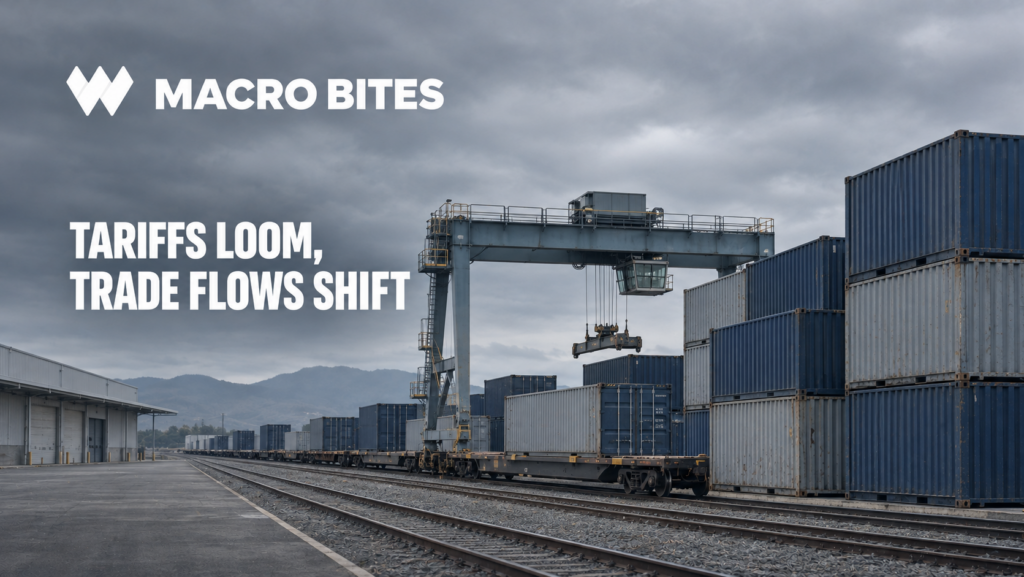
Macro Bites – Tariff Plans, Copper Trade and Inflation Watch
The Trump administration is preparing a new wave of tariffs under Section 301 of the...
Gold After a Big Drop: How Five Past Pullbacks Compare
Gold has fallen this hard before. How deep those falls went, how long they lasted...
US Carbon Markets Explained: Why Prices Differ in California, Washington and RGGI
There is no single US carbon price. California, Washington and the Northeast power market each have their own buyers, supply limits and rules. For investors, those differences help explain why prices can move in different directions.
Enjoyed This? Get More Insights
Expert insights and curated opportunities, delivered to your inbox.
Ready to Position for What's Coming?
Whether you're still learning or ready to act, your next step starts here.
- Independent
- Macro-Informed
- Real Asset Focused


The Wealthion Network
By subscribing, you agree to receive Wealthion emails. Unsubscribe anytime.
The Wealthion Network
By subscribing, you agree to receive Wealthion emails. Unsubscribe anytime.
Network Discussion
Join the Wealthion Network to Comment