

Why Gold Can Fall When Inflation Rises | Trey Reik
Key Takeaways
- Reik remains positive on gold, but his argument rests on confidence in the dollar, federal deficits and Federal Reserve credibility.
- Inflation worries can hurt gold when they increase expectations for higher interest rates.
- Gold can also be sold to raise cash during losses elsewhere in a portfolio.
- Buying by one group of investors can coexist with a falling gold price.
- The Fed held rates on October 28, 2026. That decision leaves the longer policy path unresolved.
- Reik's outlook is a guest interpretation, rather than a guarantee of a rebound.
Key Moments
00:00:19 - Reik’s assessment of the gold pullback
00:05:09 - How Treasury yields and Fed expectations affect gold
00:07:52 - Inflation, purchasing power and gold
00:09:46 - Selling gold to meet cash needs
00:11:38 - Fund flows and different types of gold investors
00:14:46 - Gold’s behavior during the 2008 crisis
00:16:48 - Why Reik’s outlook centers on Federal Reserve policy
00:18:20 - What mining shares could reveal about investor sentiment
You hear that gold can help protect purchasing power. Then inflation worries rise, markets turn unsettled, and the gold price falls. It can feel as though the investment is doing the opposite of what it was supposed to do.
That tension runs through Trey Reik's conversation with GoldSilver host Megan King Diaz. Reik, chief economist at Gold Bullion International (GBI), remains positive on gold. His explanation separates the immediate pressures on its price from his longer-term concerns about the dollar, federal deficits and Federal Reserve credibility. 1 2
Trey Reik joins Megan King Diaz to discuss gold's pullback, inflation, Treasury yields and the Federal Reserve. The conversation also covers liquidity, investor flows and gold-mining shares.
September 2026 offers a concrete example of those competing pressures. The World Gold Council reported that gold fell 8.5% during the month, even as global gold-backed exchange-traded funds (ETFs) attracted $10 billion. Its analysis pointed to higher Treasury yields, a stronger dollar and reduced futures positions as contributors to the decline. Some investors were adding gold while the market price was falling. 3
How inflation can put pressure on gold
An inflation report matters partly because of what investors think the Fed will do next. If they expect higher interest rates, interest-paying assets become more attractive relative to gold, which pays no interest. The important comparison includes inflation: a real interest rate is the return left after allowing for price increases. Higher expected real rates can make holding gold more costly in terms of the income forgone. 4
This helps explain why a worrying inflation headline does not automatically lift gold. The same news can increase concern about purchasing power while encouraging investors to expect tighter monetary policy. Those pressures can pull in different directions.
Reik is especially skeptical of treating gold as a reliable response to each release of the Consumer Price Index (CPI). His stronger conviction concerns what he calls monetary inflation: the risks he associates with debt, policy constraints and declining confidence in money. That is his interpretation of gold's role, rather than an established rule for its next move. 1
Research also gives a more qualified picture than the familiar inflation-hedge label suggests. In their 2013 study, The Golden Dilemma, Claude Erb and Campbell Harvey found gold unreliable as an inflation hedge over practical investment horizons. Separately, Chicago Fed research published in 2021 found support for an inflation relationship in some tests, alongside important effects from real interest rates and economic pessimism. The relationship depends on the period and question being studied. 5 4
Why gold can be sold during a market scare
There is another reason gold may disappoint during a stressful week: an investor who needs cash may sell an asset that is easy to trade. That sale does not require a change of mind about its long-term prospects.
Megan asks whether losses in AI and growth investments could have contributed to gold selling. Reik believes they could. He describes gold as a source of liquidity and sees a possible connection between stress elsewhere in markets and demand for cash. The interview does not establish how much of the recent selling came through that route. 1
A similar mechanism was discussed during the March 2020 market turmoil. In a report published that month, the World Gold Council said gold had likely been sold to cover losses elsewhere and meet margin requirements, the extra cash demanded on leveraged positions. That historical episode helps explain how a widely traded asset can fall during a scramble for money. It does not establish the cause of every later gold selloff. 6
What Reik is watching at the Federal Reserve
Reik's outlook brings these short-term pressures back to the Fed. He doubts policymakers will tighten as much as some investors expect, arguing that Treasury-market liquidity and government financing costs constrain the choices available. His view is that a change in rate expectations could help gold. 1
There has been an important development since the conversation. On October 28, 2026, the Federal Open Market Committee held its target range at 3.75% to 4%. Its statement said inflation remained elevated, and two members preferred a quarter-point increase. The decision establishes what the Fed did at that meeting; it does not establish that further increases are off the table. 7
That distinction matters to Reik's argument. The Fed's statement cited its dual mandate and the need for more information. It did not say government financing costs prevented a hike. His explanation for the Fed's choices therefore remains an interpretation, even where the decision is consistent with his expectation of restraint. 1 7
What the gold price can and cannot tell us
Reik also points to continued buying through gold-backed funds as a reason to look beyond the price alone. The September figures illustrate the distinction: positive fund flows and a weaker gold price can coexist because funds are only one part of the market. Those flows do not, by themselves, identify every buyer or establish where gold goes next. 1 3
The strongest challenge to his outlook is that interest rates could remain restrictive for longer than he expects. Chicago Fed research supports the relevance of real rates, while the October Fed statement leaves the future policy path open. Gold also carries price risk of its own. The Commodity Futures Trading Commission (CFTC) warns that precious metals are volatile and that premiums and transaction costs can reduce returns. 4 7 8
Gold can fall when inflation rises because markets respond to more than the inflation number. Interest-rate expectations, the dollar and the need for cash can outweigh demand for protection over a particular period. Reik believes those immediate pressures will eventually give way to stronger support from monetary concerns. The evidence explains how the pressures can coexist; it does not settle the timing or direction of the next move.
Frequently Asked Questions
Why can gold fall when inflation rises?
Inflation worries can increase expectations for higher interest rates. That can make interest-paying assets more competitive with gold. Currency movements and selling to raise cash can also affect the price. 3 4 6
Is gold a reliable short-term inflation hedge?
It is not a dependable match for each inflation release. Research findings vary by period and method, and Erb and Harvey's 2013 study found it unreliable over practical investment horizons. 5
Can gold prices fall while gold-backed funds receive inflows?
Yes. The World Gold Council reported an 8.5% decline in gold during September 2026 alongside $10 billion of global gold-ETF inflows. Fund flows describe one part of a larger market. 3
What did the Fed do after this interview?
On October 28, 2026, it maintained the federal funds target range at 3.75% to 4%. Two members preferred a quarter-point increase, and the statement said inflation remained elevated. 7
What could weaken Reik's positive outlook?
A more persistent period of restrictive interest rates could challenge his expectation of policy restraint. His interpretation of buying patterns also does not guarantee that demand will be sufficient to lift gold's price. 1 4 7
Full Cleaned Transcript
Trey Reik: No, I don't think the bull market's over. I think $4,000 will hold. Once we get out of this short-term knee-jerk reaction, oil up, the Fed's going to tighten, I think gold's going to scream.
The gold bull market
Megan King Diaz: Hey everyone, welcome to the GoldSilver Show. My name is Megan King Diaz, and today I'm lucky enough to once again be joined by Trey Reik. He is the chief economist here at GBI. Trey, we have a lot of questions for you today. Is the gold bull market over?
Trey Reik: Nice to start with a bench clearer. I will admit that last week was a tough week. I was disappointed in how gold performed, given everything that's happening around the globe. But it is what it is.
I would point out that all of these longer-term fundamentals, the big three, anti-dollar sentiment, the US deficit and Fed credibility, are 100% intact.
Just over the weekend in Brazil, Bolsonaro lost an election that everybody expected him to win to a left-wing candidate. There are some stocks in Brazil down 50% today. The entire market was down 25% earlier. I think it's down about 17% now.
If anybody's reading the newspaper, France seems to be literally coming unhinged as we speak. There's lots of social unrest there. Their OATs, their 10-year bonds, have a premium to German bonds of 177 basis points, the highest since the European debt crisis.
For someone like myself, when you have these types of things going on, and the Iran war seems to be getting trickier and trickier, it's getting a bit ridiculous that gold is under pressure because oil prices are rising and people are concerned about the Fed.
Gold has never been, in my opinion, a huge and effective geopolitical hedge that I would choose. But the gold bull market is absolutely not over, in my opinion. I think these big three fundamentals we focus on are getting more and more intense.
Megan King Diaz: In terms of gold breaking below $4,000 for the first time since July, do you feel it's a combination of those things and the various headlines we're seeing? Or was there a specific moment or data point that broke the camel's back?
Trey Reik: I'm not a big technician. I always joke that I love to use technicals only when they support my case. But there are a lot of people who trade gold technically. It is a commodity.
Technicals were at work in the last couple of days last week. The way these things work, not as much in the spot market but especially with futures, is that you try to run the stops, probe and see what holds up.
To be honest, I think we got down to [price unclear; the captions read "39.86"] or something as the low last week. That's a clear probe of the $4,000 level, which is important psychologically and, I think, technically.
So far, gold has held up. But I'll admit that $4,000 is pretty important here. If $4,000 doesn't hold in the short run, we're probably looking, in my opinion, at a two- to three-month flirt with $3,600 or something like that.
Treasury yields and the Fed
Megan King Diaz: Let's talk numbers for a second. What are your thoughts on the scale of these market movements? Do you feel that's significant for the gold market?
Trey Reik: I personally don't, but again, I'm just Trey. There are a lot of people who might find significance in that. The market's always right. If people think it's a big deal, I'm not going to try to talk them out of it.
The way I look at gold, it's [price unclear; the captions read "4,19"], and I believe we came into the year at $4,300. After being up 65% and 27% in the past two years, we've had a 5% correction. Focusing on a week or two of price movement can be dangerous.
What's happened with gold in the last month or so is that 10- and 30-year Treasury yields spiked pretty dramatically. It started at the end of September, ironically, with the S&P purchasing managers' index (PMI) numbers, which aren't exactly an economic variable most people are holding their breath about. But they were so strong that they broke 10- and 30-year Treasury yields out of their trading range. That was on September 28.
What's interesting is that, at the Fed, there are really three votes more important than the other 16. They call it the troika: Fed Chair Kevin Warsh, New York Fed President John Williams and Fed Vice Chair Jefferson.
Warsh has already, I think, made it pretty clear he doesn't want to rush into a bunch of premature rate hikes. On the 29th, John Williams said he saw no need for urgency. Keep in mind, this is when 10- and 30-year Treasury yields hit these higher levels.
On September 28, the odds of a Fed rate hike in October were 70%. This morning they were 9.7%. I think they're up to 11% now. Clearly, the Fed is trying to tamp down this expectation for short-term rate pressures.
I would argue it's because they're aware of systemic fragilities or liquidity in the Treasury market. There's something they're concerned about because that was a very coordinated effort.
I think gold has suffered in the short term from that. But as we've discussed before, we're in one of those periods where some short-term influences on gold are negative, but they're all leading to longer-term, more important fundamentals that are hugely positive.
No, I don't think the bull market's over. I think $4,000 will hold. Once we get out of this short-term knee-jerk reaction, oil up, the Fed's going to tighten, I think gold's going to scream.
Inflation and gold
Megan King Diaz: What about the notion that gold is supposed to protect you from inflation? We're seeing inflation fears up, the VIX [volatility index] is high, and yet gold has gone down. Why is that?
Trey Reik: This is one of my pet projects with respect to gold over the years. I personally don't think CPI inflation and gold have much to do with each other. I think that's a misnomer.
I have this fun little alliteration phrase I cooked up: If the price of hedonically adjusted hot dogs in Houston goes up, why would you buy gold? I don't really see a connection.
If there's CPI-type inflation in an economy or society, in my opinion, gold should go up at the same rate as everything else. That's CPI-type inflation, and I can sort of prove that chart-wise over decades.
But if you have monetary inflation, which is what our gold thesis is all about and why I think we're here today, then gold should go up faster than other prices in that economy.
When our Treasury secretary is flailing around toward semi-yield-curve-control-type moves, and you have French sovereign debt blowing out and Brazil, these are the developments I think are much more important than CPI or PCE [Personal Consumption Expenditures], which is coming on Thursday.
Gold has never really functioned, in my opinion, as an effective CPI inflation hedge.
Selling gold to raise cash
Megan King Diaz: Do you think some of the price movement we've seen in the last couple of weeks could have been people selling to cover losses in AI and growth?
Trey Reik: Definitely. We were talking about this a little earlier. People hold gold for lots of reasons, but a lot of people hold it for liquidity. It's immediate. It's a very deep, liquid market.
People don't realize it's in the billions, $150 billion, I think, a day of liquidity in all the different gold markets. It's a very important source of liquidity.
We've also been talking until we've lost our breath about this AI buildout. I've written about it being what I think will prove to be the most egregious misallocation of capital in history. But again, I'm just Trey, and the market has decided otherwise.
Last week, the biggest event was CoreWeave, which is a neocloud. I don't profess to understand all of the different implications, but CoreWeave bonds, which were issued only four months ago, started trading at about 78 cents on the dollar. That's a problem.
I think that's why 10- and 30-year Treasury yields reversed and started coming down. There's clearly a movement of large amounts of capital out of what people are deciding are the riskiest parts of the AI ecosystem and into Treasuries. I would think gold would benefit from that.
Megan King Diaz: Do you think this is traders and retail investors selling, or is it institutional capital?
Trey Reik: That's tough. I'll point this out: As gold has hit some price resistance over the past two months, ETF flows have remained very strong. Through this past month, ETF holdings have been increasing.
My conclusion is that, whether it's retail or institutional, people with a proper time frame for their bullion investments are swiping some pretty good prices from short-term traders. That's how I would conclude what's going on.
In terms of retail versus institutional, I think retail is fairly paralyzed here. Since we had those January and March highs, in conversations I've had with clients, I think retail is pretty inactive. I would have to say it's probably the smarter money.
Megan King Diaz: What about retail investors sitting on a loss? How do you feel they should be thinking about that?
Trey Reik: It's almost November. If you have losses and you've had gains elsewhere, it's hard to argue with that.
But the time frame for a gold investment, as far as I'm concerned, is so much longer-term than for people who trade it. In my opinion, you should never buy a gold stock unless you plan to hold it for three to five years.
The greats, like Rick Rule, have pointed that out. He always talks about how, in every silver stock he's owned where he's made tenfold, there have been three times the stock backed off 50%.
You have to have a three- to five-year time horizon, or you're really in the wrong market.
With respect to gold, I'll go out on a limb with other folks who have said the price of gold is really not that important. People buy and sell it based on the current price.
What's more important is your portfolio, how you save and how you're protecting yourself against debasement of the dollar. The short-term, daily price is really not the way to look at gold.
As we pointed out, this year it's down, I think, from $4,300 to $4,000. If you're looking to take that type of loss, you probably shouldn't have been there in the first place.
The comparison with 2008
Megan King Diaz: I spoke with an analyst earlier this week who drew a parallel between what we're seeing in gold now and what we saw in 2008. We're seeing a pullback in what he hopes will be a larger bull run. Would you agree?
Trey Reik: Well, 2008 was very severe and extreme.
If you go back to 2008, this may be more detail than we need, but at the beginning of the year people were short all the big financials. The US government made shorting financials illegal, so all those shorts had to be covered.
Everybody was long commodities and short the financials, so commodities completely crashed. I think in the third quarter of 2008, gold had a very sharp spike downward, but it was because of those external market factors.
In a more general sense, let's say the S&P were to correct 30% in the next two months. What would my view be of the gold price? It would definitely be a source of liquidity for lots of people. It's likely it would be weak in that time span, as would gold stocks.
But when these selloffs trough, gold always comes out with the steepest slope. With gold equities, that's literally the time you want to back up the truck because they double before the S&P even gets up 10% or 15%.
Is there some risk of that? Absolutely. But it's also a great time to be building a long-term position.
The next catalyst
Megan King Diaz: We've mentioned AI and growth, talked about Treasuries, discussed federal debt in the past and, obviously, the Iran conflict. What do you feel is going to be the catalyst for the next significant movement in gold?
Trey Reik: I think it's definitely going to be Fed-related. All of these long-term issues we follow, the Fed follows more closely than it lets on.
I personally don't think the view that the Fed is going to raise rates two or three times into the first quarter will prove to be the case.
There are liquidity issues in Treasury markets and the amount of debt outstanding. We haven't even talked about the impact of raising fed funds on the government's Treasury-bill debt service. We're at [figure unclear; the captions read "1.2 2 trillion"].
All of these things are hitting feedback-loop-type parameters. I firmly believe gold's next move, which will be up, is when people recognize the Fed is not going to get tough.
Gold and mining shares
Megan King Diaz: Is there anything you'd like to leave us with before you go, Trey?
Trey Reik: The only other thing I'd point out is that gold hit its $5,500 high, I think, on January 29. By March 2, we were back to $5,400.
If we look from that recent high through today, gold is down about 25%. GDX, the large-cap gold miners, is only down 29%.
Some people would say I'm searching for treasure in two pretty negative numbers. But for gold to be down 25% and the stocks down 29%, that's telling you something, in my opinion.
In past cases, it would be more likely for gold stocks to be down 150% to 200% of gold's decline. The fact that gold is down 25% and the stocks are down 29%, I know it sounds like I'm looking for tea leaves, but to me that's a really good sign.
Gold-equity investors are, by and large, a pretty long-term group. I think that bodes well for people's expectations about what bullion is going to do in the next year.
Megan King Diaz: That's interesting. Thank you so much, Trey. This was an excellent discussion, as always, and I'm sure we'll chat in the next couple of weeks.
Thanks so much, everyone, for watching. This is the GoldSilver Show. I'm Megan King Diaz, and this was Trey Reik.
Trey Reik: Thank you.
Sources
1 Wealthion, The Fed's Next Move Could Trigger a Massive Gold Rally, Trey Reik in conversation with Megan King Diaz. Original interview. 2 GoldSilver, About, expert biographies for Trey Reik and Megan King Diaz. https://goldsilver.com/about/ 3 World Gold Council, Gold Market Commentary: Go with the flow, October 7, 2026, September review and Divergent investor flows. Observations through September 30, 2026. https://www.gold.org/goldhub/research/gold-market-commentary-september-2026 4 Robert Barsky, Craig Epstein, Adrian Lafont-Mueller and Younggeun Yoo, What Drives Gold Prices?, Chicago Fed Letter No. 464, November 2021. Historical research through early 2021. https://www.chicagofed.org/publications/chicago-fed-letter/2021/464 5 Claude B. Erb and Campbell R. Harvey, The Golden Dilemma, Financial Analysts Journal, July/August 2013, Gold as an Inflation Hedge and concluding findings. Author-hosted original paper. https://people.duke.edu/~charvey/Research/Published_Papers/P113_The_golden_dilemma.pdf 6 World Gold Council, Investment Update: Gold prices swing as markets sell off, March 19, 2020. Contemporary analysis of liquidation and margin-related selling. https://www.gold.org/goldhub/research/gold-prices-swing-as-markets-sell-off 7 Federal Reserve Board, Federal Reserve issues FOMC statement, October 28, 2026. Decision, inflation assessment and dissents. https://www.federalreserve.gov/newsevents/pressreleases/monetary20261028a.htm 8 Commodity Futures Trading Commission, Gold Is No Safe Investment. Price volatility, premiums and transaction costs. https://www.cftc.gov/LearnAndProtect/AdvisoriesAndArticles/gold_is_no_safe_investment.htm
Wealthion is a dba of Greylock Peak Investments, a registered investment adviser. This article is general information only. It is not investment advice or an offer or solicitation, and it is not tailored to your circumstances. Guests' views are their own and may not reflect those of Wealthion. Wealthion has not verified guest statements, including any performance figures. Investing involves risk, including loss of principal, and past performance does not guarantee future results. Wealthion refers readers to other registered investment advisers and shares in the fees they receive from referred clients, which creates a conflict of interest. Please see our Form ADV Part 2A and consult your own financial advisor before investing.
What Serious Investors Are Watching
Dive into expert interviews, market analysis, and long-form content built to help serious investors think long-term.
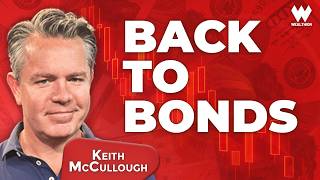
Why Keith McCullough Is Turning to Treasury Bonds
Keith McCullough connects his concerns about the artificial intelligence investment cycle with a forecast for slowing growth and inflation. The conversation explains his bond outlook, credit risks and approach to changing market signals.

The Credit Market Warning That Could Hit Stocks | Jeff Snider
Jeff Snider explains how tighter lending could reach stocks through the financing behind the artificial intelligence buildout. Andrew Sarna discusses overbuilding risks, market anxiety and his different perspective on bonds.

Macro Bites – Global Oil Market Returns to Surplus as Supply Recovers and Demand Weakens
Reuters reports the global oil market is returning to excess supply as demand drops due...
Enjoyed This? Get More Insights
Expert insights and curated opportunities, delivered to your inbox.
Ready to Position for What's Coming?
Whether you're still learning or ready to act, your next step starts here.
- Independent
- Macro-Informed
- Real Asset Focused

The Wealthion Network
By subscribing, you agree to receive Wealthion emails. Unsubscribe anytime.
The Wealthion Network
By subscribing, you agree to receive Wealthion emails. Unsubscribe anytime.
Network Discussion
Join the Wealthion Network to Comment