

Investing in Commodities in 2026: What Eleven Experts Said on Wealthion About the Supercycle
How to invest in commodities is a different question in 2026 than it was a decade ago, because the debate is no longer whether demand is coming but whether a supercycle has already begun. Across six recent Wealthion interviews featuring eleven experts, from Rick Rule's symposium stage to Bloomberg Intelligence's dissent, the bull case rests on a decade of underinvestment colliding with AI's physical appetite, while the skeptic's case insists the entry price now violates the oldest rule in the book. As of August 2026, both cases deserve your attention. Here is the full map.
Are we in a commodity supercycle?
The structural case says yes, and it starts with starved supply. Mark Mills noted in his June interview that for oil wells and copper mines alike, "the capacities have not increased significantly in the last decade," because producers who were punished for a decade refuse to risk ruin on new capacity. Jeff Currie's supercycle arithmetic, from his July conversation with Steven Feldman, adds the historical rhyme: in the supercycles of the 1970s and 2000s, commodity prices rose roughly sevenfold on average. And Rick Rule, speaking at his own 2026 symposium, called this "the calm before the storm": for four decades, he noted, "the median market share of precious metals and precious metals related investments relative to all other asset classes in the United States was 2%," and mean reversion from that base is the setup he has waited a career for.
What is actually driving commodity demand?
The AI buildout has turned the digital economy physical. Currie's framing is the sharpest: "AI compute, it's a cyclical commodity," because intelligence now consumes electricity, copper, and land, giving tech an upward-sloping supply curve for the first time. Steven Feldman's version, from his June interview: with a "trillion dollars being spent in AI," the bottleneck is physical, and "Energy infrastructure has got to be the single biggest theme around AI." Keith Neumeyer put a starting number on it at the symposium: roughly "six tons of silver" go into a single AI facility. Rudi Fronk, in his conversation with Trey Reik, supplied the copper math: "copper is now trading at about $6 a pound," discovery-to-production takes more than 20 years, and "We're just not producing enough copper" for data centers, grids, and vehicles simultaneously.
Is uranium a good investment?
The supply story is the starkest of any commodity discussed. A uranium industry executive speaking at the symposium laid it out: "We need 11 new cigar lakes to produce in the next 15 years and there haven't been found yet," referring to one of the world's largest uranium mines. His caution for investors is about the price they watch: the volatile spot price is nearly all an investor can see, but utilities buy on long-term contracts, where prices have risen steadily for years. Lobo Tiggre's discipline cuts the other way: uranium near $85 to $95, against $18 a few years ago, fails his entry test even if the story is true. Both things can be right; the disagreement is about price, not demand, which is the recurring pattern across this entire set of interviews and the reason the how-to question matters more than the whether question.
How do you actually invest in commodities?
The vehicles named across these interviews, each attributed to its advocate: producers over paper for cash flow (Currie, who contrasts oil majors' double-digit free cash flow yields with capital-consuming tech; Fronk, whose miners historically deliver a multiple of the metal's move), physical metal accumulated on schedule (Tiggre's bullion discipline, covered in our gold analysis), and Rule's consumption hedge, the most practical idea at the symposium: you can offset your own rising electricity, fuel, and vehicle costs "by investing in the very things that you consume." Currie also cautioned, in the conversation covered in our real assets analysis, that futures-based commodity products carry roll-yield complications that surprise first-time buyers. Grant Williams supplied the symposium's memorable monetary frame: "gold being the apex predator of the financial system," reintroduced like wolves to Yellowstone, disciplining an ecosystem that ran wild without it. And Nomi Prins grounded the same idea in data: "gold overtaking US treasuries as the number one reserve asset for central banks around the world," a milestone her firm ties to its call that "we believe gold will hit 6,000 this year," a prediction she stands by despite the pullback since January's highs. Those forecasts belong to the named experts, not to Wealthion. What unites the four vehicles is that each one converts the supercycle thesis into something you can size, hold, and exit, which is the difference between a view and a position.
What is the skeptic's case against commodities?
Mike McGlone of Bloomberg Intelligence, in his May interview, argues the cycle math is against new buyers: after a historic run, "buying commodities here is just very risky for a normal cycle." His two conditions for a genuine supercycle are demanding: "you have to expect China to have a major demand pull breakout" despite its deflationary 10-year yield near 1.75 percent, and you likely need a falling dollar, since all commodities price in dollars. Even Mills, structurally bullish, splits from the consensus on one point: most analysts assume a commodity boom means runaway inflation, and "I don't think that's what's going to happen this time." Tiggre's rule condenses the whole caution into six words: "buy low or just say no," and by his own accounting, monetary metals and uranium are not low today, though oil, having round-tripled its war spike, starts to look more interesting to him.
Four routes into commodities — producers, physical metal, consumption hedges, and futures — each with different tradeoffs. Which one fits depends on your current holdings, your risk tolerance, and whether you believe the supercycle thesis. A Wealthion-endorsed advisor can walk through your commodity exposure, free of charge. Request your free portfolio review at https://www.wealthion.com/advisors/
FAQ: Commodities in 2026 in Brief
How do you invest in commodities? The experts interviewed on Wealthion named four routes: shares of producers (cash flow and leverage to the metal), physical metal accumulated steadily, long-term exposure to the inputs you personally consume, and, with caution about roll costs, futures-based products.
Are we in a commodity supercycle? Contested. Rule, Currie, Fronk, and Feldman argue underinvested supply meeting AI-driven demand is the classic setup; McGlone argues a real supercycle requires a China demand breakout and a weaker dollar, neither confirmed.
Is uranium a good investment in 2026? The supply gap is real (a symposium executive: eleven new large mines needed in 15 years, none found), but Lobo Tiggre notes prices near $90 are far from low. Watch the long-term contract price, not the volatile spot.
What commodities benefit from AI? Per these interviews: copper (grids and data centers), silver (roughly six tons per AI facility, per Keith Neumeyer), uranium and natural gas (power), and the energy infrastructure connecting them.
Are commodity stocks better than commodities? Rudi Fronk argues miners historically deliver three to four times gold's move in a bull market; Currie favors producers for dividends and free cash flow. Tiggre sold his mining stocks this year on price, not thesis, a reminder that entry matters.
What would confirm the supercycle? McGlone's checklist: a Chinese demand breakout and a weakening dollar. The bulls' checklist: sustained capex discipline by producers and AI power demand arriving on schedule.
Which experts and interviews does this article reference? Six Wealthion interviews from May to July 2026: Inside the 2026 Rick Rule Symposium with Rick Rule, Keith Neumeyer, Grant Williams, Nomi Prins, and Lobo Tiggre, Jeff Currie and Steven Feldman on the supercycle, Steven Feldman on the AI resource rush, Mark Mills on AI, oil, and underinvestment, Rudi Fronk with Trey Reik on copper and miners, and Mike McGlone on why commodities are risky here.
Wealthion editorial content is for informational purposes only and is not investment advice, and nothing here recommends any security. The views and price projections quoted belong to the named guests. If you want a professional read on how commodities fit your own portfolio, you can request a free portfolio review at wealthion.com/free.
What Serious Investors Are Watching
Dive into expert interviews, market analysis, and long-form content built to help serious investors think long-term.
Is the 60/40 Portfolio Dead? What Six Experts Said on Wealthion in 2026
The 60/40 portfolio, 60 percent stocks and 40 percent bonds, was the default answer to...
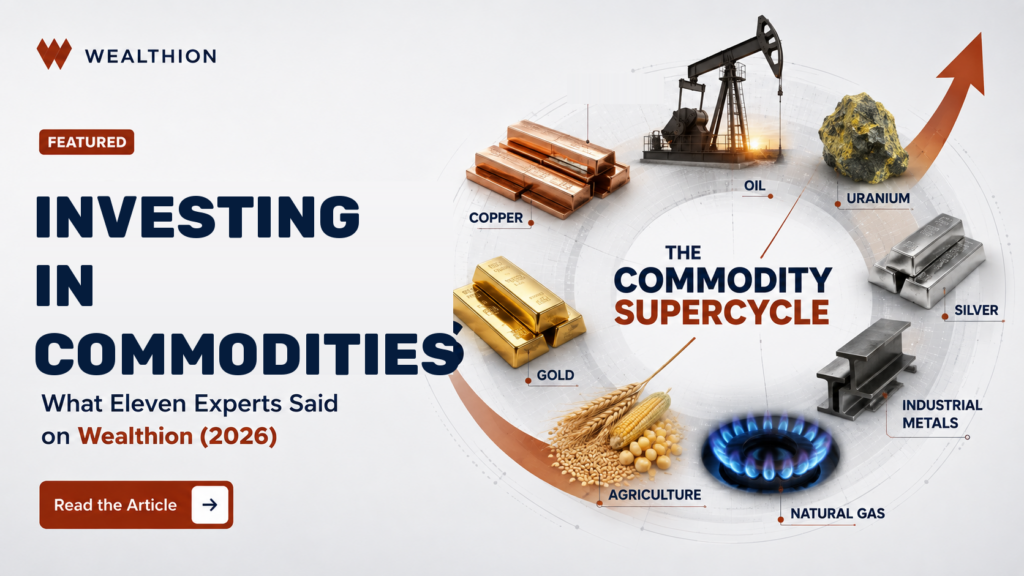
Investing in Commodities in 2026: What Eleven Experts Said on Wealthion About the Supercycle
How to invest in commodities is a different question in 2026 than it was a...

How to Hedge Against Inflation: What Six Experts Recommended on Wealthion
Five years of above-target inflation have turned "how to hedge against inflation" from a textbook...
Enjoyed This? Get More Insights
Expert insights and curated opportunities, delivered to your inbox.
Ready to Position for What's Coming?
Whether you're still learning or ready to act, your next step starts here.
- Independent
- Macro-Informed
- Real Asset Focused


The Wealthion Network
Stay ahead of the curve. Subscribe to Wealthion’s newsletter and get timely videos, articles, and alerts featuring insights from the world’s leading experts in investing and wealth-building.
Network Discussion
Sign in to share your thoughts and connect with other readers.
Join the Wealthion Network to Comment