

If AI Demand Disappoints, Who Bears the Data-Center Debt?
On October 13, 2026, the International Monetary Fund (IMF) highlighted the financial links forming around AI. Its review of 14 circular-financing transactions since 2023 identified about $650 billion of debt. [1]
In these arrangements, companies help finance businesses that commit to buying their products or services. The links can spread financial stress, but weaker AI revenue does not automatically mean missed debt payments. A tenant may absorb lower profits while continuing to pay its landlord and lenders.
Who ultimately bears a shortfall depends on the promises behind the financing: who owes the money, who has guaranteed payment and what creditors can recover.
Different assets support different loans
The building and the computers inside it can be owned and financed by different companies. Rent supports property debt; payments for computing capacity support equipment loans. The equipment includes graphics processing units (GPUs), the chips used in AI computing. [2] [3]
| Aspect | Building and power infrastructure | GPUs and servers |
|---|---|---|
| Main repayment source | Rent from the tenant | Customer payments for computing capacity |
| Possible recovery sources | Property value, power access and prospects for another tenant | Hardware value, contract rights and remaining earning power |
| Main vulnerabilities | Tenant failure, lease expiry or difficulty finding a replacement | Customer failure or falling hardware rental and resale values |
The comparison describes common financing considerations. Pledged assets, guarantees and lender rights vary by transaction. Sources: S&P Global [2]; CoreWeave's financing and risk disclosures [3].
Customer strength and parent guarantees
CoreWeave's 2026 financings show why the customer and the borrowing entity both matter. On March 31, it announced a facility of up to $8.5 billion through a subsidiary. The financing had investment-grade ratings and was supported by a contract with an investment-grade customer. [4] [5]
A $3.1 billion facility announced on May 18, 2026, supported contracts with two customers below investment grade. That facility also carried below-investment-grade ratings. These are financing commitments, rather than evidence that the full amounts were borrowed immediately. [6]
Both deals gave lenders claims on the borrowing subsidiary and its pledged assets. Their rights against CoreWeave's parent company differed. The March guarantee covered specified events, including fraud and certain bankruptcy actions; the May facility had an unconditional parent guarantee. [4] [6]
A loan's protection therefore depends on more than the company name attached to it. A parent's financial resources are available to creditors only to the extent their legal claims reach that parent.
Long leases can outlast customer contracts
Oracle illustrates a different exposure. As of August 31, 2026, it had $288 billion of lease commitments that had not yet commenced, substantially all related to data centers. The disclosed terms generally ran 15 to 19 years. [7]
These are future lease commitments, rather than a balance of loans already drawn. Oracle warned in its 2026 annual report that lease terms, renewal options and pricing adjustments typically did not align with its customer contracts. [8]
If a customer fails to pay or renew, Oracle may remain committed to capacity without the corresponding revenue. Its obligation to the landlord is separate from the income it expects from that customer. [8]
A guarantee can move risk to another company
Nvidia's August 17, 2026, agreement with SB Energy extends the chain beyond the operator and landlord. Nvidia agreed to provide credit support for an Ohio campus leased to OpenAI, with its initial commitment capped at $105 billion. [9]
The guarantees phase in as the applicable leases begin and cover defined portions of lease and power payments. They do not cover the full cost of the campus or all tenant obligations. [10]
Specified tenant defaults can leave Nvidia responsible for a shortfall linked to replacement-lease or sale proceeds. OpenAI also agreed to reimburse Nvidia for amounts it actually pays. That gives Nvidia a claim against the tenant, whose ability to pay may already be impaired. [9]
Meta's Hyperion campus in Louisiana uses another arrangement. Under its October 21, 2025, agreement, Meta took an initial four-year lease with renewal options and provided a capped residual value guarantee for the first 16 years of operations. [11]
The guarantee can require Meta to make a payment based on the campus's value if specified conditions are met following lease termination or nonrenewal. It shifts some property-value risk back to Meta, subject to the guarantee's terms and cap. [11]
Lyn Alden raised related concerns in her October 19, 2026, Wealthion interview with Maggie Lake. She discussed growing lease obligations, suppliers financing customers and uncertainty over equipment life. She treated these as longer-term concerns while pointing to continued growth in AI spending. [12]
Hardware value can change before a loan matures
A building with power and essential infrastructure in place can accommodate successive generations of equipment. Its value still depends on location, power and demand. S&P Global cautioned that remote, specialized facilities could be difficult to repurpose. [2]
Hardware faces a different risk. It can remain operational while losing rental or resale value as newer chips arrive. CoreWeave's 2025 annual report warned about useful-life estimates and the difficulty of redeploying equipment beyond its contracted life. [3]
Accounting estimates illustrate the distinction between equipment life and market value. Effective January 1, 2025, Amazon shortened the estimated useful life of some servers and networking equipment from six years to five. Meta extended the estimate for most servers and network assets to 5.5 years. [13] [14]
Those estimates determine how quickly costs are charged against earnings. They do not establish what a GPU would fetch in a sale. A lender's recovery depends on the assets' earning power and realizable value.
Bondholders have different rights to the same cash flow
Some property loans and lease cash flows are packaged into asset-backed securities (ABS) or commercial mortgage-backed securities (CMBS). Investors in these bonds receive payments from the underlying financing arrangements. [2]
Payment rights can be divided into layers, called tranches. Senior bondholders have priority over junior layers, which generally absorb credit losses first. Cash reserves and contractual triggers can provide further protection by retaining cash or accelerating debt repayment when performance weakens. [15]
That hierarchy allocates risk within a particular financing structure. It does not remove the need for rent or customer payments. If a campus relies on one tenant, that tenant's failure can affect several creditors.
What can keep the loans paying
A financially strong tenant may continue paying for underused capacity, leaving the landlord and lenders largely insulated from disappointing AI returns. Long contracts can support repayment even when the tenant earns less than it expected.
CBRE's first-half 2026 data also showed tight supply across its eight primary North American markets. Vacancy was 1.4%, and more than 80% of capacity under construction was already preleased, up from 74.3% a year earlier. [16]
Those figures describe leasing conditions in the first half of 2026. Preleasing does not establish how profitable the tenant's AI business will be or guarantee that every future payment will arrive.
Where a shortfall ultimately falls
There is no fixed order of losses across the AI industry. Within a borrower, shareholders rank behind creditors in bankruptcy. [17] Across separate businesses, exposure follows each contract, guarantee and claim on assets.
A tenant may bear the cost of underused capacity while continuing to pay rent. If payments stop, losses may reach an operator, guarantor, landlord or lender. Property creditors depend partly on the prospects for another tenant; hardware creditors also depend on what the equipment can still earn or sell for.
Weaker AI demand can reduce profits without disrupting debt payments. If the payments supporting a loan fail, contracts determine who is liable, while the value of the assets helps determine how much creditors recover.
Sources
[1] Global Financial Markets Face Rising Risks From AI, Bond Yields, and Cyberattacks. International Monetary Fund, October 13, 2026; review of 14 circular-financing transactions since 2023. The debt figure concerns that sample, rather than all AI-related borrowing. [2] Optimism grows as capital flows, but what if AI promises fade? S&P Global, December 2, 2025; financing structures, property risks, tenant exposure and limits to repurposing specialized facilities. [3] CoreWeave Form 10-K for the year ended December 31, 2025; computing infrastructure, customer obligations, useful-life estimates, technological obsolescence and equipment redeployment risks. [4] CoreWeave Form 8-K, filed March 31, 2026, including Exhibits 99.1 and 10.2. Agreement dated March 30, 2026; facility size, investment-grade ratings, collateral and limited parent guarantee. Schedule 1 of Exhibit 10.2 defines the covered events. [5] DDTL 4.0 Overview. CoreWeave, March 2026, pages 3–5; underlying investment-grade customer, facility structure and expansion of borrowing capacity upon stabilization. [6] CoreWeave Form 8-K, filed May 18, 2026, including Exhibit 99.1. Agreement dated May 15, 2026; $3.1 billion facility, two non-investment-grade customers, below-investment-grade facility ratings, collateral and unconditional parent guarantee. [7] Oracle Form 10-Q for the quarter ended August 31, 2026, filed September 11, 2026; Note 6, $288 billion of uncommenced lease commitments, substantially all for data centers, with terms generally of 15 to 19 years. [8] Oracle Form 10-K for the year ended May 31, 2026, filed June 22, 2026; Risk Factors, mismatch between data-center lease terms and customer contracts, nonpayment and renewal risks. [9] Nvidia Form 8-K dated August 17, 2026; SB Energy residual value guarantees, initial $105 billion cap, specified tenant-default triggers, remedies and OpenAI's reimbursement obligation. [10] Nvidia Form 10-Q for the quarter ended July 26, 2026, filed August 26, 2026; Note 10, phased commencement and limited coverage of defined lease and power payments. [11] Meta Announces Joint Venture With Funds Managed by Blue Owl Capital to Develop Hyperion Data Center. Meta, October 21, 2025; four-year initial lease, renewal options and conditional capped residual value guarantee for the first 16 years of operations. [12] The Treasury's Gold Revaluation Play | Lyn Alden. Original Wealthion interview with Maggie Lake, published October 19, 2026; AI-financing discussion covering lease obligations, supplier financing, equipment life and continued AI spending. [13] Amazon Form 10-K for the year ended December 31, 2025; Note 1, useful-life change effective January 1, 2025, for a subset of servers and networking equipment. [14] Meta Form 10-K for the year ended December 31, 2025; Note 1, useful-life estimate for most servers and network assets, effective January 1, 2025. [15] Asset Securitization, Comptroller's Handbook. Office of the Comptroller of the Currency, November 1997, with March 20, 2025 revisions; printed pages 19–23, senior and junior claims, cash reserves and performance triggers. [16] North American Data Center Demand Continues to Outpace Supply Despite Record Construction Activity. CBRE, September 8, 2026; first-half 2026 vacancy and construction preleasing across eight primary North American markets. [17] What Are Corporate Bonds? Securities and Exchange Commission, Investor.gov, June 4, 2013; priority of creditors and shareholders in bankruptcy.
Wealthion is a dba of Greylock Peak Investments, a registered investment adviser. This newsletter is general information only. It is not investment advice or an offer or solicitation, and it is not tailored to your circumstances. Guests’ views are their own and may not reflect those of Wealthion. Wealthion has not verified guest statements, including any performance figures. Investing involves risk, including loss of principal, and past performance does not guarantee future results. Wealthion refers readers to other registered investment advisers and shares in the fees they receive from referred clients, which creates a conflict of interest. Please see our Form ADV Part 2A and consult your own financial advisor before investing.
What Serious Investors Are Watching
Dive into expert interviews, market analysis, and long-form content built to help serious investors think long-term.
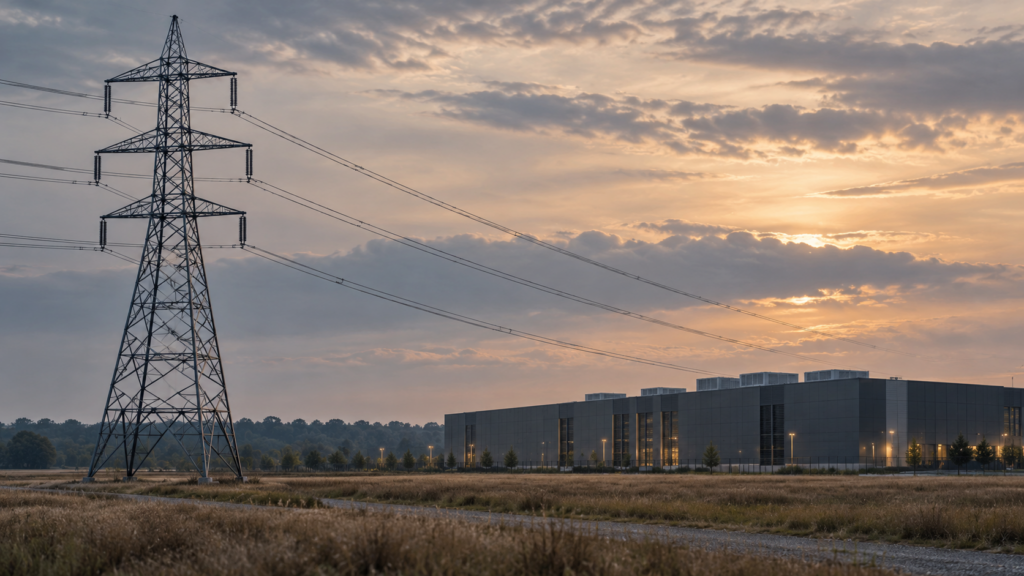
Can Announced AI Projects Support Decades of Energy Investment?
An announced data center does not establish long-term revenue. Contracts, cost recovery and the asset's usefulness help explain how utilities assess infrastructure investment.
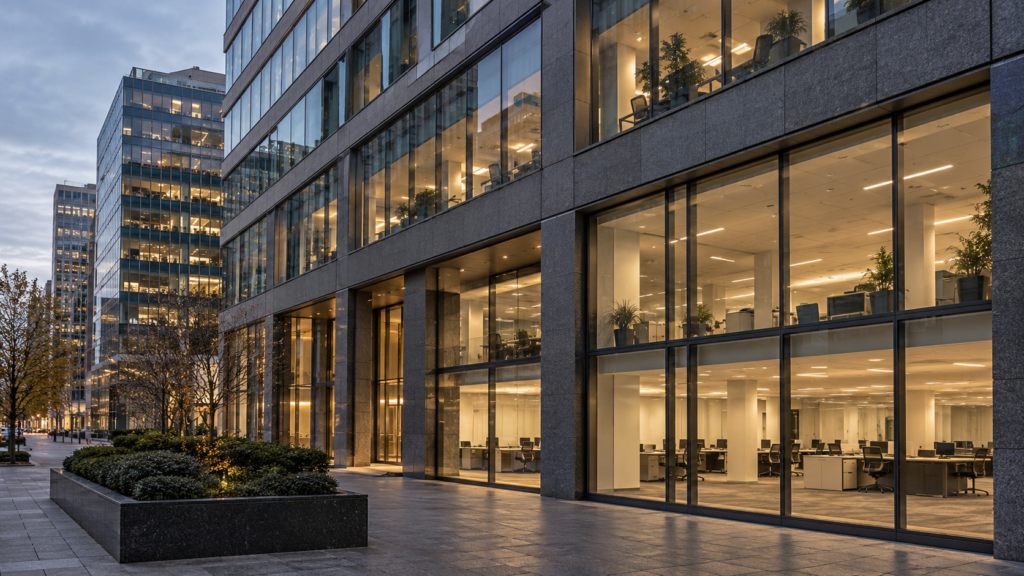
Why Rising Rents May Not Protect Commercial Property Returns
Higher rents can strengthen a building's income while its value falls or borrowing costs rise. The effect on the owner's return depends on how these forces combine.
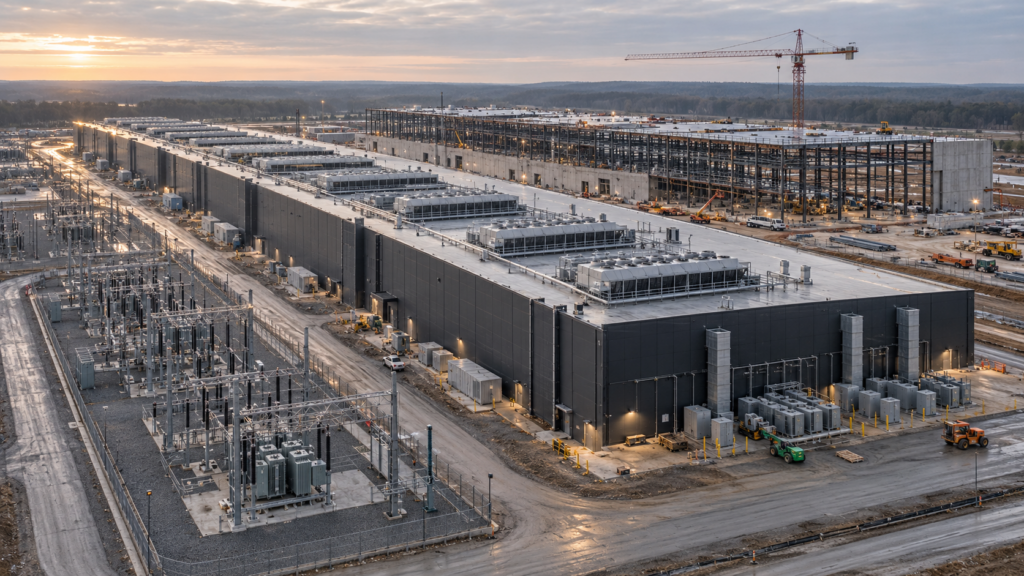
If AI Demand Disappoints, Who Bears the Data-Center Debt?
Weaker AI revenue does not automatically mean missed debt payments. Customer contracts, guarantees and asset values help determine who could absorb a loss.
Enjoyed This? Get More Insights
Expert insights and curated opportunities, delivered to your inbox.
Ready to Position for What's Coming?
Whether you're still learning or ready to act, your next step starts here.
- Independent
- Macro-Informed
- Real Asset Focused


The Wealthion Network
By subscribing, you agree to receive Wealthion emails. Unsubscribe anytime.
Network Discussion
Sign in to share your thoughts and connect with other readers.
Join the Wealthion Network to Comment