

Copper Supply and Demand: What the AI Buildout Means for the Market
Before a new AI data center can earn a dollar, somebody has to get electricity to it. That means cables, transformers and switchgear, and most of that runs on copper. The spending on chips and models creates demand for a metal that is mined in Chile, Peru and the Congo, not in Silicon Valley. [1]
The long-term demand case for copper is well documented, but it rests more on supply than on AI. Mines are slow to build and keep breaking, and that has kept prices near record highs. AI is a meaningful extra source of demand, not the main one.
Where does copper stand today?
As of October 19, 2026, US copper futures traded around $6.54 a pound, roughly 30% higher than a year earlier. [11] London Metal Exchange copper set successive records in 2026, peaking at $14,875 a tonne on September 10. [12]
Two things drove the rally, and only one of them is about long-term demand:
- Supply kept breaking. Global mine output fell about 1% in January to July, and Chile, the largest producer, was down 7%. [12] More on this below.
- US tariff policy pulled metal into America. Washington already taxes semi-finished copper products at 50%. [13] It is also weighing a 15% tariff on refined copper from January 2027, rising to 30% in 2028, but had not decided as of mid-October. [12] [14] Buyers rushed to import ahead of a possible tariff, draining inventories elsewhere.
The US futures price includes a premium for tariff risk, so it can move on a policy announcement rather than on how much copper the world actually uses. Societe Generale analysts have described the gap between US and London prices as a gauge of tariff expectations and noted that no tariff would unwind it. [14]
As of October 19, 2026, US copper prices were up about 30% from a year earlier and down about 2% over the previous month. [11]
How much of copper demand is really about AI?
Less than the headlines suggest. The International Energy Agency's 2025 Energy and AI report projected global data center electricity use would more than double to around 945 terawatt-hours by 2030, with AI the biggest driver. [2]
S&P Global's January 2026 study puts that in context. It projects annual copper demand rising from 28 million metric tons in 2025 to 42 million by 2040. AI and data centers, including the power generation built for them, account for about 2 million tons of that 14 million ton increase, roughly one-seventh. [1] Grids, buildings, vehicles and industry make up the rest.
That cuts both ways. Copper demand does not depend on AI alone; it is spread across many industries. But it also means a slowdown in factories or construction would matter far more to copper than a pause in data center spending.
Why can't the mines simply produce more?
Because new mines take a generation to build, and existing ones keep breaking. S&P Global estimates an average of 17 years from discovering a copper deposit to first production. [1] Expanding an existing mine is faster, but still slow.
The last year shows how fragile current supply is:
- Grasberg, Indonesia. One of the world's largest copper mines was hit by a deadly mudflow in September 2025. Freeport says the operation ran at about two-thirds of normal rates in the third quarter of 2026 and expects to approach full capacity by the end of 2027. [15]
- Kamoa-Kakula, Congo. Seismic activity and flooding in 2025 cut output at one of the industry's key growth projects. It had not returned to full rates by October 2026. [12]
- Cobre Panamá. Closed since late 2023 after a Supreme Court ruling. Panama allows stockpiled ore to be processed, but there is no decision on restarting mining. [16]
- Chile. Storms cut output this summer. Escondida suspended operations after a fatal accident on September 23, unions at Centinela went on strike on October 7, and an avalanche at El Teniente killed two workers on October 11. [12]
The forecasts look further out. S&P Global projects a potential annual shortfall of 10 million metric tons by 2040 without enough new investment. [1] In July 2026, the IEA trimmed its projected 2035 mine supply gap from about 30% to 25% as projects in the Congo and Zambia advanced. [3] The same report warned that the short- and medium-term outlook had worsened, partly because a sulphuric acid shortage threatens mines that rely on acid leaching. [17] Shortage forecasts move; they are warnings, not schedules.
The same delays that tighten the market can hurt individual producers. A miner with a mine shut by a mudflow doesn't benefit from higher prices. It sells less.
Who captures the margin: miners or smelters?
Right now, the miners. Smelters turn mined concentrate into metal and earn a fee for doing it. China ran roughly half of global smelting in 2025, and capacity has grown faster than mine supply, so smelters are bidding against each other for feed. [5]
The result is striking. The 2026 annual benchmark processing fee settled at zero. [5] In the spot market, it has gone deeply negative: about minus $272 a tonne on October 9, meaning smelters are effectively paying miners to take their concentrate. [12]
This is the clearest lesson in the copper story. A scarce metal can trade near record highs while the businesses that process it struggle to earn their usual fee. Where a business sits in the chain can matter as much as the price of the metal.
How do high prices affect different parts of the industry?
The effect differs across the supply chain:
| Who | How high copper prices affect them | What can go wrong | Where they stand today |
|---|---|---|---|
| Producers with operating mines | Sell current output at current prices; margins widen as prices rise | Accidents, strikes, rising costs, windfall taxes | Most directly exposed to today's prices |
| Grid and electrical equipment makers (transformers, cables, switchgear) | Paid for the AI and grid buildout directly, whatever copper does | Copper is an input cost; expectations may already reflect demand | Most direct link to AI spending |
| Scrap collectors and recyclers | Higher prices make scrap more valuable and worth recovering | Volumes depend on demolition and replacement cycles | Often overlooked |
| Developers with projects not yet built | Could gain if they reach production while prices are high | Years of spending, permits, financing, delays | Exposed to future, not current, prices |
| Smelters | Should earn a processing fee | Fees are zero or negative today | Under pressure |
For producers, the cost of digging copper out of the ground matters as much as the price it sells for. A simple illustration with round, hypothetical numbers: a mine sells copper at $5 a pound and spends $3 to produce it, a margin of $2. If the price falls 20% to $4, the margin halves to $1. That leverage works in both directions, which is why production costs get as much attention as the copper price. (These figures are illustrative only. They do not describe any company, are not a price forecast, and exclude financing, taxes and capital spending.)
How do copper investments differ?
Each route gives a different exposure to the same story.
| Route | What you own | Key factors |
|---|---|---|
| Individual mining shares | Part of a business | Production costs, debt, mine quality, country risk, spending plans |
| Copper mining ETF | A fund that owns mining businesses | Holdings, country exposure, concentration, fees |
| Futures-based copper fund | A fund holding copper futures | Which contracts, the cost of rolling them, expenses, tariff-driven US pricing |
| Physical copper trust | Units in a vehicle holding metal | Storage costs, liquidity, premium or discount to asset value |
Shares of mining companies, and funds that hold them, may not track the copper price. [7] Futures-based funds must roll expiring contracts, which can cause their returns to diverge from the spot price over time. [7] [8] Shares of exchange-traded products can trade above or below the value of what they hold, and products that hold physical metal are generally not registered investment companies, so they may offer fewer investor protections. [7] [9] Physical commodities pay no income. [10]
What could break the copper case?
Five things to watch:
- Aluminum takes share. Aluminum costs about a quarter as much as copper and conducts about 61% as well. Cable maker Nexans says buyers start switching when copper costs about 3.5 times as much as aluminum; this summer it was above 4.2 times. [18] Carmakers including BMW, Ferrari and Tesla have expanded aluminum wiring, and JPMorgan expects aluminum to replace about 6% of copper demand by 2030. [19] High prices are, in part, their own cure.
- The tariff decision. Societe Generale analysts note that if no refined-copper tariff is imposed, the premium of US prices over London prices would be expected to unwind. [14]
- Supply comes back. A Cobre Panamá restart, Grasberg returning to full output and new African projects could all ease the squeeze. [15] [16] [3]
- The economy slows. Most copper goes into construction, grids, vehicles and factories, so a recession would hit demand harder than any AI pause.
- The AI buildout runs late. The IEA estimated grid bottlenecks could delay around one-fifth of planned data center projects unless addressed. [2]
Copper has historically tended to move with US stocks, though the relationship has varied over time. [6]
The bottom line
Our view is that copper's strongest case rests on constrained supply and demand across the wider economy, with AI adding another source of growth. The clearest potential beneficiaries are producers that can maintain output and control costs. Developers face years of spending before they can sell copper, while smelters can face pressure on processing income even when the metal trades near record highs.
For investors, the priority is finding businesses that can turn tight supply into cash flow at a reasonable valuation. The more convincing investment case should work without requiring copper prices to keep setting records.
FAQ
Can recycling solve the copper supply problem? It helps, and high prices make more scrap worth recovering. But much of the world's copper is still in use in buildings and equipment, so recycling grows alongside mining rather than replacing it. [4]
Do copper investments pay dividends? Physical copper and futures pay no income. Mining companies may pay dividends, depending on their finances, and fund distributions depend on what the fund holds. [10]
What is the difference between copper reserves and resources? Reserves are deposits judged economic to mine. Resources are a broader category with less certainty. Neither tells you how much copper can reach customers this year. [4]
Sources
- [1] S&P Global: Copper in the Age of AI: Challenges of Electrification, January 2026
- [2] International Energy Agency: Energy and AI, executive summary, 2025
- [3] International Energy Agency: Global Critical Minerals Outlook 2026, executive summary, July 16, 2026
- [4] International Copper Association: Copper Demand and Long-Term Availability
- [5] International Energy Agency: Copper prices have hit record highs, but smelters face mounting strategic pressures, March 2, 2026
- [6] CME Group: Copper Defies Downdraft in Metals, China Growth, 2024
- [7] FINRA: Futures and Commodities
- [8] CFTC: Learn About Risks Before Investing in Commodity ETPs or Funds
- [9] SEC: Updated Investor Bulletin: Exchange-Traded Funds
- [10] Vanguard: Alternatives in a portfolio: Think role, risk, and realism, May 20, 2026
- [11] Trading Economics: Copper price, October 19, 2026
- [12] Fastmarkets: Base metals head to LME Week 2026 with record-low TCs, October 14, 2026
- [13] Congressional Research Service: Section 232 tariffs on copper imports
- [14] CNBC: How a niche copper trade became a gauge of Trump's next tariff move, August 14, 2026
- [15] Freeport: Freeport Provides Third-Quarter 2026 Operational Update, October 2026
- [16] SMM: What could a Cobre Panamá restart mean for copper supply?, October 5, 2026
- [17] Mining.com: IEA warns copper supply outlook has worsened, July 2026
- [18] Reuters via TimesLive: Ferrari and BMW shift to aluminium wiring, June 30, 2026
- [19] SMM: Rising copper prices drive aluminium wiring in autos, July 2, 2026
This article is for informational and educational purposes only. It is not investment, legal or tax advice, or a recommendation to buy or sell any security, commodity or fund. Wealthion is affiliated with a registered investment adviser. Wealthion, its affiliates, and their employees or clients may hold positions in companies, sectors or investment vehicles discussed here. Companies are named only to describe industry events. Past performance does not guarantee future results.
Wealthion is a dba of Greylock Peak Investments, a registered investment adviser. This newsletter is general information only. It is not investment advice or an offer or solicitation, and it is not tailored to your circumstances. Guests’ views are their own and may not reflect those of Wealthion. Wealthion has not verified guest statements, including any performance figures. Investing involves risk, including loss of principal, and past performance does not guarantee future results. Wealthion refers readers to other registered investment advisers and shares in the fees they receive from referred clients, which creates a conflict of interest. Please see our Form ADV Part 2A and consult your own financial advisor before investing.
What Serious Investors Are Watching
Dive into expert interviews, market analysis, and long-form content built to help serious investors think long-term.
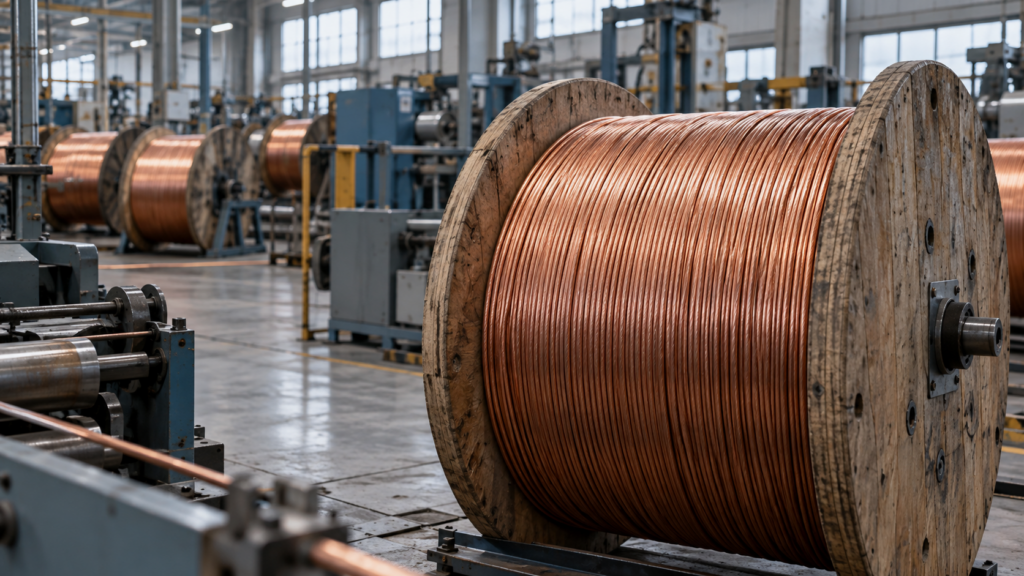
Copper Supply and Demand: What the AI Buildout Means for the Market
AI adds to copper demand, but the market also depends on mine supply, grid investment and tariff policy. The effects differ for miners, smelters, recyclers and equipment makers.

Macro Bites – Global Credit Spreads Widen as AI Selloff and Geopolitical Risks Mount
Israeli Prime Minister Netanyahu said his directive to the Israeli military and Mossad is to...
Macro Bites – French Bond Yields Cross 5% as Budget Pressure Mounts
Yemen’s Iran-backed Houthis have launched an unprecedented wave of drone and ballistic missile attacks over...
Enjoyed This? Get More Insights
Expert insights and curated opportunities, delivered to your inbox.
Ready to Position for What's Coming?
Whether you're still learning or ready to act, your next step starts here.
- Independent
- Macro-Informed
- Real Asset Focused

The Wealthion Network
By subscribing, you agree to receive Wealthion emails. Unsubscribe anytime.
Network Discussion
Sign in to share your thoughts and connect with other readers.
Join the Wealthion Network to Comment