

Gold as Portfolio Insurance: Trey Reik on Time vs. Price
Key Takeaways
- Reik measures gold in years, not weeks. He says anyone buying gold should have a horizon of at least three to five years, if not five to ten, and sees its contribution to a portfolio building over half a decade or more. 1
- He expects the Federal Reserve (Fed) to tighten less than markets fear. His house view is that debt, liquidity strains and a negative net national savings rate limit how far the Fed can go. He rejects a half-point December hike but allows for a smaller one. 1
- One speech moved gold. In his telling, remarks by Fed Governor Waller about a possible 50 basis point December hike helped push gold down about $200 and lifted long-term yields. 1
- He backs Warsh's push to talk less. Reik says Fed Chair Kevin Warsh wants to shift the Fed's framework from inflation expectations toward underlying effects on the economy, and that the Fed talks far too much. 1
- Silver faces a different test than gold. Solar adoption has hit a wall and manufacturers are using less silver per cell, so in Reik's view investment demand has to carry the price. 1
- Investment buying is not consumption. Silver in bars and coins stays above ground, so keeping prices rising takes a lot of continuing investor demand, he argues. 1
- Insurance has to be bought before the fire. Reik says years of strong stock returns mean almost nobody hedges, and that hedging means giving up some performance. 1
- He cannot name a technical floor. Gold broke classic support levels, and he knows of no strong technical argument for a specific price, though he does not expect it to stay much lower for an extended time. 1
- Sentiment is at its hardest point. After gains of 27% and 65% and a decline this year, he says retail investors are paralyzed by looking back at January. Recovery probably needs gold above $4,500 and heading toward $5,000. 1
- He treats gold miners as a separate exposure. He compares a single stock's pre-open move with the size of the whole gold-mining index and discusses Barrick's proposed listing as something to research, not a recommendation. 1
Key Moments
00:00:00 - Gold, silver and investor concerns
00:01:35 - Why Trey doubts a prolonged Fed hiking cycle
00:03:38 - Fed communication and pressure on gold
00:05:57 - Why solar manufacturers are using less silver
00:08:41 - Why investor demand matters for silver
00:10:32 - Gold as savings and portfolio insurance
00:12:26 - Building diversification before a crisis
00:14:25 - Can investors identify a bottom in gold?
00:16:40 - January's highs and the psychology of investing
00:19:02 - Gold sentiment and the reluctance to buy
00:22:42 - Trey's outlook for the December Fed meeting
00:24:27 - AI valuations and Barrick's proposed gold-mining listing
00:29:07 - Digital vulnerabilities and the case for physical assets
Gold has fallen from its January peak just as investors are asking whether they need more protection. Trey Reik, Wealthion's chief economist, says that is the wrong place to start. For him, the better question is how long you plan to hold gold and what you want it to do. 1
In this conversation with Maggie Lake, recorded for Wealthion and published on November 23, 2026, Reik explains why he expects the Fed to tighten less than markets fear, why silver faces a demand test that gold does not, and why he thinks hedging has to happen before a crisis rather than during one. They also cover the psychology behind January's spike, the idea that gold never feels like the right time to buy, Barrick's proposed listing of its North American gold assets, and a closing discussion of digital vulnerabilities. 1
Reik's views are his own, and gold's price can fall as well as rise. The sections below keep his claims attributed and flag where outside records differ from what was said. 1
Why Reik measures gold in years, not weeks
Reik starts from the idea that investors judge gold on the wrong clock. He says gold peaked at about $5,500 in January and was back at about $5,400 by March 2, and that it has been under pressure since the Iran war raised oil prices and, in turn, expectations of Fed tightening. Against that backdrop, he argues that anyone buying gold should plan to hold it for "at least 3 to 5 years if not 5 to 10," and that its contribution builds over half a decade or more. 1
He leans on two investors he and Lake both follow. Grant Williams, he says, treats gold as a holding place where price is the least important variable, and does not sell until there is something else he wants to buy. Rick Rule, in Reik's account, expects about a 75% debasement of the dollar over the next 10 to 15 years, which on that arithmetic means gold should roughly triple. Those are their views as Reik relays them, not forecasts Wealthion has tested. 1
Reik concedes the obvious objection: if the price is falling, gold is not protecting purchasing power at that moment. His answer is about role, not timing. Because gold does not move with other assets, it matters when everything can go down together, and the benefit shows up over a longer period. 1
A longer holding period does not guarantee a gain. The result still depends on gold's price over that period.
Why insurance has to be bought before the fire
Lake asks how a three-to-five-year horizon fits an investor who feels the need to diversify now. Reik answers with the insurance analogy: gold is insurance, and you do not buy insurance when the house is on fire. "You have to have it ahead of time," he says. 1
He argues that stocks have done so well for so long that almost nobody hedges. Hedge funds and professional investors do, he says, but the average retail investor has spent two years thinking about why they do not own more Nvidia. Hedging, in his view, means giving up some performance, whether through puts or through gold, for protection that matters if investors' enthusiasm for US financial assets ever levels off. 1
Lake adds that diversification chosen in a panic rarely works, and that the useful question is whether a portfolio holds assets that are not correlated with each other. She links this to a recent conversation with Kevin Muir, who argued that a modest drop in the S&P 500 hides damage underneath. 1
Why Reik thinks the Fed cannot tighten much further
Reik says gold has struggled because investors increasingly expect a long cycle of rate hikes. He lays out the chain as an "ABC": the Iran war, higher oil, higher inflation, and a Fed that tightens. His house view is that the Fed will tighten less than people expect, because of outstanding debt, liquidity strains and a negative net national savings rate. 1
He also argues that the Fed cannot run a big tightening cycle while it is adding reserves. He says the Fed began a reserve-management program last December buying $40 billion of Treasury bills a month, and asks how it could tighten sharply while doing that. 1
That figure needs updating. The New York Fed did start reserve-management purchases in December 2025, with a first schedule of about $40 billion in Treasury bills, and said amounts would be adjusted over time. Its schedule for November 16 to December 11, 2026, however, lists no reserve-management purchases, alongside roughly $14 billion of reinvestment purchases. The program is not currently buying at the pace Reik describes, and these operations alone do not determine where policy rates go. 2 3
The recent trigger for gold's drop, Reik says, was a speech in London by Fed Governor Waller. Because inflation data had come in hotter than people want to see, Waller said a 50 basis point hike in December, meaning half a percentage point, was on the table for him. Reik rejects that outcome: "You can't skip October and then go 50 in December," he says, because it would panic people. He says the one remark helped push gold down about $200, lifted the 10-year yield by about 25 basis points and sent the 30-year yield sharply higher. 1
Lake notes that other officials, including Goolsbee and Bowman, who she says used to be dovish, have sounded hawkish too. Reik says they have to act that way. He then turns to Fed Chair Kevin Warsh, who he says wants the Fed to shift its framework from inflation expectations toward underlying effects on the economy. As an example he cites 2008, when oil reached $147, the Fed talked up the long end of the curve and the European Central Bank (ECB) tightened into a recession as the US financial system was disintegrating. He does not think Warsh will repeat that mistake. 1
Warsh has had what Reik calls bad press in his first two or three months, with critics saying his reaction function is unclear and that he has taken away forward guidance. Reik disagrees. "The Fed talks way too much," he says, noting 14 Fed speakers in a single week. 1
Why silver faces a different test than gold
Reik says the gold-to-silver ratio bottomed at around 45 when silver reached about $120 in late January and has since climbed to the high 70s, which he reads as a sign that something is changing in silver. 1
In his account, silver spent roughly a decade riding the solar-panel wave. By his estimate, solar accounted for about 55% of silver's industrial demand growth, which reached roughly 110 million ounces a year. Two things are now happening. Growth in solar adoption has hit a wall, in China and elsewhere. And once silver reached $120, manufacturers began "thrifting," using less silver per photovoltaic cell and, increasingly, substituting copper. The substitutes are not as good, he says, but they are being developed. 1
That leaves investment demand as the support, since he sees no other large use that fills the gap soon. AI is often mentioned, he says, but that is about ten years away. Investment demand is also different from consumption: bars and coins are simply moved from one holder to another and remain above ground. Keeping prices rising therefore takes a lot of continuing investor buying, while mines keep producing at the same rate. 1
Lake notes that January's spike was parabolic and widely joked about as a meme, but that it did not mean the underlying story lacked fundamentals. Reik agrees. For Lake, the practical lesson is to be realistic about short-term price while still thinking about diversification. 1
Why a lower price does not reveal the bottom
Lake asks what signals indicate a bottom, since many investors are waiting for someone to ring the bell. Reik says gold broke support in every classic technical way, with the 200-, 100- and 50-day moving averages clustered around $4,400. He thought $4,000 was reasonable because gold had spent a lot of time there, but it is now below it. He jokes that he uses technicals only "when they support my case," and says he knows of no strong technical argument that a specific price will hold. He hears $3,600 and $3,100 mentioned, mostly because gold traded there before. 1
The bigger problem, he says, is that everyone is looking back at January. Gold rose 27% in 2024 and 65% in 2025 and, by his rough count, is down about 9% this year. In January alone, by the 29th, gold was up 29% and silver 69%. Focusing on that spike, he argues, turns investors into traders asking when prices will return, which is the wrong question. Lake agrees that everyone has shifted into a trading mindset rather than an investing one. 1
After 25 years, Reik says he has learned there is "never the right time to buy gold." If it is rising fast, people think they missed it. If it is falling rapidly, people say they told you so. If it is flat, there is no urgency. 1
He calls this the toughest part of the curve for retail sentiment: after a big spike and a decline, people are paralyzed. He cites a sentiment indicator, the DSI, that fell to 12 last week and rarely goes below 10. For sentiment to recover, he says, gold probably has to rise above $4,500 and show it is heading back toward $5,000, which would mean a buyer waiting for confirmation gives up about $700. 1
Lake stresses that the aim is preparation, not a call to rush. Year-end, she says, is a good time to take stock of what a portfolio holds and whether it carries too much risk, and different people have different needs. Reik adds a seasonal analogy: with holiday shopping under way, gold and gold stocks are, as Rick Rule likes to point out, the one thing that is on sale when prices fall, but you need the discipline to see it that way. 1
What Reik expects from gold and the December Fed meeting
Reik declines to name a floor but gives a view: he does not think gold goes much lower for an extended time. Others, he says, talk about $3,100 or $3,600. His reasoning is the Fed. He says he will "bet everybody a million dollars" that the Fed does not raise rates by 50 basis points in December after staying on pause in October. It may hike in December and perhaps once more, he says, but it cannot sustain an extended hiking cycle with this much credit in the system and pressure from AI and liquidity. He thinks that is what gets gold out of the doldrums. 1
Lake says she does not expect 50 basis points either, but is tempted to take the other side for something smaller than a million dollars, such as a drink. The exchange ends with her teasing that Reik's biggest risk is losing a cocktail and perhaps a dinner. 1
If rates stay higher for longer than Reik expects, the catalyst he is waiting for could arrive later than he anticipates.
| Question | Reik's answer | What he cannot know |
|---|---|---|
| Why own gold? | Insurance and purchasing power over 3 to 10 years | A falling price does not protect purchasing power in the short run |
| When does gold bottom? | No strong technical floor; he thinks it will not stay much lower for long | Price can still fall; he does not claim to know the low |
| What will the Fed do? | Limited tightening; a December hike is possible, 50 basis points is not | Hawkish speakers could be right; rates could stay higher for longer |
Summary of Reik's distinctions in the interview, with limits noted by Wealthion. These are his views, not forecasts verified by Wealthion. 1
How Reik frames gold miners and Barrick's proposed listing
Lake raises the large AI-company offerings absorbing market attention, and Reik answers with a comparison of market sizes. If Nvidia's drop in pre-open trading on a day he links to leadership news at the company was 8%, he says, that was about $366 billion, more than the market capitalizations of Agnico Eagle, Barrick and Pan American. The whole gold-miner index, the GDM, totals about $800 billion, he says, so a 14% pre-open move of roughly $600 billion equals about three-quarters of the entire gold-stock universe, all in pre-open trading on one stock. 1
Barrick, he says, is proposing to list its North American gold assets as a separate company, American Barrick Gold Corporation. In his description, Barrick owns 60% and Newmont 40% of the Nevada joint venture, whose high-grade, long-life mines sit in what he calls a good jurisdiction compared with places such as Tanzania. By separating those assets from riskier jurisdictions, he says, Barrick expects to earn a higher multiple. He says Barrick would keep about 85% of the new company and raise roughly $5.5 billion to $6.5 billion, and he cites the Fourmile project at 16 million ounces, 17 grams per ton and a 25-year mine life, though he says he cannot recall its exact name. He calls it a good example of a stock to look at and adds, "I'm not making a recommendation." He suggests readers get the S-1 registration statement and read what it says about the mines. 1
Barrick's filings differ from parts of that description. Barrick filed its registration statement for the proposed offering on November 10, 2026, and intends to apply to list the company on the New York Stock Exchange under the symbol ABGC, with the number of shares and the price range not yet determined. The raise and ownership figures Reik cites therefore cannot be checked against final terms. The filing describes Barrick's interest in Nevada Gold Mines as 61.5%, alongside a 60% interest in Pueblo Viejo in the Dominican Republic and the Fourmile project, so the proposed company is not limited to Nevada. 4 5
Owning shares in a miner is different from owning the metal. A shareholder owns a business whose results depend on costs, development, management and operating jurisdictions as well as the gold price. Reik's remarks concern the quality, jurisdiction and valuation of specific assets, and this summary of them is not a recommendation to buy any security.
Digital fragility and the case for insurance
Lake closes with a question about cyber events. She says the world is clearly more fragile and increasingly dependent on being connected, and asks whether recent incidents involve the same actor. Reik, who she says is a bit more conspiratorial than she is, says that as a gold guy he is allowed one conspiracy theory. He does not think gold is manipulated, he says, but he points to outages involving Microsoft, the FAA and, as they recorded, banks, as well as refrigeration problems in Europe, noting that officials keep saying the cause was overloaded servers. 1
Lake says the incidents may well be unrelated but expose vulnerabilities, adds that AI agents make the environment wilder, and likens cybersecurity to insurance: when it works you do not see it, which makes it a hard sell. She says the best-in-class companies have been investing heavily and that quantum computing is coming, which complicates matters. Reik says it is another risk layered on top of the others they discussed, and that is why investors need insurance. "Risks, risks, risks everywhere," he says. 1
The interview does not establish that the incidents share a cause, and neither speaker claimed to know. Physical gold changes some dependencies but not all: the metal still has to be stored and sold, and its price can fall.
For Reik, gold comes down to purpose and time. His conviction is about its role over years as insurance and a store of purchasing power. His uncertainty is about the next price and the path to it. Keeping those two judgments apart is how he can stay positive on gold without claiming to know where it bottoms. 1
FAQ
When is the right time to buy gold, according to Trey Reik?
He says there is rarely a comfortable moment: buyers feel they missed a rising market, feel proven wrong in a falling one and feel no urgency in a flat one. His advice is to think in terms of a horizon of at least three to five years, and preferably five to ten, rather than trying to call the bottom. 1
Why does Reik think the Fed will not keep tightening?
He points to outstanding debt, liquidity strains and a negative net national savings rate, and says the Fed cannot sustain an extended hiking cycle with this much credit in the system. He allows for a December hike and perhaps one more, but not a 50 basis point increase. 1
Is the Fed still buying $40 billion of Treasury bills a month?
Reik says it is, but the New York Fed's schedule for November 16 to December 11, 2026, lists no reserve-management purchases. Those purchases began in December 2025 at about that pace, and the schedule now shows roughly $14 billion of reinvestment purchases instead. 2 3
Why is silver's outlook different from gold's?
Reik says solar demand drove much of silver's industrial growth, but adoption has slowed and manufacturers are using less silver per cell and testing copper. In his view, that makes investment demand the main support, and investment buying is different from consumption because bars and coins stay above ground. 1
Does Reik think gold has bottomed?
He does not claim to know. He says gold broke key technical supports and that he sees no strong technical argument for a specific price, though he personally does not expect gold to stay much lower for an extended time. 1
Why does Reik compare gold to insurance?
Because insurance has to be in place before it is needed. He argues that investors who have been rewarded by stocks for years have stopped hedging, and that hedging means accepting some lost performance in exchange for protection. 1
Is gold guaranteed to protect purchasing power?
No. Reik acknowledges that a falling price is not protecting purchasing power at that moment. His case concerns gold's role over years, and the outcome still depends on gold's price over that period. 1
How is owning gold different from owning a gold miner?
A miner is a business whose results depend on costs, development, management and operating jurisdictions as well as the gold price. Reik used Barrick's proposed listing as an example of a company to research, stressed that he was not making a recommendation, and noted that Barrick's own filing details differ in places from his description. 1 4 5
Full Transcript
Trey Reik
It's never the right time to buy gold. Up 27, up 65, down nine. We're actually in the toughest part of the curve for retail sentiment. And when do you need to buy insurance? Or the house is on fire.
Maggie Lake
Hey Trey, it's good to see you.
Trey Reik
Hey Maggie, how are you?
Maggie Lake
I'm doing well. I'm doing great actually. Although uh also filled with uh fear and worry. I think we all are right now, right?
Trey Reik
Yeah. But you hide it well. I always like talking with you because you're almost always in an upbeat mood, which Well, I very infectious. Rubs off on me.
Maggie Lake
I like I like to think that there's opportunity in times of fear and worry, but we'll get to that. Um, let's uh I want to first of all, let's start and get an update on um on the metals on gold uh and silver. We get a lot of qu we've got a lot of questions coming in from viewers about what's happening. So, you know, what's your view? Where do we stand?
Trey Reik
Well, let's start with gold. um which I think is always the right place to start. As you know, I have sort of a monetary angle on all of this and gold is uh clearly struggling with the fact that more and more investors are expecting an extended cycle of rate hikes. So, um you know, gold as we all know peaked at 5,500 back in January and then by March 2nd it was back to 5,400. And ever since then, I talk about the ABC reasoning of Iran war, higher oil, higher inflation. Fed's going to tighten.
Uh I keep maintaining, you know, my house view is that the Fed isn't going to tighten as much as people expect for all of the reasons that, you know, I talk about all the time in terms of uh you know, the outstanding debt, uh liquidity, negative net national savings rate. Fed really can't tighten. Um, you know, back in December, the Fed had to start its reserve management program buying 40 trillion uh 40 billion of of uh bills each month. Fed's not going to have a big tightening cycle when they're buying 40 billion a month in bills. Do you see what I mean?
Maggie Lake
Yeah. Yeah. They're sort of shooting themselves and they would be shooting themselves in.
Trey Reik
It's just not going to happen.
[Wealthion promotional message omitted]
Now, what happened very recently is uh Governor Waller gave a speech in London a few days ago. I'm not quite sure why he did this, but he said um you know, because the inflation data has been a little hotter than expected, a little hotter than people want to see. uh and he said that a 50 basis point rake rate rate hike in uh January January was on the table for him and um you know I the Fed is not excuse me in December and the Fed is not going to raise rates 50 basis points. You can't skip October and then go 50 in December. Um that will panic people.
Maggie Lake
Yeah. Well, it's interesting because they're doing their best to sound as hawkish as they can and it's not just him, right? You've had sort of Goolsbee. You've had Bowman who used to be dovish. You've had this sort of steady drum beat. Clearly, they're trying to message this idea that they are going to be tough on inflation. But you you you're sort of you're calling BS on that.
Trey Reik
Yeah. I don't I think it you know I think they have to act that way. they have to. But the other thing that's happened here is Governor Warsh is really telegraphing that he would like to see the Fed change its methodology, its framework analysis from inflation expectations to underlying impacts on the economy.
and he always uses as an example back in 2008 when uh you know oil hit 147 the Fed talked up the long end of the curve and the ECB actually tightened even though the ECB turned out to already be in recession and the US financial system was disintegrating so they raised rates right into that and he won't I think let that mistake uh be repeated so and and you know in the two or three months that Warsh has been here.
He's getting a lot of I would call a bad press from people who say his reaction function isn't clear and um you know he's taking away the forward guidance and people have come to depend on it so much that if you take away that crutch you know they they're they're upset but I think it's great. I think the Fed talks way too much. Last week there were 14 Fed speakers. I mean just in that week I think we don't need to hear from everybody every week, you know, it's it's fine. And so anyway, that's what's happening with gold, the 50 basis point bomb on the December meeting because it's looked like it was maybe putting in a bottom and starting to recover 200. I thought that was it.
Uh but you know, ever since that one, this is a by the way another reason why the Fed shouldn't give all these speeches and talk about forward guidance. He made one comment. It wasn't even a big conference. It was like a school in London. And look what's happened. I mean, the 10-year yields up what, 25 basis points. The 30-year gone nuts. You know, you have gold down 200. And people overreact to this type of thing. So, I think that's what's happening with gold. I think what's happening with silver is a little different. Um, you know, silver, the the gold to silver ratio bottomed when silver was 120 in late January at like 45 or something, and it's up in the high 70s now.
So, there's obviously something going on there. Uh and I think what people are coming to terms with is uh silver has really ridden the solar panel wave for the past 10 years and in the past 5 years from like 20 to 25. Uh so silver composition of solar panels was probably 55% of industrial growth and it got up to about 110 million ounces per year. There's two things that are happening there. Number one, silver adoption was on a a parabolic slope and that has sort of hit a wall both in China and elsewhere. And the second thing is when silver got to 120, all these solar panel manufacturers are doing what they call thrifting.
So the solar uh content in each panel, they call them photovoltaic cells. uh they're searching on for different technologies to make the silver thinner, use less, and now we've even gotten to substitutions. So they're so they're stretching it. They don't want to pay, but now they're starting to use copper. They're developing technologies. It's not as good, but they're coming up with replacements. So you have a double whammy. You have the solar adoption cycle hitting at least a hurdle, certainly going to slow it flat, and then you have the thrifting which puts a little bit pressure. So what that means is for silver to maintain these prices, something's going to have to come in and support it.
And quite frankly, that has to be investment demand because there's no other big uses like AI. People talk about silver, but that's 10 years from now. You're not going to get a big uh upswing in demand. So, and the problem with investment demand with silver, people think of it as consumption, but it's not because when you buy bars and coins, you're just sort of moving them from here to here, but they're above ground. They're not being used. And so, to keep silver prices moving higher, we're going to need a lot of investment demand. So, I think that's what's happened with the gold silver ratio as it has getting back to the high7s.
[Wealthion promotional message omitted]
Maggie Lake
So the So it sounds like silver still has a lot to work through.
Trey Reik
Yes. Yeah. In terms of price, I I think it's a challenge. I uh you know, the industrial demand is a great underpinning. Um and solar demand has been great. Uh but this is what happens when you have you know, big up adoption cycles like this. uh the silver keeps coming out of the ground at the same rate. Um we had a huge investment spike in January and now everything's sort of cooled off.
Maggie Lake
That parabolic investment spike too. So you've got you've got to joke.
Trey Reik
It was unbelievable.
Maggie Lake
Yeah, it was it was they were everyone was joking it was a meme. But that's really important because I think people thought that you saw a parabolic price move and so of course you're going to see a reversal. But you're also saying there's some fundamentals to this story as well.
Trey Reik
Absolutely.
Maggie Lake
though from a sort of shorter term perspective at least you know focused on price beware a little bit uh so I think it's you know when we're talking about both gold and silver you need to be very practical about what's happening in the short term with prices but we're also talking about and hearing a lot about the really the need to diversify and to think about different parts of uh the investing world as you're constructing your portfolio, right? The sort of, you know, 6040 or o or or just having a bunch of passive moves into the S&P like there's danger everywhere um with that model and there is an an acknowledgement that there there needs to be more diversification.
I mean we are sitting here now just from the last time we chatted the headlines are crazy there there there's so much going on in the world that seems so fraught and so and um sort of motivating people to sort of say listen you need to think about diversification. So talk to me now about gold against that backdrop not so much what the price action is doing but the role that it should be expected to play in your portfolio.
Trey Reik
Uh, well, there are a few people that I think we all listen to a lot over the past 10 years. One is Grant Williams, and he's gives probably the best gold speech or macro speech I've ever seen. Uh, and he points out all the time that when it comes to gold, at least in his portfolio, price isn't even relevant. It's the least important variable. Um, in Grant's case, he uses it as a holding place. uh and he'll never sell his gold until there's something he wants to buy more. Um Rick Rule does the same sort of thing. I think good lessons from these guys. Uh he uses gold as his saving mechanism.
Um and uh I think people like Rick do a very good job of pointing out with with with gold, it's really all about debasement of the dollar. And Rick for example expects a 75% uh debasement of the dollar over the next say 10 years and 15 years and therefore gold should triple. So it's just it's sort of math on protecting your purchasing power. I think you know that's critical in terms of of the role that it plays.
Um now you could say well if the price goes down how is that protecting my purchasing power which is a very shortterm um and legitimate question but uh as we are seeing today in the market things can go you know everything can go down um and it's good to have that non-correlation of gold in your portfolio but I I think the biggest advice I could always give is um you know if you're going to buy gold your time frame should be at least 3 to 5 years if not 5 to 10. And it's that part of your portfolio over half a decade or a decade where gold really per you know starts to add alpha if you will to the portfolio.
Maggie Lake
Yeah, I think that's really important right now when we're talking about I I just had a conversation with Kevin Muir which will be up on the on the site and on the website where he was talking about uh the sort of unseen risks you know that we look now and people say oh the S&P is off 6% 7% who knows where it will be by the time this airs because we're in a down cycle right now but um and and what you don't see is a lot of the damage and uh dangerous things happening underneath the hood. So when you talk about having a 3 to five year time horizon on gold, what about like the the need to diversify now though? If you're if you're in a panic, going to diversify isn't isn't going to work.
You don't want to sort of try to do that then. It sounds like it's something that you need to think about building in or a conversation you need to be having. Do I have an do I have diversification? Do I have assets that are not correlated to each other?
Trey Reik
Right? I hate to always use these trite phrases, but another one that you hear a lot with gold, it's you hear these phrases because they're true. You know, gold is insurance.
Maggie Lake
Yeah.
Trey Reik
And when do you need to buy insurance? When you don't need or the house is on fire. So, you have to have it ahead of time. And one of the one of the big challenges with gold in that regard is stocks have done so well for so long. I mean, I always joke you never even want to try to infer that stocks might go down someday, but the way I always use the phrase if you know, infatuation with US financial assets ever levels off, you know, something something non-committal like that, you know, that's when you uh that's when you really, you know, that's when you really need your gold.
Maggie Lake
Do you uh when I know you've been watching the price of gold for a long time and you follow all sorts of charts as well. Is there any indication? What are people what what kind of signals are people looking for to try to figure out when the bottom is and do we really need to time the absolute bottom?
Trey Reik
So, I'll flip this over. Oh, I didn't finish the insurance co comment. So, the whole point what I was going to the point I was making about stocks going up all the time is nobody hedges anymore. So, you know, in terms of individuals hedge funds hedge and professional investors but I don't know, the average retail investor is just not focusing on hedging over the past two years. They're focusing on why they don't own more Nvidia or something like that. And so, the the what people need to recognize is at times like this, you have to hedge, you have to think about that diversification ahead of time.
M so do you give up maybe a little performance and you know you're hedging and you know maybe some puts or gold and people don't want to do that but that's really really important to have that insurance uh you know before the blind hits the fan.
Maggie Lake
Yeah. Well, well, that's why I'm sort of asking about the looking for the bottom because when I think about it that way, then I think, oh, it's on sale. Okay, there might be an extra discount soon, but it's on sale. And if someone tells me I can get an insurance policy for less than I have now, that's kind of attractive. So, what kind of signals are you looking in terms of what will determine when the bottoms in or what a bottoming crisis looks like in gold? Is it similar to stocks? Do we have to look at sort of different kind of indicators?
Because I think there are people who are thinking they need diversification but are kind of waiting to ring the bell and for someone to say this is it, the bottom's in, right?
Trey Reik
Quite honestly, if you're looking at it from a technical basis, 200 day, 100 day, 50-day, right around 4400, gold pretty much broke support in every classic technical fashion. So, there's nothing there. There's no, we're not trading down to the 50-day moving average. You're starting to look back. Uh, I thought 4,000 was fairly reasonable. Not because there's a specific technical term, but it spent a lot of time trading there and now we're below 4,000. So, to be honest with you, um I I only use technicals when they support my case, but um I don't know of any strong technical argument that a specific price is going to hold. I do hear 3,600 a lot.
And again, it's just because in the past it traded a lot. There's a lot of activity in that range. Um, but I I think that's that's sort of the other pro. We were talking about this earlier. I think in sort of even bigger problem is everybody's looking back at January. So when you have gold tra you, okay, let me get this. So in 2024, gold was up 27%. 2025 was up 65%. I think we're down 6% this Well, I don't know about today, but it's, you know, was 4,300 to 3,800. Maybe it's more like 9% now. Um, but that's not a bad, you know, up 27, up 65, down nine.
You'll have to look at the whole But the problem is January because in January, by the 29th, gold was up 29% in the month and silver was up 69. So, everyone's looking at those spikes, not the longer term. Up 27, up 65, down nine. Everyone's just looking at that spike and they're like, should have, should have, would have, could have, should have sold. When do we get back there? And I think people are that's another example where people focusing on price is the wrong thing to do,
Maggie Lake
right? It's sort of like everyone has shifted into a trading mindset as opposed to an investing mindset, right?
Trey Reik
investing mindset as you just said, you got to stretch those horizons out and you have to focus on things other than just are you hitting the high or the low and ringing the bell.
Maggie Lake
You have to think about, you know, what role is it playing? Is it providing the insurance I need? Am I doing it now so that I'm ready when things happen? Those are more investing conversations, but we all have gotten sort of sucked into that trading mentality. Understandably, right? I think we're all guilty of that.
Trey Reik
And I've been doing this for 25 years, so I've learned a couple things. And gold is one of the one of the few things or the things that is most influenced, but it's never the right time to buy gold. If it's going up quickly, people think they missed it. If it's falling rapidly, people say, "I told you so." And if it's flat, there's no urgent money.
Maggie Lake
Yeah. Right.
Trey Reik
So literally um everyone's always looking at some other time frame or you know where it should be or what they think it should have done or or that type of thing. So I will tell you that we're actually I'm just being honest we're actually in the toughest part of the curve for retail sentiment. Why? Well again when it's going up people get a little bit of the fever. You know there's no fever like gold fever. you know, when it's going to, but when you had a big spike and you're down, everybody's sort of paralyzed.
And um that's the hardest time to get people to buy gold because they're looking back at January, they're feeling bad they didn't do something else this and so it's going to be it's going to be challenging to get gold sentiment. I I we were talking also earlier last week we started to hit lows on things like the DSI sentiment indicator got down to 12. Um almost never goes below 10. But to get those sentiment indicators up, gold's going to have to probably be higher than 4500 and show that it's back on the way to 5,000. But think about that. So you're gonna give up $700 to get to 4500 to start think, you know, and that's just the way the psychology works.
Maggie Lake
I think I think it's so interesting and you're right because we were and again we were talking about, you know, do you want to wait and buy your insurance when it's really expensive like at the peak? No, you want to buy it when it's lower. But but but these why we have these conversations and I know that we are really trying to get people to think about making sure that they have portfolios that are ready for what's coming because it is a really risky time. I mean you've been following these markets forever.
I ask a lot of the folks that come on is it just me or does it seem like it's really hard right now and they're like no this is one of the most m challenging macro environments that they've seen in a long time. You have so many different kinds of risks layered on each other and not a lot of sort of line of sight through them.
Trey Reik
And I've been I watch a lot of Bloomberg TV and I think I seen a thousand Target ads about the holidays are in session when we walked into the lobby. I'm not going to try to imitate Mariah Carey and sing it's time. It's the trees are coming up in the lobby and what's my point there? We're in the holiday. So what does everybody spend the holidays doing? buying things that are on sale.
Maggie Lake
Yeah.
Trey Reik
And as Rick loves to point out, gold and gold stocks are the one thing that, you know, if they go down, they're on sale. You have you have to have that discipline.
Maggie Lake
Yeah. And also, you know, we're not timing matters. Different people have different needs. So, we're not suggesting everybody runs out, but this is when you want to be having a conversation, having a plan, having a framework for, you know, what your portfolio needs, what it has, if you have too much risk. this is the sort of time to take stock and I think going into year end is is a good time to do that. I mean that's at least the way I think about things. So um important important to sort of I think flag all that to you. How many times do people ask you if gold's bottoms?
Do you get do you have like you know everybody knows if you're at the you're going to be at a million cocktail parties over you know the holidays. You want to take a wager on how many times people are going to ask you if it's the first thing they ask you. It's all anybody wants to know is where you know where's it going to bottom.
Trey Reik
Yeah. And no one, you know, I I will say this, a lot of people think 3,100, 3,600, that kind of thing. I personally I I don't think gold goes much lower. Let me just use that phrase. For an extended time anyway, for an extended time, the Fed is not going to raise I I will bet everybody a million dollars the Fed doesn't raise 50 basis points in December after skipping, you know, and staying on pause in October. It's just not going to happen. So, um I think that's what's going to get gold out of the doldrums.
Uh they may hike in December, they may do one more, but the Fed can't have a extended rating rate hike cycle at this point in time with this much credit in the system and you know all of the different pressures that are coming from AI and liquidity and all that type of thing. So,
Maggie Lake
I love it. That's a bold I don't know even we might have to edit that out. A million dollars. I feel like just just never say never. I should take the other side of that.
Trey Reik
Absolutely.
Maggie Lake
Not for a million dollars, but for for a very nice beverage next time you're in New York.
Trey Reik
Absolutely.
Maggie Lake
We'll see. No, I don't think they're going to do 50 either, but you know, the the the better in me takes that is tempted to take that the other side of that.
Trey Reik
I get it. I get it. I'm I'm That's how you I You're absolutely right.
Maggie Lake
I like it. I like that. Um we have uh the other risk that I'm gonna I'm gonna selfedit myself. It's not a risk. The other event on the horizon that's getting so much attention and and it's going to be interesting to see how this plays out over the course of the next few weeks. Not the day it it uh goes public, but over the next few weeks is Anthropic, of course, the um humongous IPO sort of unprecedented. It it seems like it's sucking all the oxygen in the world up
Trey Reik
100%. So, and if we look at it just from Nvidia, uh the day that uh Jensen announced that he was leaving or the board announced that he was leaving, um it actually opened down 14% but it was just a few trades. It sort of was more like 8% is where it traded a lot and 8% if my math is correct is about 366 billion. And it's more than the market cap of Agnico, Barrick, Pan-American, you know, I like half the the the total market cap of the GDM index is about 800 billion. So when it open when it traded down 14%, that was about 600. You know, it's three-quarters of the entire gold stock universe.
Maggie Lake
That's correct.
Trey Reik
And it was pre-open trading on one stock on Nvidia.
Maggie Lake
So yeah, the numbers are are crazy. Um, so you mentioned Barrick. I in the midst of all of it and it and it if you didn't notice it, I wouldn't blame you because it was so just whizzed past the headlines like everything else because everyone's so focused on Anthropic, but Barrick Gold is having is listing as well, right?
Trey Reik
Well, what Barrick is doing, uh, Barrick owns 60% and Newmont owns 40% of their joint venture, which is all their really profitable high-grade mines in Nevada, which is a really nice little jurisdiction to be doing business in rather than Tanzania or something like that. Um, Newmont's keeping their 40% but Barrick has decided that if they separate these very high-quality, high-grade, very productive, old long mine life mines in Nevada from their riskier jurisdictions, it'll get a higher multiple. So what they're doing is they've chosen to actually IPO uh what's being called American Barrick Gold Corporation (ABGC).
Um they're only you know we were talking about Anthropic I think their valuation is going to be a trillion two to a trillion five and I think they raised 800 billion. I'm not exactly sure but I think it's about 800. Barrick is just trying to raise five and a half to six and a half billion and they're maintaining uh the other 85%. So Barrick will own 85% of the new company uh but they're offering it to the public to get it trading. I think that's a good example of a stock. I'm not making a recommendation.
Maggie Lake
No, we don't do that unless but I think it's a great example for folks at home who are deciding that they would like to increase their gold exposure. This is a great project to do the work on.
Trey Reik
Yeah. You know, you have all this information that's coming out. You have Nevada Mines and then as a kicker included in this new company is a thing called four I can't remember the exact name foursquare or something like that which is a major new product uh project with 16 million ounces um uh 17 grams uh per ton uh 25 year mine life and it's right near these big mines in Nevada. Uh but it's a uh a really exciting project that will make this new equity something to look at.
Maggie Lake
Yeah, that's so interesting. We'll we'll obviously talk more as we come be we come closer uh to that to the IPO day. But super interesting that it's US-based too because again we're in this world where there's a whole a whole lot of different risks and jurisdiction is one of them that people haven't had to consider before but they might want to. But just a wild juxtaposition to some of the other conversations and concerns um that are swirling around Anthropic. So
Trey Reik
for folks at home again you can get that S1 statement from Barrick anywhere these days and you can get information so easily and I think everybody should get a copy and read it. There's just so much information there about uh these mines. They're very high quality and you learn something.
Maggie Lake
And we'll we'll likely have um some reports you do uh on the website. Okay. uh as well under our learn section because we're always posting things going on in the industry. Something to keep our eye on. Trey, it was so fun to see you in person. So before we leave, we have to at least tell give me your thoughts on what's going on in the cyber world. Uh listen, I think that uh we talk all the time that we're in a new era and I think we're seeing that play out. I don't know that we will find out uh exactly what's happening. I think there's some national security issues, right? A lot of pe reporters are going to try their best to beat the bush on that.
But we are clearly in a much more fragile world and we are learning really quickly how much we depend on being connected digitally and so uh is this all the same actor? Is are all of these incidents related? I'm not sure. I think you're a bit more conspiratorial on that than I am.
Trey Reik
Well, as a gold guy, I get to have one conspiracy theory. I don't think that gold is manipulated, but Microsoft, the FAA, and now the banks within the course as we
Maggie Lake
as we record this, right?
Trey Reik
Well, and let's not forget about the refrigeration in Europe. And so we're we're see we've always known that and the officials keep telling us it's overloaded servers. They're like, wow.
Maggie Lake
And and it may just be that that we are that they are unrelated. Um, but I think it shows the vulnerabilities and if we all see it and feel it, you know, the bad actors do as well. And it is the wild west with AI agents now in the mix. Um, you know, it's funny because you talk about being uh in the gold community where people are you're sort of always warning people to be diversified and about some of these sort of debasement threats and um and they think you're just shaking your fist at the sky sometimes.
try being on the cyber security world as well because I've interviewed a lot of the executives and folks who who are um involved in that and it's kind of like if if it's working you don't see it and so you're also trying to sort of convince people all the time to invest and upgrade and have their defenses at the highest level in the hopes that nothing happens right that's your insurance so it's the same thing they're also in the insurance business but it's been it's it's kind of rolling a a a rock uphill I will say that I think that people are very aware and have been waiting for these type of threats.
So, I think there is a lot of work that's been done and I think that the best-in-class companies have been investing heavily. They know quantum's coming which really complicates these things. If you think we're seeing weird stuff now, just wait. Um, so I think that there's a lot of work that's been done, but we're going to start to get tested hard, I think.
Trey Reik
And that's a, you know, even more of a sort of risk to layer on all the other risks we talked about. So, we'll see. Risks, risks, risks everywhere. I know. That's why we need insurance. It's all connected to gold.
Maggie Lake
But um but your biggest risk is that you you lose a cocktail and maybe a dinner if they go 50 in uh December, but we shall see. Thanks so much, Trey.
Trey Reik
Thanks for having me. I always enjoy it.
[Wealthion outro omitted]
Sources & Disclosure
1 Don't Wait for Gold to Bottom: Why Time Beats Price | Trey Reik. Wealthion interview with Maggie Lake, November 23, 2026; complete YouTube transcript and publisher chapters. 2 Operating Policy: Statement Regarding Reserve Management Purchases Operations. Federal Reserve Bank of New York, December 10, 2025; first schedule of about $40 billion in Treasury bills, with amounts to be adjusted. 3 No, the Fed isn't pumping $1.756 billion into markets on Friday morning: what that viral post gets wrong. investingLive, November 2026, accessed November 25, 2026; New York Fed schedule for November 16 to December 11, 2026, with about $14 billion of reinvestment purchases and no reserve management purchases. 4 American Barrick Gold Corp, Form S-1. U.S. Securities and Exchange Commission, filed November 10, 2026, accessed November 25, 2026; Barrick's 61.5% interest in Nevada Gold Mines, 60% interest in Pueblo Viejo and the Fourmile project. 5 Barrick files S-1 for American Barrick Gold IPO on NYSE. Investing.com, November 10, 2026, accessed November 25, 2026; proposed NYSE symbol ABGC; number of shares and price range not yet determined.
Wealthion is a dba of Greylock Peak Investments, a registered investment adviser. This article is general information only. It is not investment advice or an offer or solicitation, and it is not tailored to your circumstances. Guests' views are their own and may not reflect those of Wealthion. Wealthion has not verified guest statements, including any performance figures. Investing involves risk, including loss of principal, and past performance does not guarantee future results. Wealthion refers readers to other registered investment advisers and shares in the fees they receive from referred clients, which creates a conflict of interest. Please see our Form ADV Part 2A and consult your own financial advisor before investing.
What Serious Investors Are Watching
Dive into expert interviews, market analysis, and long-form content built to help serious investors think long-term.
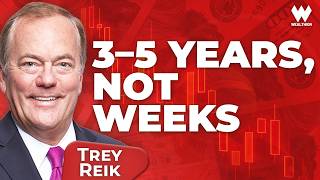
Gold as Portfolio Insurance: Trey Reik on Time vs. Price
Trey Reik separates gold's long-term portfolio role from the difficulty of timing its bottom. His conversation with Maggie Lake also examines Fed expectations, silver demand, mining shares and digital vulnerabilities.
Is the Bull Market Over? Kevin Muir on the AI Bubble
Kevin Muir believes the long bull market may have ended, while allowing for a near-term rally. He explains the risks in AI earnings and hedge fund positioning, alongside his views on cash, bonds, gold and oil.
Why Didn’t Oil Hit $200? Art Berman Explains
Art Berman revisits his expectation of a much larger oil-price spike. His explanation connects inventories, shipping costs, Chinese demand, refining investment and the limits of higher prices.
Enjoyed This? Get More Insights
Expert insights and curated opportunities, delivered to your inbox.
Ready to Position for What's Coming?
Whether you're still learning or ready to act, your next step starts here.
- Independent
- Macro-Informed
- Real Asset Focused

The Wealthion Network
By subscribing, you agree to receive Wealthion emails. Unsubscribe anytime.
The Wealthion Network
By subscribing, you agree to receive Wealthion emails. Unsubscribe anytime.
Network Discussion
Join the Wealthion Network to Comment