

Is Gold a Good Investment Right Now? Jesse Felder on Yields and the AI Bubble
Key Takeaways
Felder calls the 10-year Treasury yield "the most important chart in the world." As the risk-free rate that everything else is priced against, he argues it now sits at the center of an interconnected web linking the yen, the bond market, hyperscaler financing and an AI-dependent stock market.
He believes a slow-motion debt crisis is unfolding, and not only in Japan. With Japanese debt above 200% of GDP and a weak yen forcing Treasury sales, plus a US deficit near 6% of GDP during an expansion, he sees bond vigilantes reasserting themselves across developed markets.
Gold is consolidating, not broken. Felder says gold ran ahead of itself early in the year and is now back near fair value, with rising real rates a near-term headwind, but he expects it to resume higher once the Fed's next dovish pivot comes into view.
He thinks the AI bubble is in "the beginning of the end." He points to weakening leverage-driven buyers, a historic break in the momentum factor, and deteriorating earnings quality among the hyperscalers as signs the unwind has started, with a rotation toward value already underway.
Oil and energy are his stand-out value. Felder argues oil has rarely been cheaper relative to gold, that energy has quietly matched tech over five years, and that its intrinsic value is well above $100 a barrel.
Key Moments
00:45 - Why Treasury yields matter more than stocks Felder's case that the 10-year yield is the chart that drives everything else.
02:38 - The 10-year Treasury and a slow-motion debt crisis Why he thinks the bond market is losing faith in the Fed's inflation resolve.
05:34 - Is the Fed losing control of inflation? Forward guidance, moral hazard, and the reaction-function problem under Warsh.
10:07 - Japan, government debt and bond vigilantes How a weak yen and Japanese debt ripple into US yields.
16:42 - Could higher bond yields crash stocks? Why bond-market volatility, not just the level, is the trigger to watch.
19:10 - Gold's next move and future Fed rate hikes Real rates, consolidation, and when gold resumes its climb.
22:23 - Where should investors hide? Short-term Treasuries, value stocks, and the Berkshire template.
24:58 - Is the AI bubble finally bursting? The leveraged buyers who blew up and the break in momentum.
34:56 - Why oil and energy could be the best investment Oil's historic cheapness relative to gold and the case for well over $100.
39:17 - AI earnings, OpenAI and the circular financing problem Why the ability of AI labs to go public may decide the boom's fate.
Is Gold a Good Investment Right Now? Jesse Felder on Rising Yields and the AI Bubble
The risk-free rate is the yield on safe government debt against which nearly every other asset is priced, which is why Jesse Felder, founder of The Felder Report, told Wealthion in early August 2026 that the 10-year Treasury yield is the chart that matters most. His argument is that rising yields threaten an AI-dependent stock market, that a slow-motion debt crisis is already unfolding, and that the defensive question, where to hide, now runs through short-term Treasuries, value stocks, energy and eventually gold.
Why does Jesse Felder call the 10-year Treasury yield "the most important chart in the world"?
Because, as he puts it, "the 10-year Treasury yield is the most important chart in the world," the risk-free rate that everything else is based on. Felder describes a tightly interconnected system: the yen is tied to the bond market, the bond market is critical to the hyperscalers financing the data-center buildout, and the stock market has become dependent on the health of the AI economy. Pull on one thread, he argues, and the others move, which is why he watches yields above any single stock. Underneath it all, "I do believe we're watching kind of a slow motion debt crisis unfold."
Is the Fed behind the curve under Kevin Warsh?
Felder thinks so, and by a wide margin. He notes nominal GDP growing rapidly, on his math over 7% annualized last quarter, while the Taylor rule implies a policy rate above 6% against an actual rate near 3.75%, leaving the Fed roughly 300 basis points behind. He is nuanced on Chair Kevin Warsh: removing forward guidance is, in his view, healthy, because guidance created moral hazard (he cites Silicon Valley Bank buying long bonds on the assumption rates would stay low) and because some term premium returning to the bond market is natural. The mistake, he argues, is Warsh declining to discuss the Fed's reaction function, how it will respond to inflation and fast nominal growth, since that silence is what leaves markets unable to trust the Fed will act. For the backdrop on the chair at the center of this, see a Fed now led by Kevin Warsh.
Is a debt crisis actually unfolding?
Felder argues it is, starting abroad and spreading. Japan's debt exceeds 200% of GDP, and he cites work by economist Robin Brooks showing that, given that load, Japanese long-term yields are far too low, perhaps 100 to 200 basis points below where the debt-to-GDP relationship says they should be. A weak yen forces Japan to sell Treasuries to defend its currency, which pushes US yields up and prompts investors to ask whether they are being compensated for lending to a heavily indebted United States under a central banker who will not describe his reaction function. Add a US fiscal deficit near 6% of GDP during an expansion, which he calls unprecedented, roughly $2 trillion a year of new supply, and hyperscalers shifting from cash generators to heavy borrowers, and he sees bond vigilantes returning across the US, Japan and the UK. For a related read on the long end, see Michael Green on the bond market hiding a banking crisis.
Could higher bond yields crash stocks?
Felder's answer is that volatility matters as much as the level. Breaking to new highs on the 10- and 30-year would worry markets, he says, but the deeper link is that bond-market volatility (the MOVE index) tracks stock-market correlations closely. Right now correlations have collapsed because of huge offsetting moves within the index, one mega-cap up sharply on a day another falls just as hard, which lets the headline market sit still. If bond volatility rises, he warns, those correlations can snap back upward, which would be dangerous for a market priced for very low correlation.
Is gold a good investment right now?
Felder's view is measured: gold is consolidating rather than broken, and the near term is a headwind. He argues gold got well ahead of itself early in the year, disconnecting from what real interest rates would justify, and has since come back roughly in line as real rates rose, an environment that typically pressures the metal. With the Fed potentially facing three or four hikes over the next six to nine months, he expects gold to struggle for a time before it begins to "sniff out" the next dovish pivot, which is historically its best driver. He describes being overweight gold since around 2016, trimming earlier this year when it looked stretched, and adding some back near fair value. In his framework a gold bull market looks like a strong move followed by a year or more of consolidation, and he believes gold is in one of those consolidation phases now. As always on Wealthion, this is his attributed view, not a recommendation.
Where can investors hide?
Felder's uncomfortable conclusion is that getting inflation down likely requires a genuine tightening of financial conditions, something 2022 never really delivered. That means lower stock prices, wider high-yield spreads and visible market stress, closer to a typical recession than to a soft landing. In that world he points to short-term duration as shelter, citing Berkshire Hathaway's very large short-term Treasury position (which he put around $400 billion) as a template and saying "following his lead is probably not a terrible idea." He also sees a durable rotation from momentum toward value already underway, favoring consumer staples over discretionary, software over semiconductors, and defensives over cyclicals, and says he is even finding value in beaten-down software names.
Is the AI bubble bursting?
Felder is blunt: "I honestly I think it's the beginning of the end." He argues the leveraged, late-arriving buyers who powered the final leg have been impaired, invoking Peter Atwater's idea that bubbles are "last in first out." He points to leveraged retail traders in South Korea blowing up, a rotation of speculative capital into AI hardware names, and a highly levered AI-focused hedge fund that collapsed, all removing the marginal buyer. Just as important, he says the momentum factor has just seen one of its biggest breaks in history after one of its biggest surges, which is pushing capital toward value, an echo of how the dot-com unwind played out in 2000. Other Wealthion guests have described the AI spending boom cracking; for the bullish counter-case, see why some see AI as the biggest opportunity yet.
Why does Felder think oil and energy are the best value?
Because, on his relative-value read, oil is exceptionally cheap. He argues "oil has never been as cheap relative to the gold price or the silver price as it is today," and that energy has quietly performed as well as the tech sector over the past five years while remaining widely unloved. He does not think the world returns to the pre-pandemic disinflationary backdrop, given changes in geopolitics, globalization and demographics, and he pegs oil's intrinsic value well above $100 a barrel, calling energy the most attractive sector in the market and the commodity bull market only in its middle innings. The AI buildout reinforces the theme, as covered in why AI's dirty secret is oil.
What are the biggest risks this fall?
Felder flags two. The first is deteriorating earnings quality among the hyperscalers: reported profits look strong, but free cash flow has turned negative, and he says these companies "never reported lower quality earnings than they are today," with recent results flattered by one-time markups on private investments that may reverse. The second, and to him the key tell, is whether the major AI labs can go public. He argues the hyperscalers' enormous compute backlog rests largely on commitments from massively lossmaking labs that must raise public equity to pay for it, noting that one hyperscaler advanced billions to a lab ahead of schedule. If doubt emerges about those companies reaching the public market, he says, that "circular financing" breaks, which he would treat as a major warning sign for the whole data-center buildout. Above all, he repeats, watch the 10-year yield.
What Investors Should Watch
- The 10-year Treasury yield: Felder's single most important indicator, especially new highs on the 10- and 30-year.
- Bond-market volatility (the MOVE index): his link between rate turbulence and a spike in stock correlations.
- Real interest rates: the driver he watches for gold, with falling real rates the signal for its next leg higher.
- The momentum-versus-value rotation: whether the shift toward value, staples and defensives continues.
- AI-lab funding and IPO progress: whether the major labs can raise public capital, which he calls the tell for the AI buildout.
FAQ
Is gold a good investment right now? Jesse Felder sees gold as consolidating rather than broken. He says it got ahead of itself earlier in the year and is now near fair value, with rising real rates a near-term headwind, and he expects it to resume higher once the Fed's next dovish pivot comes into view. This is his attributed view, not advice.
Why does Felder call the 10-year Treasury yield the most important chart in the world? Because it is the risk-free rate that all other assets are priced against, and because it links the yen, the bond market, hyperscaler financing and an AI-dependent stock market into one interconnected system.
Is a debt crisis coming? Felder believes a slow-motion debt crisis is already unfolding. He points to Japan's debt above 200% of GDP and a weak yen forcing Treasury sales, plus a US deficit near 6% of GDP during an expansion, as reasons bond vigilantes are returning across developed markets.
Where can investors hide if yields keep rising? Felder points to short-term Treasuries, citing Berkshire Hathaway's roughly $400 billion short-term position as a template, and to a rotation from momentum into value, including staples, software over semiconductors, and defensives.
Is the AI bubble bursting? Felder calls it "the beginning of the end," citing impaired leveraged buyers, a historic break in the momentum factor, and deteriorating hyperscaler earnings quality, with the ability of major AI labs to go public as the key thing he is watching.
Which expert and interview does this article reference? This article draws on Wealthion's interview with Jesse Felder, founder of The Felder Report: "Could Treasury Yields Break the AI Boom?"
What Serious Investors Are Watching
Dive into expert interviews, market analysis, and long-form content built to help serious investors think long-term.
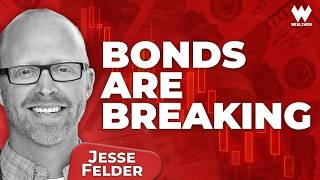
Is Gold a Good Investment Right Now? Jesse Felder on Yields and the AI Bubble
Key Takeaways Felder calls the 10-year Treasury yield "the most important chart in the world."...
Everyone Is Watching AI Stocks. Who’s Watching What AI Needs?
Everyone is watching AI stocks. Far fewer are watching what AI actually needs to run,...
Are AI Stocks a Good Investment? Jim Bianco: Two Stock Markets
Key Takeaways The S&P 500 has split into two markets that no longer move together....
Enjoyed This? Get More Insights
Expert insights and curated opportunities, delivered to your inbox.
Ready to Position for What's Coming?
Whether you're still learning or ready to act, your next step starts here.
- Independent
- Macro-Informed
- Real Asset Focused


The Wealthion Network
Stay ahead of the curve. Subscribe to Wealthion’s newsletter and get timely videos, articles, and alerts featuring insights from the world’s leading experts in investing and wealth-building.
Network Discussion
Sign in to share your thoughts and connect with other readers.
Join the Wealthion Network to Comment