

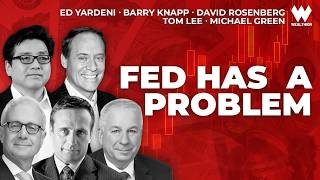
Is Inflation Going Down? Expert Panel
Key Takeaways
The panel leans toward disinflation. David Rosenberg says "the inflation numbers are going to surprise to the downside for the next several months," expecting "a period of disinflation."
Barry Knapp sees the components cooling. He notes goods prices are "basically zero" since the tariff effect washed through, with services and rents set to come down, since official rents near 3% sit above alternate measures nearer 2%.
Michael Green argues core CPI is already near target. He says core CPI around 2.3% is "not that far from the Fed's target" and "moving in the right direction," with core PCE distorted higher by stock-market-linked fees and flash-memory prices.
Tom Lee says the Fed is fighting the last war. Quoting Churchill, he argues "economists are fighting last year's wars" by focusing on an inflation fight that is largely won.
But Ed Yardeni relays the Fed's tripwire. He points to New York Fed President John Williams' guidance that steady 0.2% monthly inflation is fine, while 0.3% to 0.4% would mean "we have a problem and we may need to raise interest rates."
Key Moments
00:20 - Today's CPI: is inflation still too hot? The latest print and the question it raises for the Fed.
00:47 - Ed Yardeni: when inflation becomes a Fed problem The monthly threshold that would force a rate rise.
01:31 - Barry Knapp: why inflation could keep cooling Goods, services and rents all pointing lower.
02:09 - David Rosenberg: disinflation is coming Below-potential growth pressing prices down.
02:37 - Tom Lee: is the Fed fighting the wrong battle? Economists fighting last year's wars.
02:55 - Michael Green: is the CPI framework broken? Why core PCE overstates inflation versus core CPI.
03:24 - How investors can position for what comes next The takeaway from the disinflation debate.
Is Inflation Going Down? Five Experts on Whether the Fed Is Fighting the Wrong War
After a fresh inflation report, the question of whether prices are genuinely cooling, and whether the Federal Reserve is still fighting a battle it has largely won, is front and center. Wealthion gathered the views of five recent guests, Ed Yardeni, Barry Knapp, David Rosenberg, Tom Lee and Michael Green, on exactly that. Their takes, summarized and attributed below, lean toward disinflation, with one important caveat about what would change the Fed's mind. These are their attributed views, not investment advice.
Is inflation going down?
On balance, the panel thinks so. The latest CPI, as the host noted, showed prices up 3.4% from a year earlier, with core inflation easing to 2.4% but coming in slightly hot for the month. Against that, several of the guests argue the trend is lower: Rosenberg and Knapp see the components cooling, Green argues core CPI is already close to target, and Lee says the inflation fight is yesterday's battle. The dissenting note is not that inflation is reaccelerating, but that the Fed has set a specific tripwire, relayed by Yardeni, that could still force a rate rise.
What did the latest CPI show?
The report showed headline inflation running 3.4% year over year, while core inflation (excluding food and energy) eased to 2.4%, though it came in a little hotter than expected on a monthly basis. That split, cooling on an annual basis but firm month to month, is what drives the disagreement among the panelists about whether the Fed can relax. (These are point-in-time figures from the print discussed in the video.)
Why does the panel lean toward disinflation?
Two of the guests make the component case. Barry Knapp argues the pressure is fading across the board: "good prices are flat" now that the tariff effect has washed through since its peak, services prices should ease seasonally as they have since the pandemic, and although official rents are still calculated near 3% by both CPI and PCE, "all the alternate measures are more like two or lower," so "rental inflation's going to most likely going to come down." David Rosenberg approaches it from growth: with the economy expanding below potential, he sees "downward pressure on aggregate prices," and expects "the inflation numbers are going to surprise to the downside for the next several months," a "period of disinflation." His fuller view is in his interview on why the economy is more fragile than it looks.
Is the Fed fighting the wrong war?
Two more guests argue it is. Tom Lee invokes Churchill, saying "economists are fighting last year's wars" by staying fixated on an inflation problem that is largely resolved. Michael Green makes the technical case that the Fed is misreading its own data: core PCE, he says, is running hot versus core CPI largely because of stock-market-linked portfolio fees and surging flash-memory prices, items the average household does not experience as inflation, so core CPI near 2.3% is "not that far from the Fed's target" and "moving in the right direction." Green also argues the rent-measurement formula is badly lagged and flawed. For the opposing case that inflation could reaccelerate, see Michael Howell on why AI will fuel inflation.
What would change the picture?
The clearest tripwire comes from Ed Yardeni, relaying guidance from New York Fed President John Williams. Williams, Yardeni notes, said that if monthly inflation "just kind of stays 0.2% month over month," there is no problem, but if it shows signs of being "more like 0.3 or 0.4," meaning not consistently 0.2%, then "we have a problem and we may need to raise interest rates." So the risk the panel is watching is not a return to high inflation, but monthly readings that fail to settle at the Fed's comfort level, under a Fed chair, Kevin Warsh, who Yardeni notes prefers not to give forward guidance. For that Fed backdrop, see Wealthion's coverage of a Fed now led by Kevin Warsh. As always on Wealthion, these are the panelists' attributed views, not advice.
What Investors Should Watch
- Monthly core CPI: the 0.2% versus 0.3% to 0.4% threshold Yardeni relays as the Fed's tripwire.
- The core CPI versus core PCE gap: the distortion Green attributes to fees and flash-memory prices.
- Rents and services: the components Knapp expects to cool further.
- Growth versus potential: the below-trend growth Rosenberg says presses prices down.
- The Fed's response: whether policymakers ease as disinflation shows up, or hold on the inflation-above-target concern.
FAQ
Is inflation going down? Most of this Wealthion panel thinks so. The latest CPI showed 3.4% headline and 2.4% core, and Knapp, Rosenberg, Green and Lee all argue the trend is lower, citing cooling goods, services and rents, core CPI near target, and below-potential growth. Yardeni notes the Fed still has a tripwire that could force a rate rise.
What did the latest CPI report show? Prices rose 3.4% from a year earlier, with core inflation easing to 2.4% year over year but coming in slightly hotter than expected for the month.
Is the Fed fighting the wrong war on inflation? Tom Lee and Michael Green argue it is: Lee says economists are "fighting last year's wars," and Green contends core PCE overstates inflation versus core CPI, which he says is already near the Fed's target.
What would make inflation a bigger problem again? Ed Yardeni relays New York Fed guidance that steady 0.2% monthly inflation is fine, but consistent readings of 0.3% to 0.4% would signal a problem that could require raising rates.
Full Transcript
This is a panel compilation. Speakers are identified by the chapter markers: Ed Yardeni (Yardeni Research), Barry Knapp (Ironsides Macroeconomics), David Rosenberg (Rosenberg Research), Tom Lee (Fundstrat) and Michael Green (Tier 1 Alpha), with host Maggie Lake. ASR errors corrected (names, terms) and filler removed; meaning preserved. A closing Wealthion membership message has been noted rather than reproduced.
Ed Yardeni (cold open): So, we have a problem, and we may need to raise interest rates.
David Rosenberg (cold open): I think that the inflation numbers are going to surprise to the downside for the next several months.
Tom Lee (cold open): As Winston Churchill said, the war department always fights last year's wars, and I think economists are fighting last year's wars.
Maggie Lake: Inflation is still refusing to go quietly. Today's CPI showed prices rising 3.4% from a year ago, while core inflation eased to 2.4%, but came in a little hotter than expected for the month. So is inflation still the biggest threat facing the Fed, or are policymakers fighting yesterday's battle? Here's what some of our recent Wealthion guests have been telling us.
Ed Yardeni: The president of the New York Fed, John Williams, gave a speech recently in which he offered some forward guidance, believe it or not. Under Kevin Warsh, the new Fed chair, they don't want to give any forward guidance, but John Williams basically said that as far as he's concerned, if inflation just kind of stays 0.2% month over month over and over again, then we don't have a problem. If it shows signs of being more like 0.3 or 0.4, in other words, if it's not consistently 0.2, then we have a problem and we may need to raise interest rates.
Barry Knapp: You look at CPI goods, they're basically zero now since the effective tariff rate peaked last September; that's all washed through. Services prices seasonally will come down over the next couple of months, which has been the pattern post-pandemic. And rents are still calculated by both CPI and PCE at around three, but all the alternate measures are more like two or lower, so rental inflation's most likely going to come down. Core services will come down over the next few months, and goods prices are flat.
David Rosenberg: The question about inflation is, is it the prices businesses want to charge, or the prices consumers are willing and able to pay? There's always that tug of war. I think the inflation numbers are going to surprise to the downside for the next several months. I think the economy will continue to grow, but below potential, which is going to put overall downward pressure on aggregate prices. So I think we're going to be in a period of disinflation.
Michael Green: Core PCE is up because of the stock market and flash memory compared to CPI. And in fact, if people accepted that and looked at core CPI around 2.3 versus 2, I think Waller is correct: it's not that far from the Fed's target, and it's moving in the right direction. The rent-measurement approach was basically created to prevent the Federal Reserve from repeating an earlier mistake, and yet here we are again, with people encouraging the same behavior tied to a formula that increasingly shows a lagged three-, four-, or five-year average on CPI. It's absurd.
Tom Lee: I think, as Winston Churchill said, the war department fights last year's wars, and I think economists are fighting last year's wars.
Wealthion editorial content is for informational purposes only and is not investment, tax, or legal advice, and nothing here recommends any fund or security. If you want a professional read on how gold fits your own portfolio, you can request a free portfolio review from an advisor who understands real assets at https://www.wealthion.com/advisors/.
What Serious Investors Are Watching
Dive into expert interviews, market analysis, and long-form content built to help serious investors think long-term.
Is Inflation Going Down? Expert Panel
Key Takeaways The panel leans toward disinflation. David Rosenberg says "the inflation numbers are going...

Wealthion Macro Bites – Canada’s New Investment Summit Draws $120 Trillion in Assets Under Management
Yemeni officials confirmed Iran-backed Houthi rebels captured the strategic islands of Greater and Lesser Hanish...

Will the AI Bubble Burst? What the Signs Actually Say
Nobody can tell you the date an AI bubble bursts, and anyone who claims to...
Enjoyed This? Get More Insights
Expert insights and curated opportunities, delivered to your inbox.
Ready to Position for What's Coming?
Whether you're still learning or ready to act, your next step starts here.
- Independent
- Macro-Informed
- Real Asset Focused


The Wealthion Network
Stay ahead of the curve. Subscribe to Wealthion’s newsletter and get timely videos, articles, and alerts featuring insights from the world’s leading experts in investing and wealth-building.
Network Discussion
Sign in to share your thoughts and connect with other readers.
Join the Wealthion Network to Comment