

When Does a Market Selloff Become a Financial Crisis? | Steve Hanke
Key Takeaways
- Artificial intelligence (AI) spending needs an economic return. Hanke questions whether future revenue can justify the buildout, describing the risk as malinvestment.
- Credit growth can make a valuation boom more dangerous. He links rapidly expanding borrowing and asset prices, while distinguishing a sudden crash from gradual deflation.
- Private lending can still reach the banking system. Nonbank lenders may themselves owe money to banks, creating a possible route for losses to spread.
- A downturn could extend beyond technology. Hanke sees potential damage to construction, electricity and commodities, with a slow recovery rather than a quick rebound.
- High deficits complicate the policy response. He expects persistent spending pressures, including defense, to leave Washington less room to respond to a slowdown.
- Monetary policy could face conflicting demands. Hanke emphasizes money growth in inflation analysis, while expecting the Federal Reserve (Fed) to supply emergency liquidity in a crisis.
- Public resentment adds another source of uncertainty. He connects strained household finances with distrust of powerful institutions and opposition to data centers.
- His caution includes bonds as well as stocks. He distinguishes short-term policy rates from longer-term Treasury yields and expects continued pressure on bonds.
- Hanke emphasizes liquidity while acknowledging uncertainty. He discusses money market funds as his preference; their risks differ from those of insured bank deposits.
Key Moments
00:00:23 - Deficits and government debt Why Hanke expects persistent fiscal pressures.
00:02:17 - The scale of AI investment Spending, expected revenue and economic dependence.
00:05:26 - Credit growth and crisis research The historical study behind his concern.
00:07:15 - A crash or gradual deflation Why monetary conditions matter in his framework.
00:11:14 - Malinvestment and recovery How losses could reach the wider economy.
00:13:50 - Washington's policy constraints Debt, deficits and the ability to respond.
00:18:00 - The inflation dilemma Competing demands on the Federal Reserve.
00:19:10 - Private credit and banks How financial connections could transmit stress.
00:28:09 - Household finances and resentment The political consequences Hanke sees.
00:37:15 - The outlook for bonds His distinction between short and long rates.
00:44:56 - Liquidity amid uncertainty Hanke's money market fund preference.
A disappointing technology investment can hurt twice: first when expected profits fail to arrive, and again when the money borrowed to build it must be repaid.
Steve Hanke's concern is that a large enough investment boom could create problems reaching well beyond its shareholders.
In his conversation with Maggie Lake, the Johns Hopkins economist connects AI investment risk with private lending, government debt and inflation. He questions how quickly the economy could recover if spending disappoints and policymakers have less room to respond. His warning is serious, but he acknowledges uncertainty about whether a financial crisis will occur. 1
When spending becomes malinvestment
Hanke's central question is whether the money going into AI will earn an adequate return.
He uses the term malinvestment for spending that ultimately proves economically misplaced. A large construction program can generate activity today without establishing that the completed projects will generate enough income tomorrow. 1
He sees rapid credit expansion alongside rising valuations as a warning combination. Borrowing can fund more investment, but it also creates obligations that remain when expectations weaken. A falling share price and a borrower unable to repay are different problems. 1
A hypothetical shows how debt changes who absorbs a loss. Two owners each buy a $100 asset: one pays entirely with its own money; the other borrows $80 and supplies $20.
| Funding | Owner receives at a $90 sale | Owner receives at a $75 sale |
|---|---|---|
| $100 of owner's money | $90 | $75 |
| $80 debt, $20 of owner's money | $10 | $0; lender is $5 short |
Hypothetical dollars, not a forecast. Assumes sale when debt is due, lender paid first, no other assets or recoveries. Excludes interest, taxes and transaction costs. Sale prices are illustrative. 2
At $90, the asset loses 10%, but the borrowing owner loses half its money. At $75, the loss also reaches the lender. A price decline alone does not force a sale; repayment dates, available cash and loan terms matter. 2
A crisis warning is different from a crisis forecast
Hanke cites Predictable Financial Crises, a 2022 study by Robin Greenwood and co-authors.
Across 42 countries from 1950 to 2016, rapid credit and asset-price growth over the preceding three years was associated with roughly a 40% probability of a financial crisis within three years, versus about 7% in normal periods. 3
Those are historical country-level results, not a current AI-specific probability or a forecast of stock-market losses. Hanke uses the relationship to frame his concern. He also distinguishes a sudden bursting of a bubble from a slower deflation, and considers monetary tightening important to how a boom unwinds. 1 3
Why private credit can become a banking problem
The first losses might appear outside banks. That does not mean banks are disconnected.
Hanke points out that nonbank lenders can themselves borrow from banks. If their borrowers fail and their own resources cannot absorb the damage, repayment problems could move back toward the banking system. 1
He also worries about companies moving from internally generated cash toward debt-financed expansion, and follows the cost of protection against default as a sign of lenders' concern. His argument is about financing resilience, not simply whether demand for AI continues growing. 1
There are potential buffers. The Federal Reserve's November 2026 Financial Stability Report described banks as sound and resilient overall, with high regulatory capital, while identifying weaker debt-servicing capacity among lower-rated public companies and private businesses. An investment boom alone does not settle how much loss the system could absorb. 4
Why a recovery could take longer
Lake asks whether infrastructure built during the boom might still benefit energy and other industries.
Hanke emphasizes the damage instead: he sees AI investment as a major source of economic activity, with links to electricity, commodities and construction. 1
If that spending weakens, his concern is a prolonged adjustment rather than an immediate rebound. Construction activity, investment plans and financing could all need time to reset. That is his assessment of a possible downturn, not evidence that every project would fail or every related industry would suffer equally. 1
Debt and inflation complicate the response
Hanke expects little change in fiscal discipline following the congressional election.
He sees a bipartisan reluctance to restrain spending and worries about debt-service costs absorbing more of the government budget. Defense spending is another pressure in his analysis. 1
His point is that entering a slowdown with large deficits leaves a more difficult choice about additional stimulus. This is an argument about fiscal flexibility, rather than a claim that the government is legally unable to borrow or spend. 1
Monetary policy presents a separate dilemma. Hanke puts money-supply growth at the center of his inflation analysis and considers interest rates alone an incomplete guide. In his framework, lasting disinflation requires slower money growth. 1
Yet he expects the Fed to supply liquidity if an AI downturn becomes a financial crisis. 1 Liquidity means money available to meet payments when due. The Fed's discount window, for example, provides collateral-backed funding to eligible deposit-taking institutions; primary credit is available to institutions in generally sound financial condition. 5
Emergency funding can help an institution meet payments. It does not by itself establish that an unsuccessful investment will become profitable. That distinction explains Hanke's concern: stabilizing finance and restoring returns on past spending are different tasks.
How public backlash could affect investment
Hanke connects the affordability debate with pressure on household balance sheets, especially among younger Americans.
His broader interpretation is an age of resentment toward powerful political and business figures. 1
For data centers, that resentment becomes a practical investment issue. He describes a mismatch between the temporary construction boom and the smaller ongoing workforce, alongside local concerns about the sites. He sees political opposition as another possible brake on expansion. 1
Lake highlights a conflict: people can distrust technology leaders while owning substantial technology exposure through funds. Their political preferences and financial interests need not line up neatly. 1
What his warning means for bonds and liquidity
Hanke's caution extends to bonds. He expects government financing pressures to sustain a difficult environment and distinguishes longer-term Treasury yields from the short-term rates most directly influenced by the Fed.
He expects short-term policy rates to rise if fighting inflation requires tighter conditions, while expecting longer-term yields to remain elevated. His outlook allows for different pressures at different maturities. 1
For a fixed-rate bond, rising market rates generally mean a lower market price. New bonds offer more interest, making the old payments less attractive. Government backing of principal repayment does not guarantee the price available before maturity. 6
Asked where he would place additional liquid money, Hanke favors money market funds. 1 The Securities and Exchange Commission explains that these funds hold liquid, short-term debt, cash and cash equivalents. They are not federally insured bank deposits, and losses are possible. Their income generally reflects short-term interest rates, while inflation can erode purchasing power. 7
Asked whether a dramatic policy reset could ease these pressures, Hanke says it is very hard to anticipate. 1 His wider warning is about several constraints meeting at once: disappointing investment returns, borrowed money and limited policy flexibility. The outcome depends on how those pressures develop and who has the resources to absorb them. 1
Full Transcript
Steve Hanke: I would say probably overinvestment in AI. If it pops, they'll go down about 70%, and the collateral damage in the general markets will probably be 40%. It's all about malinvestment. There's going to be a lot of damage. I wouldn't be putting them in the stock market. I'd be putting them in a money market fund.
Maggie Lake: What will the Democrats mean for the deficit and spending? To discuss, I'm joined by Steve Hanke, professor of applied economics at Johns Hopkins University and author of Making Money Work. Hi, Steve. It's great to see you again.
Steve Hanke: Yeah, good to see you, Maggie.
Maggie Lake: Wow, we kind of have earthquakes all over the news headlines these days. Of course, the big results from the midterm. We've had a huge amount of market volatility on the back of that. You've been watching this intersection of politics and policy and markets for a long time. What's your take, first of all, on what this sea change in Congress will mean for the economy?
Steve Hanke: For the economy, I don't anticipate much of a change, really, because you mentioned when you started the deficits and debt and the general macroeconomic situation, and that will remain about the same because both, it's a bipartisan deal. The deal is neither party is very interested about controlling government spending, controlling deficits or controlling the debt.
Getting back to the economy and the markets, the deficit problem will get worse and worse. The debt problem will get worse and worse. The interest and servicing of the debt will be taking up a larger and larger portion of government expenditure. So that's kind of how I see the political macroeconomic thing. Now the micro thing, moving to the private sector, the big story really is AI.
Unidentified speaker: Mhm.
Steve Hanke: I mean, the AI investment, by the way, it's running over a little, about 5.2% of GDP. Now, there's just nothing like this in history. We're talking about a mega, mega thing going on with regard to investment.
And to put that in context, if you go back, for example, I said right now it's running about 5.2% of GDP. To put that into perspective, we had canals, 1836 to 41. That was 7/10 of a percent of GDP. We then had railroads. The big railroad boom was huge, 1870 to 90, and that was 2.2% of GDP. And then we had electrification, 1905 to 25. That was a half a percent of GDP. We had highways in the 50s and 60s. That was 1.1% of GDP. And then the telecommunications, remember that bubble when that popped? That was 1.1% of GDP.
So there's just nothing like it. It's absolutely massive. And people don't, they talk about AI, AI, and most people don't even understand what it is. But looking at the economic numbers, the investment there is absolutely astounding.
Now what happens, and this gets into the market thing. Now we're phasing away from, let's, okay, let's forget Washington for a while and move into, actually, the real world, the private sector. And we have this massive investment, and I would say probably overinvestment, massive overinvestment in AI.
And when you have these things occurring, it usually results because you have two things going on at the same time. You have a huge credit expansion and a huge increase in market cap in the sector where you have the credit expansion. So this is what, and what happens. By the way, the last time we had a bust, remember 2007, 2008 with housing, huge credit expansion, huge increase in the valuation of houses. We had a bubble, a bubble pop.
Well, bubbles occur when you have this dual huge increase. And if you look at the charts, it's just straight up, the credit expansion and the investment and valuation, straight up. And that signals a bubble. And the research that's been done on this, and it's been quite extensive, by the way, there was an article in the 2022 Journal of Finance by Greenwood and three other authors, and they found that the increased probability of a financial crisis, that means the bubble popping but also lots of collateral damage, that's a pure crisis, would increase to about 40% if you had these dual things of overextension of credit and increases in valuation. So it isn't in the bag, but the percentage goes up from the normal is about 7%, by the way, that you have some kind of a financial crisis. This goes up to 40%. So this is the big story and the big thing to watch out for in markets, because when this AI, right now, by the way, the AI stocks are down, you know, around 25% from their peak already. But there's a long way to go because if it pops, they'll go down about 70%, and the collateral damage in the general markets will probably be a reduction of maybe 40% or something like that.
Maggie Lake: Well, those are some really painful numbers, and I think that speaks to the fear, which is why we are having so many people warn about the bubble. So, a couple questions on that. Let's talk about the bubble and then we'll talk about the collateral damage, because I think that part's really important. Is it clear, when we look at history, is it inevitable that these sort of credit expansion, valuation expansion bubbles will burst? There will be massive losers. Is that just an absolute given?
Steve Hanke: It's not that clear, actually, because what you can get, you can get, too, if you have the overvaluation, it's eventually going to dissipate. Okay. So that's one thing, but you don't know whether it's going to be actually a pop or a slow deflation of the thing. So that's one aspect. The only thing that we really know much about is that the popping usually occurs if it's in conjunction, the bubble is in conjunction with a situation in which monetary policy starts tightening up.
So everything is always about monetary policy. People forget, you know, a lot of people are explaining the last inflation we had after the pandemic as supply chain glitches and temporary and all of this nonsense. But it was due to the fact that the money supply exploded, and at one point the money supply measured by M2 was growing at about 27% per year, the highest rate it's ever grown since the founding of the Federal Reserve in 1913.
So you've got to be watching the monetary picture. And let's talk about, let's say things go south, and we don't know if it's popping or deflating or exactly the nature of the going south in AI, which probably will occur, by the way, because it looks like the projections of investment in AI for the next five years and the projections of revenue, these are just projections already, there's a 58% revenue shortfall that will not be funding and generating a rate of return of just 10% on the capital that's being invested.
So it's clear something's going to happen because the revenue just isn't there to finance all of this.
Maggie Lake: Yeah. In the sort of hyperscalers themselves, correct? Like in the AI names themselves?
Steve Hanke: Right. There are hyperscalers. There's some, like, for example, the interesting one to me is Apple. Looks like it's stayed out of the game.
Now that's an interesting thing because that's one of the great companies and great stocks of all time, and they have not jumped on the bandwagon.
Maggie Lake: Yeah. It's interesting. Some of the names that were penalized for falling behind now, when you're looking at it, you know, potentially are viewed from a different lens. But it sort of brings up, you're getting to the point that I was wondering about when we're talking about a bubble bursting and there will be losers, but is all of that investment that went into it malinvestment, or can some of it make its way into parts of the economy that either needed it or there are upgrades or that other companies will benefit from?
And I'm thinking about, say, energy. I just had a really interesting conversation with someone who said, you know, the AI trade gave a sort of anchor tenant to the energy sector and to electricity and to some of these infrastructure. The reindustrialization, the manufacturing base of the US is growing nicely partly because of that. If the AI trade rolls over, does all of that get re-evaluated, or are there positive pockets and then also some losers that will, you know, be on the wrong end of the overinvestment? But will there also be positives? How are you thinking about that?
Steve Hanke: Well, as an Austrian economist, you mentioned the key word, and in terms of Austrian business cycles, it's all about malinvestment. So that's the emphasis, that there's going to be a lot of damage and a lot of collateral damage and so forth. So that's one aspect.
Now, to put this into perspective, though, I said that the AI investment is a large chunk of GDP. But if you look at the growth in GDP, the third quarter growth in the United States annualized was 3.4%. And if you drill down into that, which I've done, 96% of that was accounted for by AI, which means the rest of the economy right now is totally flat. There's nothing much going on except AI. So again, it gets the thing into perspective. We're talking about something that's just massive here.
And let's assume we go into a recession. Now there are two kinds of recessions. One, the interesting part isn't necessarily when you go in. The interesting thing is when you go out. There are two kinds of recessions. One is a V-shaped recession where you come out fast, you bounce back fast, or you come back slowly, slowly, slowly. And I think with this kind of malinvestment, you're going to see a very slow recovery.
So don't, that again relates to the market. It's not going to be the, you know, this one month wonder where a car crashes and boom, all of a sudden it comes back. It's going to be probably a long slog, because it's massive, and it touches a lot of different sectors of the economy. You mentioned electricity, some of the commodities and so forth. So those are also aspects that we want to be thinking about. But again, the thing to think about is just AI.
And let's talk about coming out of a recession or a slowdown. We're in a corner, and this comes back to the Washington thing that you brought up, Maggie, and that is there isn't really much fiscal firepower that can be used. We're overextended. The debt is high. The critical thing is a deficit which is running, you know, quite high by historical standards already. And it's been that way for a long time. It isn't something that we just all of a sudden, it crept up on us and we have a deficit of 6% of GDP. No, it's been hanging around for a long time. So forget that idea of stimulating yourself out of the problem that's created by the bubble bursting.
And also monetary policy. Right now, inflation, the inflation genie is out of the bottle. They're having trouble getting inflation down. Why? Why do you think the Republicans got whacked? Well, they got whacked for a lot of reasons, but one factor is inflation and the cost of living. Everyone, one way or another, was complaining about the cost of living. And with monetary policy, I don't think they've got room to loosen and goose a thing unless they want a lot of inflation and basically stagflation.
So the levers of the margin of safety in Washington, DC, has been spent. There is no margin of safety. And that's, by the way, that goes back to Trump number one, Biden big time, Trump number two. They're not interested. No politician in Washington is interested in controlling government expenditures. Now, you have a few exceptions, but we're talking about a handful.
Maggie Lake: Will we see, you're absolutely right, and I think that's why this election was really important. Are we seeing the rise of populism, and is that going to mean that we continue to see a push to have the government address either affordability or spend more? Like, there's two sides to this. And it seems like voters want the government to continue spending. They don't have an appetite for cuts, but they also want them to address the affordability crisis.
How do they do both of those things? They have to spend fiscally if they're going to address the affordability crisis. No, how can they? This sounds like a very difficult task, a mandate that's been given by the American voters.
Steve Hanke: Well, the affordability thing, it comes back again. It's fundamentally, the Congress can't do much about it. Okay. They could give people direct subsidies and, you know, bail out the farmers and bail out truckers buying diesel and stuff like that. But generally, the real problem is overall inflation, and inflation is always and everywhere a monetary phenomenon. So it comes back to money and the Fed.
Maggie Lake: So you think that they will be forced to raise interest rates, even though we have these risks around the AI bubble and no growth anywhere else. They're still going to have to move?
Steve Hanke: They're going to be on the horns of a dilemma because if the AI bubble pops and we do go into a recession and we do have literally a financial crisis, the Fed will be forced to pump liquidity into the market. That will be the reaction, if not just the recession, but if it's a financial crisis, if we go down that path, which, that was the article in Journal of Finance that I mentioned earlier, a financial crisis would entangle the financial system and banks, and the Fed always reacts pretty rapidly to a financial crisis.
Maggie Lake: Do you think that's where the collateral damage lies, in the actual banking system? Is it different because so much of this was at least originally in private credit? There's some people who seem to think that somehow the tentacles of all this are not really entwined in the traditional banking system.
Steve Hanke: Well, that's true. But that's kind of the first order condition would be, you know, private equity and the non-banking, shall we say. But it often comes back to haunt the banks because the banks have extended credit to these other non-banks. So it's a tangled web, the financial system. And as I say, the first order condition would obviously be the non-banks because they're the most active ones in it.
But we have the hyperscalers. Let's talk about the hyperscalers now. Originally, when they started pouring money into AI, they had free cash flow was coming out of revenues from the hyperscalers. Well, to give you some idea of the malinvestment, they had lots of free cash flow. They burnt through that, and then they jumped into the debt market big time. And now what do you have? You have the credit default swap spreads going up, and basically, in simple terms, the cost of insuring the debt that someone's bought against default has gone up. Insurance costs have gone up. So the bond vigilantes smell some of this stuff out pretty quickly. So you can see some of this is actually being priced into the market right now, as well as the fact that even the top line numbers of market cap in the AI sector has gone down. I mean, you know, 25% reduction from the peak is, as they say in economics, non-trivial. [Laughter]
Maggie Lake: We like these economic terms.
Steve Hanke: Yeah, well, that one I like. Every once in a while,
Maggie Lake: you pull that one out. I'm going to use that too, Steve. So do you think that, is AI, whenever we talk about a bubble, and let's use the internet one, you know, lots of people sort of get worried about it. We sort of see it coming, but it's so hard to stop these things before they blow up. Is there anything different about AI? Is it more important or so important to national security that, can it be allowed to fail or burst? Or it doesn't matter? The government has no control over stopping it.
Steve Hanke: Well, I don't think the government has that much control over stopping it. But the other factor we haven't even talked about that was relevant in the election is that the public does not like AI.
Maggie Lake: Yeah.
Steve Hanke: They don't. And it comes down, they don't want these data centers in their backyard, number one. But in general, they're quite skeptical, and they fundamentally don't like it.
And they don't like the Silicon Valley crowd, basically. They don't trust these people, the general public. So there are two factors that we really haven't mentioned directly. One indirectly, the thing will stop when the credit, the money runs out. So the credit spigot could get turned off. That is possible.
The other thing, and this does come into the elections and what the Democrats actually might do, because the Democrats have been on the side of public opinion on this. But we don't know. If you're a newly elected Democratic governor in Texas and they're building these damn data centers all over the place, are you going to actually shut these things down?
Maggie Lake: Yeah.
Steve Hanke: I mean, remember I said 96% of that 3.4% annualized growth rate in the third quarter was AI.
That's a lot of construction going on and work and so forth. Of course, the reason they don't like it in these local areas, you have a little spurt in economic activity when you're building these sites, but then when they're built, they don't employ anyone.
Maggie Lake: Yeah.
Steve Hanke: So you end up with kind of a, it's a boom town effect. They build it. There's a little boom going on. The locals do very well for, you know, a year or a year and a half, however long it takes to build a thing, and then that's it.
Maggie Lake: Yeah. It seems some people are kind of wise to that time horizon for work.
Steve Hanke: Yeah. And then you're left with a humming site or whatever, in effect all the pollution associated with it afterwards, and not very many jobs.
These things are capital intensive. They're not labor intensive.
Maggie Lake: It sounds like a very negative outlook. I mean, if we are looking at the potential of a financial crisis being as high as 40%, no economic growth outside of AI, a Fed that is facing inflation and might be forced to tighten, that's a pretty toxic mix for an outlook for markets.
Steve Hanke: It is, and I think it's a realistic scenario. I'm not predicting that it's going to happen, but, again, to use my non-trivial, there's a non-trivial chance that it will. So we have to be paying very close attention to it. This is the biggest thing in the economy right now. That's it.
And we have to pay quite a lot of attention to it.
Maggie Lake: Although it's unclear to see decisions that can be made at this point. Well, have you thought about it? Are there things that can be done at this point to reduce the risk of a financial crisis? And who's the party that needs to do that? Where does that responsibility lie?
Steve Hanke: It's very hard to see how you can put the horses back in the barn. I mean, they...
Maggie Lake: That's what I was afraid you were going to say.
Steve Hanke: We've already covered one of these things, the government budget. I mean, the government's a big, huge sector of the economy. And right now, the problem could be mitigated if you started controlling the federal budget, but that takes time. All of this takes time and is a very slow process to get the federal debt down to reasonable levels again. Let's say even down to 90% of GDP. We're talking about, realistically, if you decided to do it, I think it would take probably 5 to 10 years to do it.
Maggie Lake: Yeah. And this is, I know you've been banging the table on this issue because this is what happens when your back is up against the wall, right? You run out of policy options.
Steve Hanke: Exactly. Just think of, as an individual household, as your family, and if you're overextended all over the place and something bad happens, there's not much you can do about it. If you have a margin of safety and you've got savings and so forth, you can mitigate the damage that befalls you. But if you don't have any ammo, you just have a big problem.
And by the way, in the voting thing, getting back to the political aspect, and this is related to Wealthion, if you look at the last data on personal income and net wealth, that is assets minus liabilities, the group that has really been hurt in the last three years, just taking from 2022 through 2025, those below 35 years of age, they've seen their net wealth drop by 23%.
So why? And the newspapers don't pick up on this. They say, "Oh, all the youth voted against Trump and the Republicans. I wonder why." And they talk about cost of living, diesel and some of these specific things, but it's a balance. And there's nothing more important than a balance sheet.
And the balance sheet of young people, it's a disaster. Complete, complete disaster. And that's why Generation Z and older, I mean, we're going out to 35 years of age.
It's tough. They've taken a huge hit in the last three years.
Maggie Lake: And that has repercussions. You're absolutely right. I think that's a huge driver of what we're seeing, and it may be a huge driver of policy going forward because they're not okay with that, and they're going to look for someone to try to solve for that, which is, I think, where things, certainly when we get to tax policy, where things get interesting and something we all have to keep on our radar. And we do talk to our network of advisers about that and how to prepare for that.
When we're looking at technology, you said a really interesting thing before, and that, I think, is very true. We saw that borne out in the polls, that the American people do not like the tech leaders. They don't like AI. They're very skeptical. They're very concerned. But it's interesting because for anyone who holds equities, your exposure to technology is probably really high, right? It's sort of embedded in so many, not just the NASDAQ, not just Nvidia, but across all sorts of funds and throughout the S&P. You mentioned how important it is to the economy. So that's a point of conflict, isn't it? We don't like it. They want to slow it down, but economically and from an investing point of view, it's awfully important to people's balance sheet.
Steve Hanke: Well, it is, but I think there's kind of a subjective factor in this, in a way, and that is that they see these tech people coming out, and they're not thinking about their balance sheets. They just say, "I don't like this guy.
He's an arrogant know-it-all. These guys, they're the Silicon Valley crowd, they're know-it-alls. I mean, they're running around acting like, you look at Peter Thiel, he's a philosopher king, you know, he's going to the Vatican and giving lessons on theology and stuff like that." And people are going, "This is BS. This guy doesn't know what the hell he's talking about." That's the reaction. They don't like him.
And how about the crypto crowd? They don't like the crypto crowd. These are another bunch of know-it-alls that have made billions and so forth. So there's a lot of resentment. We're entering, and this gets to your question about the populism thing, we're entering an age of resentment.
Now, this was big in the 18th century. I mean, there was a lot actually written about this and a general theme, and I think this is a big thing. You've got now many big players, and the public, they don't like the big players. They don't like Trump. They don't like his behavior. They don't like the Mar-a-Lago crowd. They don't like the Silicon Valley crowd. They don't like the crypto crowd. And you can go on. And that comes in little ways. They talk about what? Corruption.
Maggie Lake: Yeah.
Steve Hanke: You see, that's an umbrella that covers all of this stuff. And it isn't just started now. Now why did Trump win the second term? Because of resentment. The MAGAs resented a lot of people.
So who's resenting who? There are different pockets and different targets, shall we say, of the resentment. But I think we're entering a two-phase thing, and we've entered an age of big players, and this started really with the COVID lockdowns. The big players came on the scene and had outsized influence, and then we also have the age of resentment. So the deadly cocktail is a mixture of the age of big players versus the age of resentment. And they resent Washington, by the way.
Maggie Lake: Yeah. They're rejecting anyone they don't think is working for them.
I think it's a very keen observation you're making. I think that's exactly right. And they were calling it corruption or cronyism or some other words. But I think that umbrella of resentment is very accurate.
Steve Hanke: Well, once you, it gets into legitimacy, the idea of legitimacy. And what's happened is the elites, the big players, this isn't just in the United States. You look at the United Kingdom, you look at France, you look at Germany, and the leaders have no legitimacy. They're very unpopular. They're even more unpopular than Trump, by the way, if you look at the opinion polls in Europe, the leadership. So they have no legitimacy there, and the public knows that they're completely disconnected from the public. So that's why you had the resentment. All of these people are in different worlds. They're on different planets than the average Joe or Jane.
Maggie Lake: Yeah, that's very true. And again, I think that really played out in the election. You talked about deficits. Just want to bring it back to that for a moment because the other gigantic elephant in the room is defense spending. We know the Iran war is very unpopular, but it doesn't seem like there's going to be a reduction in defense spending anytime soon. Won't that put further pressure? And what does that mean for the bond market?
Steve Hanke: Oh, it's a disaster. My old colleague, who was the OMB director when I was in the Reagan administration, David Stockman.
Stockman's done an, you know, he's a sharp pencil guy. So he knows the work. He knows where the bodies are. He knows how to work a pencil on a piece of paper and come up with the numbers. Stockman did an analysis in which he said the Department of Defense, which it still legally is, if you're just defending the United States totally and securely and everything, it's about 850 billion a year. Now, what's the budget going to be? 1.7 trillion.
So what are you doing with that? You're doubling the amount that's being spent on so-called defense, and what are you doing with that? What mischief are you getting into? What wars are you going to get into? That's another thing. That's another resentment factor. By the way, people are saying, they don't even know where Iran is on the map. Most Americans, this is true, by the way. If you put a map up and it was blank with no names on the thing and you said put a pin in the place where Iran is, hell, most Americans wouldn't even know where it is. So why are we spending? And by the way, they're almost approaching 50 billion in expenditures, the transparent things that they've been forced to say. It's up to close to 50 billion. I have estimated that at the end of the day this thing will cost a trillion dollars. So that again is the margin of safety. They'll restock everything they burn up and the other damage and so forth, but the direct cost will end up being probably around a trillion.
Maggie Lake: What does this all mean for the Treasury market?
Steve Hanke: It means that the bear market that we've been in bonds since 2022 will continue. We had 39 years, by the way, of a bull market in the bond market. People don't realize bond markets have very long bull and bear markets. So the one we had that started in 1981, that was 39 years. If you were invested in the bond market, it was just a one-way ride. You were picking up your interest, and you were getting a constant augmentation in capital gains. But that's not true now. Now we're in a bear market. So the bear market will continue. That's what it means.
Maggie Lake: So do you think interest rates have the potential, given all the challenges you just laid out, to go higher from here, or have we seen the peak? We're just going to stick at these elevated levels?
Steve Hanke: It depends. Well, this gets a little bit technical. It depends on where you are in the yield curve.
Unidentified speaker: Right?
Steve Hanke: So, but let's say the 10-year, which is an interest rate, the 10-year US government bond, which is a kind of anchor for most private sector interest rates like mortgages and
Unidentified speaker: Sort of benchmark, right?
Steve Hanke: It's a benchmark type thing. I think it will stay up over 5% for quite some time.
Now, the short end of the curve, I think, will probably end up going up because they'll be forced to tighten up and the Fed funds rates will go up. And the Fed funds rate, by the way, just looking at the numbers and calculations, the Fed funds rate could go up by two and a half or 3 percentage points from where it is now to be consistent with a 2% inflation target.
Unidentified speaker: So many people expect that.
Steve Hanke: Well, that means we have a Fed now with, fortunately, a new chairman who is interested in getting the inflation down to the target of 2%. That's Kevin Warsh.
So that part's good. And Warsh actually is also starting to mention and looking at the money supply. So if they put in policies that contract the money supply and get that down from, it's now running, the broad measure Divisia M4 is running about 7.4% year-over-year. If they get that down to five or 6%, then they're going to end up with 2% inflation, and they'll hit the target.
But moving to the Fed funds, the way they view monetary policy and the levers of doing things, they think that monetary policy, that is most members of the Fed and the banking community and public, they think monetary policy is all about interest rates. No, monetary policy is not all about interest rates. It's all about changes in the money supply.
But given their view, their way of thinking about things, the calculations are that actually to get, if you forget the money supply, you're just looking at interest rates and you're looking at inflation, to get, using that way of thinking and that model, you're talking about increases in the Fed funds rates are very significant that would be required to get you down to 2%.
And that could be at, you know, as I say, two and a half percent, or maybe even 3 percentage points.
Unidentified speaker: Percent higher.
In here.
Percentage points higher.
Yeah.
Steve Hanke: So this means that we have kind of baked in the cake a policy going forward of increases in federal funds rates. So that means what? That's the short end of the yield curve. So those rates will probably continue to go up, maybe significantly.
Maggie Lake: Which is not going to be welcome. Last question. I mean, we're talking about all these challenges that you just laid out and the difficult spot. It's hard to find a way forward without an extreme amount of pain. Presumably so does Scott Bessent, the Treasury Secretary, and he's brought some advisers on that people have been kind of looking at with interest. Do you think he tries some sort of reset, that he tries to introduce some sort of novel policy to kind of extend the window, whether it's revaluing the gold or some sort of digital stablecoin to reinforce the dollar? There's all these sort of wild narratives out there. Do you see him doing something dramatic?
Steve Hanke: It's very hard to anticipate, but he seems to be floundering a great deal. And he's another personality on the screen, by the way, that there's kind of resentment. He doesn't come off well. He might come off better than some of the other members of the Trump administration, but basically the public, this is another aspect, by the way, of the election, they're just dislikable characters. The public just doesn't like them.
Maggie Lake: Doesn't trust them, maybe.
Steve Hanke: They don't trust, well, yeah, that's a separate thing. You can like somebody and not trust them. But I'm talking about they just can't deliver. Bessent just can't deliver a message. And he's a warmonger of the highest order, by the way.
Unidentified speaker: He's right in there with
Hegseth.
Steve Hanke: He's in the Hegseth camp.
And why is he? Of course, people don't understand sanctions are all executed out of the US Treasury, and sanctions are a weapon of war just like a missile or a destroyer or jet or whatever Hegseth has under his arm.
Unidentified speaker: But Bessent has a lot.
Yeah.
Steve Hanke: And what they're talking about right now, they're not emphasizing so much the Defense Department aspect of the war against Iran. They're emphasizing the aspects that Bessent has under his control. And he's a fanatic, and way out, in my view, way out over his skis, and has done a disservice to the US Treasury because, number one, people don't like him. That's a subjective thing. He doesn't come off well. He doesn't deliver a message well, and he just appears to be kind of a dislikable chap. But in addition to that, he spends a lot of time on the Iran issue.
Maggie Lake: Yeah. Which we know is unpopular. Is there anywhere to hide given all of these concerns? Like, is there any...
Steve Hanke: Oh, yeah. Yeah. Money market funds. If somebody asked me now, right now, if you ask me to forecast, that's what you've been trying, you've been trying to squeeze out some kind of forecast. "What, Hanke, what do you think is going to happen?" Hanke doesn't know what the hell's going to happen. [Laughter]
Maggie Lake: We love your honesty, Steve.
Steve Hanke: Well, and no one else does either. Right now, this is literally a fog of domestic war, the political thing and the age of resentment, the age of big players, etc., etc., etc. So it's very difficult to have a clear picture. And remember AI.
I have a pretty clear picture of AI.
I think it's coming down.
So what do you do for any additional liquidities that you have? I wouldn't be putting them in the stock market. I'd be putting them in a money market fund.
Maggie Lake: Keep your powder dry. Steve, you may not know what's going to happen, but you have spent a career looking at the financial plumbing and following history, and that is very valuable at these times, which is why we ask you all of these questions.
Steve Hanke: I think the main message is, I think everybody should be, you know, staying awake a little bit at night worrying about things because we do have a mega investment in AI. This is unprecedented. Okay. And most people don't realize how big it is, and there's a pretty good chance that it's actually a bubble. Or, as you put it, I think the way you put it is actually better, a malinvestment. Everybody jumped on this bandwagon, and there'll be a few on the bandwagon that win, but most of them will not. And that suggests that the market cap in that sector or silo will come down. It's too high, and it will come down. Now, the extent of the overall economic damage will probably be pretty great. And worse than that, we won't have, as we have in some recessions, a V-shaped recovery. I think we'll have a long slog getting out of the thing. So the damage will be quite pronounced and widespread. So that's a pretty nasty picture.
Maggie Lake: It is, and one we might have to prepare for. A malinvestment that is non-trivial, what we should take away from this.
Steve Hanke: Yes. Oh, that's great, Maggie. [Laughter]
Maggie Lake: I love it. Steve, it's always such a pleasure to catch up with you. You're so thoughtful about all of this. We really appreciate it.
Steve Hanke: Well, it's great to be with you, Maggie, as usual.
Maggie Lake: Great. We'll see you again soon. Thanks so much.
Steve Hanke: Okay, good. Have a good day. Thank you.
Maggie Lake: Steve Hanke's big point today: High deficits have limited the options available to policymakers. And if the AI trade rolls over, the damage will be widespread.
Sources & Disclosure
1 Steve Hanke Warns: A Financial Crisis Could Send Stocks Down 40%. Wealthion interview with Maggie Lake, published November 11, 2026; complete transcript and original chapter markers. Hanke's views on investment, monetary policy, public debt, political resentment, bonds and liquidity remain attributed opinions and forecasts. 2 Wealthion hypothetical financing calculations. Initial asset cost $100; either $100 owner capital or $80 debt and $20 owner capital. At a $90 sale, debt-financed owner receives $10, a 50% loss. At $75, owner receives zero and lender has a $5 shortfall. Debt-free owner receives sale proceeds. Assumptions and exclusions appear in the caption. 3 Predictable Financial Crises. Robin Greenwood, Samuel G. Hanson, Andrei Shleifer and Jakob Ahm Sørensen, The Journal of Finance 77(2), April 2022, pp. 863-921; abstract and introduction. Forty-two countries, 1950-2016; elevated credit and asset-price growth associated with roughly 40% crisis probability within three years versus about 7% in normal periods. This is not an AI-specific risk estimate or equity-loss forecast. 4 Financial Stability Report. Board of Governors of the Federal Reserve System, November 13, 2026; Overview, printed pp. 1-2. Bank capital and resilience, and differences in debt-servicing capacity across investment-grade corporations, lower-rated firms and private companies. Report generally reflects information available October 28, 2026. 5 Discount Window. Board of Governors of the Federal Reserve System; General Overview and Primary Credit. Eligible institutions, collateral, funding access and generally sound financial condition. Accessed November 17, 2026. 6 Investor Bulletin: Fixed Income Investments - When Interest Rates Go Up, Prices of Fixed-Rate Bonds Fall. Securities and Exchange Commission, Investor.gov, June 26, 2013; fixed-rate bond prices, market rates and the distinction between principal repayment and resale value. 7 Money Market Funds. Securities and Exchange Commission, Investor.gov; liquid short-term holdings, lack of federal deposit insurance and potential losses. Accessed November 17, 2026.
Wealthion is a dba of Greylock Peak Investments, a registered investment adviser. This article is general information only. It is not investment advice or an offer or solicitation, and it is not tailored to your circumstances. Guests' views are their own and may not reflect those of Wealthion. Wealthion has not verified guest statements, including any performance figures. Investing involves risk, including loss of principal, and past performance does not guarantee future results. Wealthion refers readers to other registered investment advisers and shares in the fees they receive from referred clients, which creates a conflict of interest. Please see our Form ADV Part 2A and consult your own financial advisor before investing.
What Serious Investors Are Watching
Dive into expert interviews, market analysis, and long-form content built to help serious investors think long-term.

Macro Bites – Metals Supply Tightens as Oil Shipping Costs Fall
At the Silver Institute’s Annual Industry Supply Dinner in NY, Metals Focus’ Managing Director Philip...
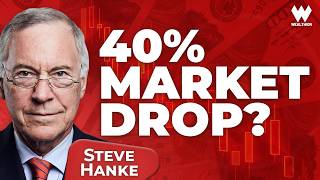
When Does a Market Selloff Become a Financial Crisis? | Steve Hanke
Steve Hanke connects the artificial intelligence investment boom with growing credit risk. The article explains how losses could spread, what historical crisis research establishes and which financial buffers could contain the damage.
Protecting Stock Market Gains: Albert Lu’s Approach to Risk
Albert Lu discusses preserving market gains without chasing a rebound. His conversation with Maggie Lake covers technology concentration, cash, bonds, precious metals, credit and long-term opportunities.
Enjoyed This? Get More Insights
Expert insights and curated opportunities, delivered to your inbox.
Ready to Position for What's Coming?
Whether you're still learning or ready to act, your next step starts here.
- Independent
- Macro-Informed
- Real Asset Focused


The Wealthion Network
By subscribing, you agree to receive Wealthion emails. Unsubscribe anytime.
The Wealthion Network
By subscribing, you agree to receive Wealthion emails. Unsubscribe anytime.
Network Discussion
Join the Wealthion Network to Comment