

What Are Bond Vigilantes? Ed Yardeni
Key Takeaways
Bond vigilantes are the market's discipline on government, and Yardeni named them. He coined the term in 1983 to describe investors who push long-term yields higher when they lose confidence in fiscal or monetary restraint, and he warns "you could have a revolt on the long end" even if the Fed cuts short-term rates.
He says the Fed's credibility is on the line again. Yardeni argues Chair Kevin Warsh talked hawkishly in June but did not follow through in July, and that "a quarter point is going to do more for their credibility than it's going to hurt the economy."
The economy is resilient because the consumer is, especially older Americans. With the baby-boom and silent generations holding roughly $110 trillion in net worth, Yardeni argues higher rates actually help many of them, which is why "if we got a bulletproof economy, it's because the consumer is bulletproof."
He reframes the divide as a "G-shaped economy." Rather than simply rich versus poor, Yardeni sees a generational split: an affordability crisis for the young while seniors thrive and help their children, funded in part by government deficits he calls, bluntly, "intergenerational theft."
He is less alarmed about the deficit than many. Yardeni argues that all that debt is somebody's wealth, that buyers keep showing up at high enough yields, and that the Treasury has tools to manage stress, even as he watches Japan and the long end closely.
Key Moments
00:43 - Why this economy refuses to break Yardeni's list of stress tests the US economy has passed without a recession.
02:17 - The "bulletproof" American consumer The demographic and wealth story he says most economists missed.
04:24 - Bond vigilantes and the risk of a debt revolt The term he coined in 1983 and what could trigger it now.
08:56 - Is inflation about to become a bigger problem? Low unit labor costs versus tariff and energy supply shocks.
10:53 - The Fed's credibility is on the line Why Yardeni thinks the Fed should move in September.
12:43 - Yardeni's "G-shaped economy" His generational reframing of the K-shaped economy.
18:07 - How fragile is the U.S. Treasury market? Why he says the deficit is less frightening than it looks.
20:27 - Japan's currency crisis risk The yen intervention and what it means for US yields.
What Are Bond Vigilantes? Ed Yardeni, Who Coined the Term, on the Fed's Credibility Test
Bond vigilantes are investors who sell government bonds and drive up long-term yields when they lose faith in a government's fiscal discipline or a central bank's willingness to fight inflation. The phrase belongs to Ed Yardeni, president of Yardeni Research, who coined it in 1983, which makes his warning to Wealthion in August 2026 worth weighing: with the economy resilient, inflation sticky, and the Federal Reserve talking tough without acting, he argues the Fed's credibility is on the line and the long end of the bond market could revolt.
What are bond vigilantes?
Yardeni's own definition is that when the authorities cannot keep order, the market does it for them. He describes bond vigilantes as investors who, if "the Fed and the Treasury can't keep law and order in the financial markets," take charge by pushing up bond yields, which tightens conditions and slows the economy. The key risk today, he says, is that even if the Fed cuts short-term rates, "you could have a revolt on the long end," where vigilantes set the price. He is careful to note the other side of his own reputation: over 45 years, people have predicted a debt debacle that has not arrived, and even in the summer of 2023, when the 10-year yield jumped from 4% to 5% in three months, buyers reappeared and the Treasury defused it by shifting issuance toward T-bills.
Why is the Fed's credibility on the line?
Because, in Yardeni's telling, the Fed has talked tough without following through. He says Chair Kevin Warsh made a hawkish splash in June by naming price stability as his top commitment, but that July brought "no follow-up," no rate move, and only the same language, with Warsh calling it not a pause but "watching the data." Yardeni's verdict is blunt: "The Fed's credibility is on the line again." He draws the parallel to 2021, when the Fed misjudged inflation as transitory and lost credibility, and argues Warsh's own mea culpa, that the Fed has missed its target for over five years, raises the stakes. For the backdrop, see Wealthion's coverage of a Fed now led by Kevin Warsh.
Will the Fed cut rates in September?
Here Yardeni is contrarian: he thinks the Fed should raise, not cut. His view is that "a quarter point is going to do more for their credibility than it's going to hurt the economy," a small hike to restore its inflation-fighting standing. He notes New York Fed President John Williams offered rare forward guidance, that steady 0.2% monthly inflation is fine but readings of 0.3% or 0.4% would signal a problem, and points to the Cleveland Fed's nowcasting tool pointing near 0.29% for the coming report. The number to watch, he says, is inflation excluding food and energy; if it stays near 3%, Warsh "has some explaining to do." (Recorded in mid-August 2026; the September decision is Yardeni's forward call, not a stated outcome.)
Is inflation about to get worse?
Yardeni sees crosscurrents. The underlying picture looks disinflationary: unit labor costs, which divide labor compensation by productivity, are running about 1.4% year over year, which is very low. Offsetting that in the short run are supply shocks, tariffs, volatile energy prices, and disruptions to chemicals and fertilizers tied to Middle East shipping. He notes there is no wage-price spiral like 2021 to 2022, so the shocks may prove relatively transitory, but argues the Fed cannot afford to assume that again given second- and third-round effects. For a more alarmed inflation view, see Michael Howell on why AI will fuel inflation.
Why is the US economy so resilient?
Yardeni's answer is the consumer, and specifically older Americans. He argues economists missed the demographic story: the baby-boom and silent generations hold roughly $110 trillion in net worth, the richest retiring cohort in history. Higher interest rates actually help them, since he says boomers account for about 60% of money market funds; they are largely insulated from the labor market because they are retired; and they own stocks and homes, often with mortgages paid off or locked at 3% to 4%. Many are also helping their children. Layer on the AI capital-spending boom, he says, and "if we got a bulletproof economy, it's because the consumer is bulletproof."
What is the "G-shaped economy"?
It is Yardeni's reframing of the popular "K-shaped economy." Instead of simply rich versus poor, he emphasizes a generational split: a real affordability crisis for the young, while seniors on average do very well and help the next generation. He notes government deficits of $1.5 trillion to $2 trillion, and more than $1 trillion in interest payments that flow largely to savers, act as stimulus. But he does not sugarcoat the cost, calling the debt being passed down "intergenerational theft," since every young person inherits the liability even if not the family wealth. He also argues boomers who stay in their homes constrain housing supply and, as heavy spenders, may be inflating costs for the young. The interview explicitly frames this as economic analysis, not a political or moral judgment of either generation.
How fragile is the US Treasury market?
Less fragile than the headlines suggest, in Yardeni's view. He acknowledges yields ticked up after a coordinated currency intervention, but stresses the bond vigilantes are not the only players: the Treasury has tools, as in 2023, and the bond market is now a genuine free market "allowed to have an opinion" after years of being pinned near zero. His reframing of the deficit is that "all that debt is somebody's wealth," roughly $31 trillion of marketable debt held by the public, bought voluntarily by investors who, as global wealth rises, want to own it. For contrasting takes on the long end, see Michael Green on the bond market hiding a banking crisis and George Goncalves on stealth tightening hitting markets.
Is Japan a cautionary tale?
Yardeni thinks so, and it ties back to US yields. He says the US intervened to support the yen, buying yen and selling euros, aimed at protecting the roughly $1 trillion of US debt Japan holds, since a collapsing yen could force Japan to sell Treasuries. His prescription is that Japan needs to raise interest rates substantially to align with the rest of the world; the vigilantes have been "working overtime" there, lifting yields toward 3%, still well below the roughly 4.5% to 5% in the US, with short rates near 1%. Unless Japan hikes meaningfully, he warns, its currency crisis may not be over, and it is something the whole market needs to watch. This is a companion to Yardeni's other Wealthion conversation on why the recession keeps failing to arrive.
What Investors Should Watch
- The long end of the Treasury curve: where Yardeni says a bond-vigilante revolt would show up, even if the Fed cuts short rates.
- The next CPI, excluding food and energy: his key test, with 0.2% monthly benign and 0.3% to 0.4% a problem, per John Williams.
- The Fed's September decision and Warsh's language: whether the Fed acts to restore credibility.
- The yen and Japanese Treasury holdings: the currency-crisis risk he ties to US yields.
- Unit labor costs and productivity: his gauge of underlying, and currently disinflationary, price pressure.
FAQ
What are bond vigilantes? Bond vigilantes are investors who push long-term bond yields higher when they lose confidence in a government's fiscal discipline or a central bank's inflation resolve. Ed Yardeni coined the term in 1983 and warns that even if the Fed cuts short-term rates, the long end of the market could still revolt.
Why is the Fed's credibility on the line? Yardeni argues Chair Kevin Warsh talked hawkishly about price stability in June but did not follow through in July, echoing the Fed's 2021 "transitory" misjudgment. He says a small September rate increase would do more for the Fed's credibility than it would hurt the economy.
Will the Fed cut rates in September? Yardeni's contrarian view is that the Fed should raise rates by a quarter point rather than cut, to rebuild credibility. He points to inflation excluding food and energy near 3% as the key number, and to New York Fed guidance that monthly readings above 0.2% would signal a problem.
Why is the US economy so resilient? Because the consumer is, especially older Americans. Yardeni notes the baby-boom and silent generations hold roughly $110 trillion in net worth, benefit from higher rates, are insulated from the labor market, and are helping their children, all reinforced by the AI capital-spending boom.
What is the G-shaped economy? It is Yardeni's generational reframing of the K-shaped economy: an affordability crisis for the young alongside prosperous seniors who are helping them, financed partly by deficits he calls intergenerational theft because the debt is passed to the next generation.
Which expert and interview does this article reference? This article draws on Wealthion's interview with Ed Yardeni, president of Yardeni Research: "The Fed's Credibility Is on the Line, Ed Yardeni Warns."
Full Transcript
Speakers: Maggie Lake (Wealthion host) and Ed Yardeni (president, Yardeni Research). ASR errors corrected and filler removed; meaning preserved. A mid-interview Wealthion membership message has been noted rather than reproduced.
Ed Yardeni (cold open): If we got a bulletproof economy, it's because the consumer is bulletproof. The Fed's credibility is on the line again. I think they should move in September. You could have a revolt on the long end.
Maggie Lake: Hello and welcome to Wealthion. I'm Maggie Lake. Joining me today to discuss the outlook for the economy and inflation is Ed Yardeni, president of Yardeni Research. Ed, welcome back.
Ed Yardeni: Thank you, Maggie.
Maggie Lake: We're coming off a week of strong earnings and a strong stock market. What's your assessment of the US economy overall?
Ed Yardeni: It has been remarkably resilient. Think of the stress tests it has passed: the pandemic and lockdowns, supply-chain disruptions, inflation, the Fed raising rates, the financial stress of 2023, tariffs, a war, and tariffs again. And yet here we are with no recession, real GDP at a record high, consumer spending at a record high, capital spending at a record high, and the stock market at a record high. I conclude the economy will remain resilient through the end of the decade. I don't expect a recession, and I think earnings will keep surprising to the upside and drive the market higher.
Maggie Lake: You've asked whether we're in a new roaring '20s. Some say lean into it, another tech revolution; others say everything's at a record, it's a bubble, the bottom's about to fall out. Where do you come down, and what's driving the strength?
Ed Yardeni: What a lot of economists missed is the strength of the consumer, and especially the demographic story. I have some inside information: I'm a baby boomer, still working, but a lot of my friends are retiring. The baby-boom generation, together with the silent generation, is sitting on something like $110 trillion in net worth, the richest retiring senior cohort we've ever had. And think about what they want. They actually like higher interest rates, because boomers account for about 60% of money market funds, so higher rates are a benefit. Do they care much about the labor market? They're retired, spending their retirement assets. If their kids aren't doing well, they help them out, which again explains the resilience. There's an affordability issue, but it's for younger people, not older ones on average, and the older people are helping the young. The stock market keeps rising, which benefits boomers because they own a lot of stock and a lot of homes, often with mortgages paid off or locked at 3% to 4%, so they're not worried about mortgage rates. If we've got a bulletproof economy, it's because the consumer is bulletproof, and on top of that we have the AI capital-spending boom.
Maggie Lake: It may be expanding from "don't fight the Fed" to "don't fight the government," since government has become an Achilles' heel when markets tank.
Ed Yardeni: The risk is that government debt has grown, especially after the pandemic, and there could be an adverse reaction from the bond market. I coined the phrase "bond vigilantes" back in 1983. We should be careful about continuing to bail ourselves out, because at some point the bond vigilantes say "no más": if the Fed and the Treasury can't keep law and order in the financial markets, the vigilantes take charge by pushing up bond yields, which weakens the economy. Even if the Fed tries to lower short-term rates, you could have a revolt on the long end. That said, over more than 45 years people have worried about a debt debacle, and it hasn't happened. Ray Dalio has been vocal about a debt crisis, and yet it hasn't arrived. We came close in the summer of 2023, when the 10-year went from 4% to 5% in three months, but at 5% buyers appeared everywhere, partly because the Treasury said it would raise money in the T-bill market rather than the bond market. So the vigilantes aren't the only players; the Treasury has cards up its sleeve. Speaking of nasty situations, the US just intervened to support the yen, and it did so by buying yen and selling euros, without telling our friends in Europe. That wasn't a gesture of goodwill; it was because Japan holds about a trillion dollars of US government debt, and if the yen kept weakening, we worried Japan would have to sell that dollar debt to support its currency. So there are some funky things going on that I'm watching carefully.
Maggie Lake: [Membership message noted.] You zeroed in on the concern: strong growth and a bulletproof economy can come with higher inflation, creating a dilemma. The Fed may want to do nothing, but bond investors could force its hand.
Ed Yardeni: There's a measure called unit labor costs, hourly compensation divided by productivity, and on a year-over-year basis it's down to 1.4%, very low, which is a disinflationary force. Offsetting that, at least short term, are significant supply shocks: tariffs, volatile energy prices, and, with the Middle East and the Strait of Hormuz, disruptions to chemicals needed for technology and fertilizers. Supply shocks raise the question of whether the Fed should even respond, since shocks come and go, but there can be second- and third-round effects. Fortunately, we don't have a wage-price spiral like 2021 to 2022, when labor shortages sent everything the wrong way. This time it may prove relatively transitory, but I don't think the Fed can take that chance the way it did in 2021, when it lost credibility after "transitory" turned out to be persistent. One reason yields have risen is that the new Fed chair, Kevin Warsh, surprised everyone in June by being very hawkish, saying his number one commitment was price stability. But in July there was no follow-up, no rate increase, just the same language, and when asked how long the pause would last, he said it wasn't a pause, they were watching the data, a semantic distinction. So the Fed's credibility is on the line again, and I think they should move in September. A quarter point would do more for their credibility than it would hurt the economy.
Maggie Lake: Some say productivity is fairy dust and this is all drunken-sailor government spending that ends in a hangover.
Ed Yardeni: The economy is doing very well for many reasons. Consumers keep spending. People call it a K-shaped economy, arguing the rich get richer and the poor poorer unsustainably. I call it a G-shaped economy, emphasizing the generational factor: yes, there's an affordability crisis for the young, but seniors on average are doing extremely well and helping the young. Capital spending is strong, and government deficits of $1.5 trillion to $2 trillion, including over $1 trillion just on interest, are stimulative, because that interest is income, especially for retirees. Put it together and the economy is doing very well, though some of it is borrowing from the future.
Maggie Lake: Does the G-shaped economy risk becoming generational economic warfare, with older cohorts reluctant to fund things like public education while younger people are shut out of housing? We're not making this political or judging anyone.
Ed Yardeni: I'll apologize on behalf of my cohort. How are we getting away with raising all this debt? The honest answer is that it's intergenerational theft; we're leaving it to the kids. Not all kids will inherit wealth from retiring parents, but every kid inherits the government debt. So far we've gotten away with it without terrible consequences, quite the opposite, since the deficits are stimulative now. The affordability crisis is also generational: boomers aren't selling their houses or downsizing, so housing supply is constrained and prices rise. And because boomers are well off, they may be inflating costs for the young, at restaurants, in health care, where Medicare spending ratchets up costs. I don't have a solution, but the G-shaped framing explains a lot. I'd add that the solution may be happening on its own: many seniors are concluding there's no point leaving money to the kids when they die if the kids need help now.
Maggie Lake: Back to Treasuries and the coordinated intervention. Did the US just advertise how fragile the Treasury market is, and will the market test that?
Ed Yardeni: Yields ticked up, but the vigilantes aren't the only players; the Treasury has tricks, and so does the Fed. The bond market is finally a free market again, allowed to have an opinion after years of being pinned near zero, though within limits, and we saw buyers step in at 5%. As long as the auctions go reasonably well and the resulting yields aren't a threat to the economy, the key point is that all that debt is somebody's wealth. Someone voluntarily bought those bonds. There's about $31 trillion of US marketable debt held by the public, Americans, foreigners, central banks, sovereign funds, and so far the world has grown wealthier and wants to own it.
Maggie Lake: Is Japan a cautionary tale, possibly forced to repatriate?
Ed Yardeni: Cautionary tales can become horror stories, but we're supposed to learn from them. What Japan really needs is to raise interest rates substantially to align with the rest of the world. The bond vigilantes have been working overtime there; yields have risen, but they're still around 3%, well below the roughly 4.5% to 5% in the US, and short rates are near 1%, which looks like a lot coming from zero or negative. Unless Japan actually raises rates significantly, this currency crisis may not be over, and it's something we all need to watch.
Maggie Lake: We have inflation data this week. Are you worried it runs hot, and about the bond-market reaction?
Ed Yardeni: New York Fed President John Williams recently offered some forward guidance, believe it or not, given that Warsh doesn't want to. Williams basically said that if monthly inflation stays around 0.2%, we don't have a problem, but readings of 0.3% or 0.4% would mean we do, and might require raising rates. I like the Cleveland Fed's nowcasting tool, and it's pointing to something like 0.29% for the coming report, so I don't think it will be a shocker either way. The real issue is what happens when you strip out food and energy and look at the sticky components. Warsh told the president he'd do what he could to lower rates, but now that he has the job he doesn't sound ready to; if anything he's hinted at raising them, without rushing. He's also done a mea culpa, saying the Fed hasn't hit its 2% target in over five years, so the question is when and how he gets us there. If the next CPI, excluding food and energy, stays closer to 3%, he'll have some explaining to do.
Maggie Lake: A lot of potential, and a lot to be hopeful for, while keeping the worry list on the radar. Great stuff, Ed. Always a pleasure.
Ed Yardeni: My pleasure. Thank you.
What Serious Investors Are Watching
Dive into expert interviews, market analysis, and long-form content built to help serious investors think long-term.

Why the US Dollar Could Weaken, and What It Means for Investors
Higher US rates can support the dollar, while borrowing needs and reserve diversification create longer-term pressures. The effects of a weaker dollar differ across assets and currencies.
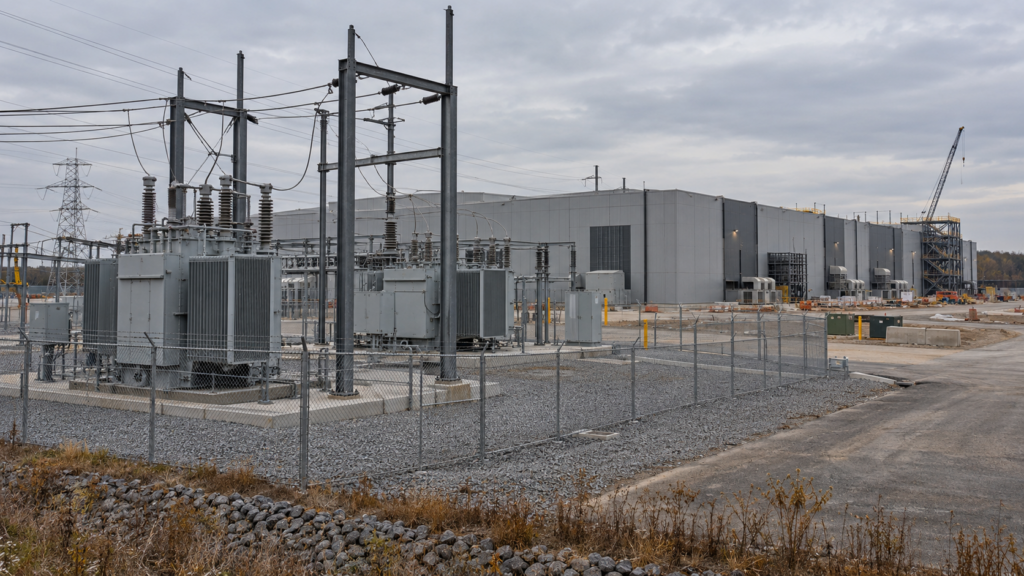
Why More Efficient AI Could Still Need More Power
Efficiency reduces the energy needed for a given AI task, but wider use and more demanding applications can offset those savings. The balance matters for electricity and infrastructure planning.
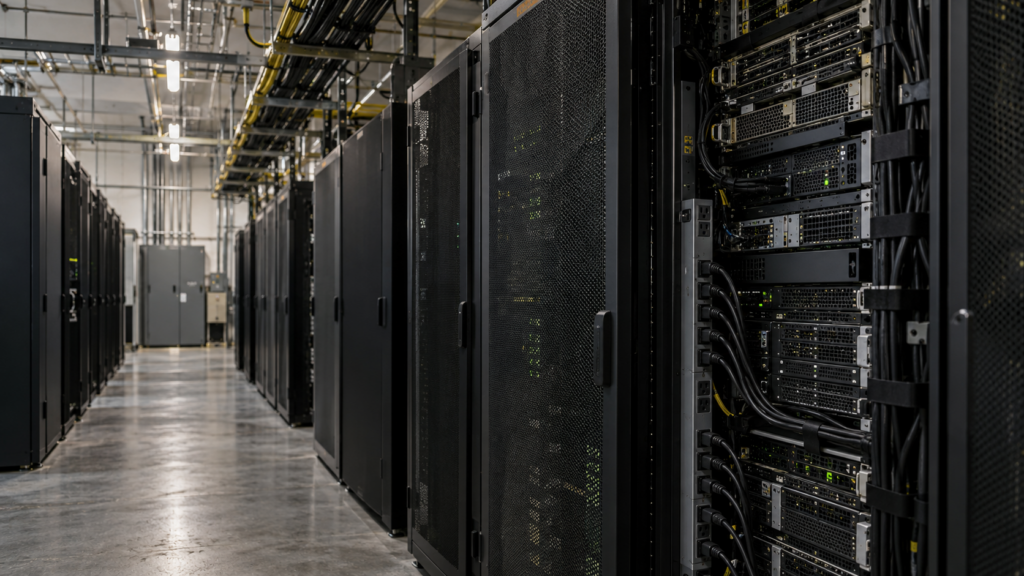
Where the AI Data Center Building Boom Could Hit Its Limits
Large technology budgets do not immediately become operating data centers. Power connections, equipment, local approvals and financing shape how quickly the AI buildout can proceed.
Enjoyed This? Get More Insights
Expert insights and curated opportunities, delivered to your inbox.
Ready to Position for What's Coming?
Whether you're still learning or ready to act, your next step starts here.
- Independent
- Macro-Informed
- Real Asset Focused


The Wealthion Network
By subscribing, you agree to receive Wealthion emails. Unsubscribe anytime.
Network Discussion
Sign in to share your thoughts and connect with other readers.
Join the Wealthion Network to Comment