

What the Recession Callers Keep Missing
Forecasting a recession and having one arrive are different skills. Conflating them has produced a long run of confident calls that did not pay off. Someone who has managed money through three separate recessions over 35 years sees this differently than someone counting indicators from the outside.
This is the deliberate other half of the recession conversation. An earlier Wealthion piece covered the labour-market warning signs. This one covers why the warning has not yet resolved into a downturn.
What is the actual track record of recession calls?
Poor, and worth stating plainly rather than politely.
Chris Galipeau, Head Market Strategist at Franklin Templeton, made the point directly in September 2026: "And if I think back when I think about all the all the folks that talk about eminent recession, right, we've had I've I've run money through three recessions in 35 years."
The subtext is that recession calls have been a background hum for most of the past several years, and three actual recessions occurred against a much larger number of confident predictions. That is not an argument that a recession cannot happen. It argues that the base rate for any individual call being right is lower than the confidence it is usually delivered with.
Is the current economy actually strong, or just not yet weak?
Galipeau's assessment leans toward genuinely strong rather than merely undamaged so far: "I think the economy is strong enough, the market's strong enough, but that is a risk and that's something we need to be mindful of."
That is a calibrated statement, not a dismissal. He is naming risk while declining to treat it as a base case. The distinction between strong with risks and fragile and about to break matters enormously for how a portfolio gets positioned. The two get collapsed together constantly in recession commentary.
What causes recessions historically, according to this view?
Not spontaneous weakness, but policy overreach.
Galipeau connected the historical pattern to central bank behaviour in July 2026: "But what history tells us is when they get active on the on the hiking side and they have a tendency to overdo it, put us into recession."
That reframes the risk. On this account, the danger is not that the economy quietly rolls over on its own. The risk is that tightening gets applied with enough force, or held long enough, that it does the damage a recession call warns about. Policy becomes the cause, not the symptom.
How does this square with the labour-market warning signs?
It does not contradict them so much as offer a different weighting.
Claudia Sahm has argued that weak hiring is the more informative signal, even alongside stable unemployment. A frozen labour market produces calm headline numbers while eroding underneath. David Rosenberg has pointed to persistent above-target inflation and unusually large deficits as reasons for caution.
Both of those are real and neither guarantees an outcome. Galipeau's framing does not dispute the data. It disputes the confidence behind converting any single reading into a forecast, given how often that conversion has been wrong.
Why do experienced money managers seem less alarmed than commentators?
Possibly because running actual capital through past cycles teaches a different lesson than reading about them.
Someone who held positions through three recessions has direct experience of what a genuine downturn looks like from the inside. That includes how it typically differs from the warning period that preceded it. That experience does not make the next call more accurate. It does tend to make the person more skeptical of pattern-matching from indicators alone, because the pattern has produced false positives before.
Is there a way to hold both views at once?
Yes, and it is probably the most useful takeaway here.
You can treat the labour market data as a genuine risk factor worth monitoring. You can also decline to treat it as a forecast with a defined outcome. Galipeau's own language does exactly that: strong enough, with a risk to be mindful of, rather than a countdown to a specific date.
That posture is less satisfying than a confident call in either direction. It is also the one with the better track record over the past several years.
What should you watch?
The same underlying data as the labour-market piece: hiring and quits rates, continuing claims, payroll revisions. Hold it with a different level of confidence about what any single reading means. Specifically watch whether the Federal Reserve's September rate hike gets followed by further tightening into softening data. That is the mechanism Galipeau identifies as the actual historical trigger.
FAQ
Why do recession forecasts keep failing to materialize? Galipeau's argument is a base-rate problem. Many more confident recession calls have been made than actual recessions have occurred. Any individual forecast has historically had low odds of being right.
Is the US economy currently strong or weak? Galipeau describes it as strong enough, with risks worth monitoring, which is different from either an all-clear or an imminent-recession framing.
What actually causes recessions, on this view? Central bank tightening that overshoots, historically, rather than the economy spontaneously weakening on its own.
Does this contradict the labour-market recession warning signs? Not directly. It offers a different weighting of the same evidence. It emphasises the poor historical accuracy of recession calls over the significance of any single indicator.
How many recessions has a typical portfolio manager lived through? Galipeau cites three in his own 35-year career, against a far larger number of predicted recessions that did not occur in that window.
What would confirm the more cautious reading instead? If the Federal Reserve continues tightening into weakening labour and consumer data. Galipeau identifies that as the historical mechanism: policy overreach produces the very recession the forecasts warned about.
Should I position my portfolio for a recession or for continued growth? Neither with high confidence, on this view. The more defensible position is a mix that tolerates being wrong in either direction rather than a bet that requires being right about the outcome.
Which experts and interviews does this article reference? Wealthion interviews from July and September 2026: Chris Galipeau, 23 July and 24 September 2026 (no companion article page yet); Claudia Sahm on the labour market; David Rosenberg on the US economy.
If you want a professional read on how recession risk fits your own portfolio, you can request a free portfolio review from an advisor who understands real assets at https://www.wealthion.com/advisors/.
This article is educational and is not investment, tax, or legal advice. It does not recommend any security. Advisory services are provided by Greylock Peak Investments, LLC, a subsidiary of Wealthion. Wealthion is compensated for advisor introductions; see the Solicitor's Disclosure Document, ADV Part 2A and Form CRS. That arrangement does not influence editorial coverage.
What Serious Investors Are Watching
Dive into expert interviews, market analysis, and long-form content built to help serious investors think long-term.
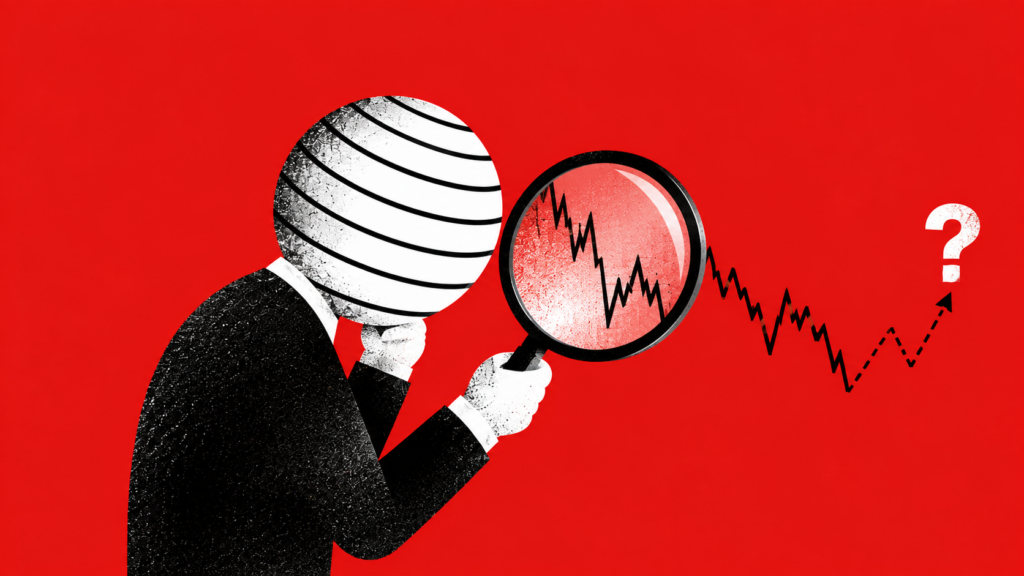
What the Recession Callers Keep Missing
Forecasting a recession and having one arrive are different skills. Conflating them has produced a...
Why Bonds May Be Mispriced for the Inflation Investors Expect
Bond yields have risen for a reason most coverage already understands. Heavy capital demand from...

Gold and Bitcoin Are Answers to Different Questions
Gold and bitcoin get compared as though they compete for the same job: protecting savings...
Enjoyed This? Get More Insights
Expert insights and curated opportunities, delivered to your inbox.
Ready to Position for What's Coming?
Whether you're still learning or ready to act, your next step starts here.
- Independent
- Macro-Informed
- Real Asset Focused


The Wealthion Network
By subscribing, you agree to receive Wealthion emails. Unsubscribe anytime.
Network Discussion
Sign in to share your thoughts and connect with other readers.
Join the Wealthion Network to Comment