

Macro Bites – Why the S&P 500 No Longer Reflects the ‘Average’ Stock
Yemen’s internationally recognized government launched a full-scale military campaign to recapture all Houthi-held territory after weeks of escalating conflict between the Iran-backed group and Saudi Arabia.
The Head of Yemen’s Presidential Leadership Council Rashad Al-Alimi announced that all branches of Yemen’s army were told to begin operations and fight “until the liberation of the country from the grip of
the terrorist Houthi militia.”
Commodity analyst Kpler cites shipping data in reporting crude oil exports from the Middle East rose above prewar levels in 4 of the last 7 days of September despite continued attacks. Exports rose to between 19.5M and 22.5M bpd, with the 7-day average for exports at 18.5M bpd on 10/1/16 (compared with an average 18M bpd between March ‘25 and Feb. ’26).
G7 countries agreed on Friday to release 100M barrels of diesel and crude oil from emergency reserves and pledged to refrain from energy export restrictions. The move followed pressure from President Trump for the EU to draw down emergency diesel inventories or face a U.S. diesel export ban which could sharply reduce supplies to the EU and potentially inflict high economic costs on the bloc.
U.S. International Development Finance Corporation Investments Head Conor Coleman announced that the joint U.S.-Ukrainian reconstruction investment fund (established as part of the bilateral minerals pact signed April ’25) has sealed its first critical minerals deal alongside four other new projects. The fund’s projects, which focus on five strategic sectors from minerals and defense to energy and infrastructure, now total around $70M. The long-anticipated first minerals deal will inject roughly $30M into a "joint investment platform" with BGV Group to develop rare earths, uranium, beryllium and zirconium deposits.
Malaysia is removing its 10% import duty on minted gold bars, cutting the tariff rate down to 0% effective 11/1/26. The complete removal of the duty represents a swift policy pivot by the Royal Malaysian Customs Department, which had in May introduced a 10% import levy on LBMA standard gold bars. However, because local gold prices did not rise to match the tax, the tariff immediately disrupted the regional bullion trade, compressed profit margins, and caused shipments to backlog at customs lines.
AI watch: The 3-month realized correlation of the S&P 500 and its own equal weight version has fallen to 0.598, the lowest in its 15-year series and more than 4 standard deviations below the 0.93 average. In other words, the index is no longer representative of the average stock within the index. Goldman Sachs has noted the index now behaves like “a self-contained asset class, driven less by traditional macro transmission and more by (a) narrow set of forces dominating index returns [AI vs non-AI].”
Separately, the FT reports global pension funds are cutting U.S. equity allocations over AI concentration risk, with fund managers citing "stretched" valuations and turning to hedge funds and emerging-market assets as buffers against a sudden shift in sentiment.
What Serious Investors Are Watching
Dive into expert interviews, market analysis, and long-form content built to help serious investors think long-term.
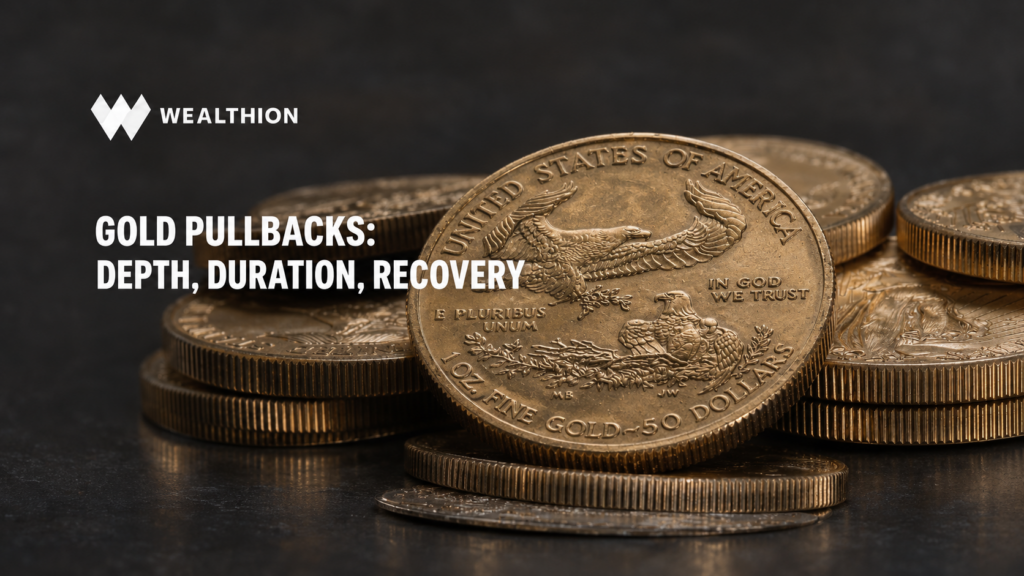
Gold After a Big Drop: How Five Past Pullbacks Compare
Gold has fallen this hard before. How deep those falls went, how long they lasted...
US Carbon Markets Explained: Why Prices Differ in California, Washington and RGGI
There is no single US carbon price. California, Washington and the Northeast power market each have their own buyers, supply limits and rules. For investors, those differences help explain why prices can move in different directions.
Will the Fed Raise Rates in December? What Steve Hanke, Kevin Muir and Keith McCullough Say
The Fed’s latest signals point toward further tightening. December’s decision turns on whether to act now, how large a hike might be and what the next reports show.
Enjoyed This? Get More Insights
Expert insights and curated opportunities, delivered to your inbox.
Ready to Position for What's Coming?
Whether you're still learning or ready to act, your next step starts here.
- Independent
- Macro-Informed
- Real Asset Focused


The Wealthion Network
By subscribing, you agree to receive Wealthion emails. Unsubscribe anytime.
The Wealthion Network
By subscribing, you agree to receive Wealthion emails. Unsubscribe anytime.
Network Discussion
Join the Wealthion Network to Comment