

What Drives the Silver Price
What Drives the Silver Price
Silver is priced as two different things at the same time. It is a monetary metal that responds to real interest rates, currency debasement and financial stress, and it is an industrial input consumed by solar, electronics and electrical systems. Those two demands rarely peak together, which is why silver moves further than gold in both directions.
Understanding which of the two is driving a given move is most of the analysis.
Why is silver more volatile than gold?
Because the market is smaller and the demand is split.
Gold is held overwhelmingly as a store of value. Central banks hold it, investors hold it, and very little is consumed. Silver is different. A large share of annual supply is used industrially and does not come back, while a smaller float has to absorb investment demand when it arrives.
When monetary demand and industrial demand arrive together, silver can move violently. When they diverge, silver can sit still while gold runs, which frustrates people who expect the two to track.
What is the gold to silver ratio actually measuring?
The relative performance of one against the other, and it is the number specialists watch rather than either price alone.
Michael Oliver described the calculation in September 2026: "We measure the relative performance of silver versus gold by dividing an ounce of silver into an ounce of gold and expressing the answer as a percent."
The ratio matters because it strips out the shared driver. If both metals rise because the dollar weakens, the ratio barely moves. If the ratio moves, something specific to silver is happening, usually industrial demand or a shift in speculative appetite.
Does silver follow gold or lead it?
Historically it lags, then overshoots.
In the early stage of a precious metals move, gold usually goes first, because the buying is monetary and institutional. Silver joins later, and when it does it tends to travel further in percentage terms. That pattern is why silver is often described as a higher-beta version of gold rather than a separate asset.
The important caveat is that the pattern is a tendency and not a rule. Silver has spent long periods failing to catch up at all.
What role do interest rates and bonds play?
A large one, and it is the monetary side of the equation.
Don Durrett put his own reasoning plainly in June 2026: "The only reason I own gold and silver is because of the weakness in the US bond market."
That is a specific claim about mechanism rather than a forecast. Precious metals pay no income, so their opportunity cost rises when real yields rise. But if the bond market itself is seen as the risk, rather than the safe alternative, that logic inverts. The metal stops competing with bonds and starts substituting for them.
Durrett also argued the relevant comparison is not the dollar price at all: "And I've been saying the only chart that matters for gold and silver investors is the ratio of gold to S&P 500."
How does industrial demand change the picture?
It puts a floor under consumption and a ceiling on availability.
Silver is used in photovoltaics, electronics, brazing alloys and electrical contacts. That demand is driven by manufacturing cycles and by the build-out of electrical infrastructure, neither of which cares about monetary policy.
Industrial demand is also largely price-insensitive at the margin, because silver is usually a small share of the cost of the finished item. A solar manufacturer does not stop buying silver because silver rose. That makes industrial offtake a relatively steady drain on supply.
What do mining equities add to the analysis?
They are a separate decision, not a leveraged proxy.
Oliver noted the relationship between miners and the metal in September 2026: "So, if by the way, when that spread advances, meaning when the miners do outperform gold, and frankly, over the last couple years, they've been outperforming gold."
Rick Rule made a valuation argument in June 2026: "And the gold stocks themselves, I would suggest by traditional valuation metrics, are at a discount to their values relative to the price of gold and their future cash flows."
Both are views and both are contested. What is not contested is that a miner carries operational, jurisdictional and cost risk that the metal does not. The companion article on why mining equities lag the metal covers that in detail.
What should investors watch?
The gold to silver ratio, which isolates silver-specific moves. Real yields, which set the monetary opportunity cost. Industrial offtake data from solar and electronics, which is the demand that does not return. And inventory levels at the major exchanges, which show whether availability is genuinely tightening.
FAQ
What drives the silver price? Two separate demands. Monetary demand, driven by real interest rates, currency concerns and financial stress, and industrial demand from solar, electronics and electrical manufacturing.
Why is silver more volatile than gold? A smaller market and a split demand base. Industrial consumption removes supply permanently while investment demand arrives in bursts that a small float must absorb.
What is the gold to silver ratio? The relative performance of the two metals. Oliver describes it as dividing an ounce of silver into an ounce of gold and expressing the result as a percent.
Does silver always follow gold? It usually lags early in a move and then travels further. That is a tendency, not a rule, and silver has spent long periods failing to catch up.
How do interest rates affect silver? Higher real yields raise the opportunity cost of holding a metal that pays no income. That relationship weakens if the bond market itself is the perceived risk.
Is industrial demand good or bad for silver? It provides a steady drain on supply that is relatively insensitive to price, because silver is usually a small part of the cost of the finished product.
Are silver miners a better way to own silver? They are a different investment. Miners add operational, cost and jurisdictional risk, and they can outperform or underperform the metal for long stretches.
Which experts and interviews does this article reference? Wealthion interviews from June to September 2026: Michael Oliver on precious metals; Rick Rule on gold; Don Durrett on bonds and gold, 23 June 2026.
If you want a professional read on how precious metals fit your own portfolio, you can request a free portfolio review from an advisor who understands real assets at https://www.wealthion.com/advisors/.
This article is educational and is not investment, tax, or legal advice. It does not recommend any security. Advisory services are provided by Greylock Peak Investments, LLC, a subsidiary of Wealthion. Wealthion is compensated for advisor introductions; see the Solicitor's Disclosure Document, ADV Part 2A and Form CRS. That arrangement does not influence editorial coverage.
What Serious Investors Are Watching
Dive into expert interviews, market analysis, and long-form content built to help serious investors think long-term.
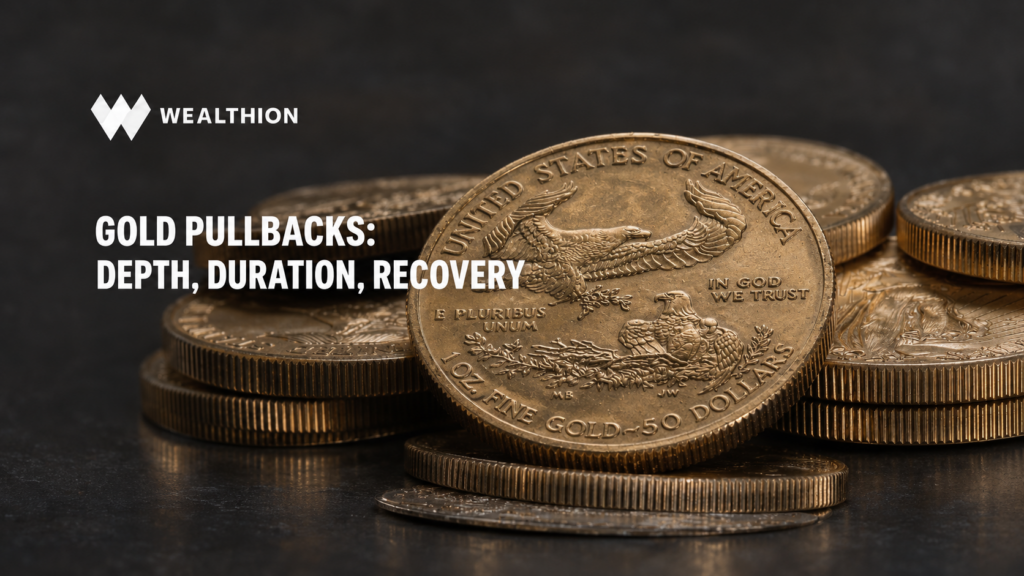
Gold After a Big Drop: How Five Past Pullbacks Compare
Gold has fallen this hard before. How deep those falls went, how long they lasted...

US Carbon Markets Explained: Why Prices Differ in California, Washington and RGGI
There is no single US carbon price. California, Washington and the Northeast power market each have their own buyers, supply limits and rules. For investors, those differences help explain why prices can move in different directions.

Will the Fed Raise Rates in December? What Steve Hanke, Kevin Muir and Keith McCullough Say
The Fed’s latest signals point toward further tightening. December’s decision turns on whether to act now, how large a hike might be and what the next reports show.
Enjoyed This? Get More Insights
Expert insights and curated opportunities, delivered to your inbox.
Ready to Position for What's Coming?
Whether you're still learning or ready to act, your next step starts here.
- Independent
- Macro-Informed
- Real Asset Focused

The Wealthion Network
By subscribing, you agree to receive Wealthion emails. Unsubscribe anytime.
The Wealthion Network
By subscribing, you agree to receive Wealthion emails. Unsubscribe anytime.
Network Discussion
Join the Wealthion Network to Comment