

Where the AI Data Center Building Boom Could Hit Its Limits
Amazon plans to spend about $220 billion on capital projects in 2026. Yet chief executive Andy Jassy said in July that capacity would still fall short of demand this year. He expected the same imbalance in 2027. [1]
That gap between spending and usable capacity runs through the artificial intelligence (AI) data center boom. Electricity connections, equipment deliveries and local approval determine how quickly a construction budget becomes an operating facility.
In the US, power and electrical equipment are major constraints. Memory costs, skilled labor, water and local opposition add pressures that vary by project and location.
The scale of the spending
Amazon, Alphabet, Microsoft and Meta have outlined roughly $725 billion to $745 billion in combined capital spending for 2026. Wealthion's sum combines their July outlooks with Meta's October 21 update. [1][2][3][4]
These are company-wide plans and include spending beyond AI data centers.
| Company | April–June 2026 spending | Calendar 2026 outlook | Source dates |
|---|---|---|---|
| Amazon | $54.2 billion in gross property and equipment purchases | About $220 billion, up from $200 billion | July 30 2026 |
| Alphabet | $44.9 billion | $195–205 billion, up from $180–190 billion | July 22 2026 |
| Microsoft | $41.0 billion, including finance leases | About $175 billion | July 29 2026 |
| Meta | $31.1 billion, including finance-lease principal payments | $135–145 billion | Spending: July 29 2026 Outlook: October 21 2026 |
Sources: company releases and earnings calls. Quarterly spending covers April–June; outlook dates are shown separately where updated. [1][2][3][4][5][6]
Microsoft's reported outlook fell from $190 billion after an accounting change affected the classification of some future leases. Its underlying investment expectations were unchanged. [3][7] Differences in accounting make the combined total an indication of scale rather than a standardized measure.
Brett Rentmeester of WindRock Wealth Management, a Wealthion advisory partner, discussed data centers' physical requirements in a July interview. He identified chips, energy and real estate, connecting technology budgets to construction and energy supply chains. [8]
The US electricity footprint is growing alongside the buildout. Lawrence Berkeley National Laboratory (LBNL) estimated that data centers used 192 terawatt-hours (TWh) in 2024, or 4.7% of US electricity. Its reference case projects 649 TWh, or 11.8%, in 2030, covering data centers overall. [9]
LBNL's compounded uncertainty range for 2030 runs from 521 to 843 TWh. It reflects different equipment shipment, lifetime and usage assumptions. It excludes major departures caused by technological breakthroughs or changes in market conditions, supply chains, regulation or grid availability. [9]
Getting power to new data centers
The gap is visible before some projects reach construction. In February, energy intelligence firm Currence estimated that 30% to 50% of large data center capacity scheduled for 2026 in its pipeline could be delayed. About 16 gigawatts (GW) was scheduled, but only about 5 GW was under construction at that point. [10]
Expanding the electricity supply takes time. LBNL counted 2,061 GW of proposed generation and storage in US interconnection queues at the end of 2025. These queues track projects seeking permission to connect to the transmission grid. [11]
For projects completed in 2025 in regions with available data, the median time from an interconnection request to operation exceeded five years. That measures generation projects, not a standard waiting time for every data center. [11]
The pressure also shows up in plans for future reliability. PJM Interconnection operates the grid serving 13 states and Washington, DC, including the Northern Virginia data center hub. Its July 14 capacity auction for 2028/2029 cleared at the price cap of $325 per megawatt-day. [12]
Total capacity secured fell 6,831 megawatts (MW) below a reliability requirement that includes reserves. PJM said this meant slimmer reserves and greater risk, rather than necessarily an inability to serve demand reliably. [12]
Regulators are trying to speed connections while deciding who bears the costs. On June 18, the Federal Energy Regulatory Commission (FERC) ordered six regional grid operators to justify or revise rules for connecting large electricity users. [13]
The equipment needed to deliver power has its own delays. Reuters reported that generator step-up transformer lead times exceeded 160 weeks in early 2026. High-voltage circuit breaker lead times reached 125 weeks in late 2025, compared with 77 weeks in 2023. [14]
Manufacturers are expanding, but output cannot rise immediately. GE Vernova reported 116 GW of gas-power equipment backlog and slot reservations on July 22, up from 100 GW. It planned to lift annual turbine output to 24 GW in 2028. [15]
Adding generation therefore depends on the same equipment and infrastructure that are already under pressure. A new grid-connected power project needs transformers, switchgear and transmission infrastructure before its electricity can reach customers. [11][14]
Memory shortages raise computing costs
Equipment costs also affect how much capacity a budget can buy. Jassy attributed Amazon's increase from about $200 billion to $220 billion in expected 2026 capital spending to higher memory costs. Microsoft also said its quarterly spending included higher component pricing. [1][3]
Micron chief executive Sanjay Mehrotra said: "We do not have line of sight to when supply and demand will return to balance." The company expected tight supply conditions in calendar 2027 and 2028. [16]
Micron reported fiscal fourth-quarter revenue of $54.23 billion on September 30, up from $11.32 billion a year earlier. [17]
A spending increase can therefore reflect higher prices as well as additional capacity. The amount committed does not, by itself, show how much more computing a company will be able to deliver.
Local resources and household bills shape approval
LBNL's 2024 report estimated direct US data center water consumption at about 17 billion gallons in 2023. It estimated another 211 billion gallons consumed indirectly through electricity generation. Direct consumption could roughly double or quadruple by 2028, the report projected. [18]
Associated Builders and Contractors estimated that construction would need about 349,000 net new workers in 2026 and 456,000 in 2027. Those figures cover construction overall; its chief economist specifically cited data center demand for electricians. [19]
Local opposition can delay projects even when funding is available. Data Center Watch counted at least 75 projects worth approximately $130 billion blocked or delayed in the first quarter of 2026. It also counted more than 300 state data center bills filed in the year's first six weeks. [20]
Electricity bills bring the debate into households. Monitoring Analytics, PJM's independent market monitor, attributed $6.3 billion of $16.4 billion in capacity charges to data center load for 2028/2029. Across four auctions, it attributed $29.4 billion, or about 46%, to that load. [21]
Capacity charges pay for resources to be available when needed and are one component of retail electricity bills. The US Energy Information Administration (EIA) forecast on October 6 that residential electricity prices would average 18.2 cents per kilowatt-hour in 2026. That compares with 17.3 cents in 2025 and a forecast of 18.7 cents in 2027. [22]
These national averages reflect several drivers and do not isolate data centers' contribution. The political question is how the costs of meeting additional demand are divided between large users and other customers.
New supply and efficiency could ease the pressure
Developers and suppliers are responding, although announced capacity takes time to reach operation. In February, EIA reported plans for a record 86 GW of utility-scale capacity additions in 2026, if completed. The total included 43.4 GW of solar and 24 GW of battery storage. [23]
Those additions are not continuous new power dedicated to data centers. Solar output varies, batteries store previously generated electricity, and the location and timing of new capacity matter. [24]
Some expansion is already operating. Microsoft chief executive Satya Nadella said the company added about one GW of data center capacity in its June quarter. [3]
Other developers are building generation on site, on the customer's side of the utility meter. Cleanview tracked 59 such projects with roughly 90 GW of generation capacity across the pipeline, mostly gas-fired. Only about 2 GW was operating as of mid-2026. [25]
On-site power can reduce dependence on a grid connection, but equipment and permits still affect delivery. Cleanview documented permitting delays among the projects it tracked. [25]
Efficiency offers another possible response. In a May Wealthion interview, Michael Green of Simplify Asset Management argued that breakthroughs could make some electricity-demand forecasts look overstated. [26]
Funding and replacement costs
The buildout also needs financing. Alphabet raised $49.6 billion in net equity proceeds in June for general corporate purposes, including AI infrastructure and global computing capacity. [27]
The costs continue after construction. Microsoft said roughly two-thirds of its quarterly capital spending went to short-lived assets, primarily central processing units (CPUs) and graphics processing units (GPUs). These components create recurring replacement needs alongside longer-lived buildings and power infrastructure. [3]
The evidence points to limits on the pace, cost and location of the buildout. Large budgets can fund construction, but power connections, equipment deliveries and local approval determine how quickly that spending becomes usable capacity. Financing and recurring equipment costs also affect the ability to sustain the expansion.
Frequently asked questions
What does the combined spending figure measure?
The roughly $725 billion to $745 billion total adds four companies' calendar-2026 capital spending outlooks, combining July reports with Meta's October 21 update. These company-wide plans include spending beyond AI data centers, and the accounting definitions differ. [1][2][3][4]
What is an interconnection queue?
In LBNL's study, it is the list of proposed generation and storage projects seeking connection to the transmission grid. Its 2,061 GW total is not a measure of data center connection requests. [11]
Can data centers raise household electricity bills?
They can contribute to capacity and grid costs. PJM's market monitor attributed about 38% of the 2028/2029 capacity auction charges to data center load. The effect on an individual bill depends on other costs and how charges are allocated. [21][22]
Could on-site power solve the connection problem?
It can reduce dependence on a grid connection, but generating equipment, fuel infrastructure and permits can still limit delivery. Cleanview's mid-2026 figures show a large announced pipeline with only a small share operating. [25]
Wealthion is a dba of Greylock Peak Investments, a registered investment adviser. This newsletter is general information only. It is not investment advice or an offer or solicitation, and it is not tailored to your circumstances. Guests’ views are their own and may not reflect those of Wealthion. Wealthion has not verified guest statements, including any performance figures. Investing involves risk, including loss of principal, and past performance does not guarantee future results. Wealthion refers readers to other registered investment advisers and shares in the fees they receive from referred clients, which creates a conflict of interest. Please see our Form ADV Part 2A and consult your own financial advisor before investing.
Sources
[1] Amazon Q2 2026 earnings call transcript
The Motley Fool. Call July 30, 2026; transcript published August 7, 2026. Jassy's $220 billion cash capital spending outlook, prior $200 billion estimate, memory costs and capacity warning. Transcript of company remarks.
[2] Alphabet Q2 2026 earnings call transcript
Alphabet. July 22, 2026. PDF pages 11 and 13: $44.9 billion quarterly spending and $195–205 billion outlook, up from $180–190 billion.
[3] Fiscal year 2026 fourth quarter earnings conference call
Microsoft. July 29, 2026. $41 billion quarterly spending; approximately $175 billion calendar-2026 outlook after lease reclassification; capacity, component pricing and short-lived assets.
[4] Meta reports third quarter 2026 results
Meta. October 21, 2026. CFO outlook: 2026 capital expenditures of $135–145 billion, including finance-lease principal payments, narrowed from $130–145 billion.
[5] Meta reports second quarter 2026 results
Meta. July 29, 2026. $31.08 billion quarterly capital expenditures and $130–145 billion full-year outlook, including finance-lease principal payments.
[6] Amazon announces second quarter results
Amazon. July 30, 2026. Consolidated statements of cash flows: $54.208 billion gross purchases of property and equipment for April–June 2026.
[7] Fiscal year 2026 third quarter earnings conference call
Microsoft. April 29, 2026. Amy Hood's earlier calendar-2026 capital spending outlook of roughly $190 billion.
[8] AI's 920 Billion Dollar Gamble Bubble or the Biggest Opportunity Yet
Wealthion interview with Brett Rentmeester. July 20, 2026. Original interview discussing the physical requirements of data centers.
[9] United States Data Center Energy Usage Report 2025 Update
Lawrence Berkeley National Laboratory. June 18, 2026. Printed pages 6–9: model scope, 192 TWh and 4.7% for 2024; 649 TWh and 11.8% reference case for 2030; 521–843 TWh compounded uncertainty range.
[10] Data center outlook half of 2026 pipeline may not materialize
Currence. February 24, 2026. February pipeline snapshot: 30–50% potential delays; about 16 GW scheduled for 2026, with about 5 GW then under construction.
[11] Backlog of power plants seeking transmission grid connection eased somewhat in 2025 amidst high withdrawals
Lawrence Berkeley National Laboratory. July 1, 2026. 2,061 GW of proposed generation and storage at end-2025. Median completion time exceeds five years in regions with available data.
[12] PJM capacity auction procures 138,318 MW of generation resources
PJM Interconnection. July 14, 2026. 2028/2029 auction: $325 per MW-day and 6,831 MW below the reliability requirement; explains the reserve-margin implications.
[13] FERC launches aggressive targeted action to speed large load integration
Federal Energy Regulatory Commission. June 18, 2026. Show-cause orders to six regional grid operators on rules governing connections for large electricity users.
[14] US power companies scramble to secure equipment as surging data center demand strains supplies
Reuters via Kitco. July 9, 2026. Generator step-up transformer lead times above 160 weeks; high-voltage circuit breakers at 125 weeks versus 77 weeks in 2023.
[15] GE Vernova releases second quarter 2026 financial results
GE Vernova. July 22, 2026. 116 GW of gas-power equipment backlog and slot reservations, up from 100 GW; 24 GW annual turbine output planned for 2028.
[16] Fiscal Q4 2026 earnings call prepared remarks
Micron. September 30, 2026. Page 5: Sanjay Mehrotra's supply-demand balance statement.
[17] Micron fiscal fourth quarter and full year 2026 results
Micron filing with the Securities and Exchange Commission. September 30, 2026. Fiscal fourth-quarter revenue of $54.23 billion versus $11.32 billion a year earlier.
[18] 2024 United States Data Center Energy Usage Report
Lawrence Berkeley National Laboratory. December 19, 2024. Printed pages 55–57: direct water use, Figure 5.9 projections and nearly 800 billion liters of indirect water consumption in 2023.
[19] Construction industry must attract 349,000 workers in 2026 despite macroeconomic headwinds
Associated Builders and Contractors in Construction Executive. Release January 15, 2026; article January 16, 2026. Association-authored article: construction-wide estimates of 349,000 and 456,000 net new workers, plus comments on electrician demand.
[20] Q1 2026 Data Center Watch report
Data Center Watch. Research period January–March 2026. Public summary: at least 75 blocked or delayed projects, approximately $130 billion and more than 300 state bills in the year's first six weeks.
[21] Market Monitor Report
Monitoring Analytics. July 28, 2026. Slide 4: $6.3 billion of $16.4 billion attributed to data-center load; $29.4 billion, or 46.2%, across four auctions.
[22] Short Term Energy Outlook Electricity
US Energy Information Administration. October 6, 2026. Residential prices: 17.3 cents per kilowatt-hour in 2025; forecasts of 18.2 cents in 2026 and 18.7 cents in 2027.
[23] New US electric generating capacity expected to reach a record high in 2026
US Energy Information Administration. February 20, 2026. Planned additions of 86 GW, including 43.4 GW of solar and 24 GW of battery storage; record conditional on completion.
[24] US battery capacity increased 66 percent in 2024
US Energy Information Administration. March 12, 2025. Explains that batteries store previously generated electricity rather than create electricity from fuel or a natural resource.
[25] Bypassing the Grid How Data Center Developers Are Building Their Own Power Plants
Cleanview. Mid-2026 public summary. 59 projects; roughly 90 GW of generation capacity across the pipeline; approximately 2 GW operating as of mid-2026; permitting constraints.
[26] Broken Market Signals Are Warning of the End Game
Wealthion interview with Michael Green. May 27, 2026. Original interview including Green's opinion on efficiency and electricity-demand forecasts.
[27] Alphabet announces second quarter 2026 financial results
Alphabet. July 22, 2026. Equity capital raise section: $49.6 billion net proceeds in June for general corporate purposes, including AI infrastructure and global compute.
What Serious Investors Are Watching
Dive into expert interviews, market analysis, and long-form content built to help serious investors think long-term.
Where the AI Data Center Building Boom Could Hit Its Limits
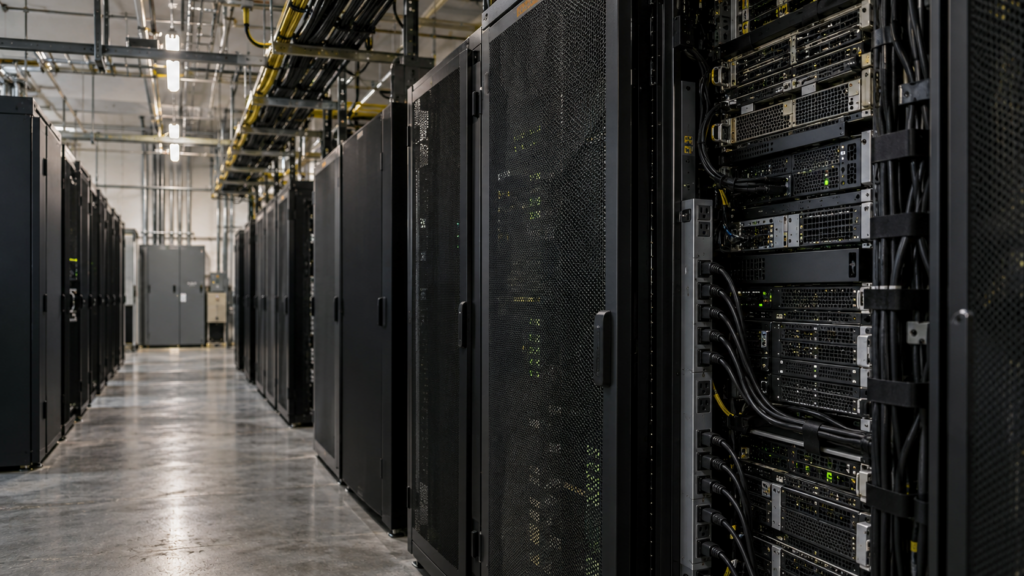
Large technology budgets do not immediately become operating data centers. Power connections, equipment, local approvals and financing shape how quickly the AI buildout can proceed.

Bitcoin Has Gone Mainstream. Why Is It Still So Volatile?
Mainstream access has changed how Bitcoin is bought and held. Leverage, trading liquidity and shifting demand still help explain its large price swings.
Copper Supply and Demand: What the AI Buildout Means for the Market
AI adds to copper demand, but the market also depends on mine supply, grid investment and tariff policy. The effects differ for miners, smelters, recyclers and equipment makers.
Enjoyed This? Get More Insights
Expert insights and curated opportunities, delivered to your inbox.
Ready to Position for What's Coming?
Whether you're still learning or ready to act, your next step starts here.
- Independent
- Macro-Informed
- Real Asset Focused


The Wealthion Network
By subscribing, you agree to receive Wealthion emails. Unsubscribe anytime.
Network Discussion
Sign in to share your thoughts and connect with other readers.
Join the Wealthion Network to Comment