

Why More Efficient AI Could Still Need More Power
October 22, 2026
Electricity use at data centers focused on artificial intelligence (AI) rose 50% in 2025, the International Energy Agency (IEA) estimates [1].
Efficiency lowers the energy needed for a given task. Total electricity demand also depends on how much AI is used and what it does.
Google provides one example of those efficiency gains. Energy per median Gemini Apps text prompt fell 33-fold between May 2024 and May 2025, the company reported [2]. That equates to about 97% less energy per prompt.
AI is doing more work
Google's usage figures show how quickly the work is growing. Its products processed more than 3.2 quadrillion AI tokens a month in May 2026 [3]. That was about seven times the roughly 480 trillion reported a year earlier.
Tokens are small units of text or other data that models process. They measure parts of that work, not the electricity it consumes.
Video generation, reasoning and agent tasks can be far more energy-intensive than simple text generation. The IEA puts the difference at hundreds or thousands of times more energy per query [1]. An agent may carry out a sequence of tasks rather than produce a single response.
These measures describe different parts of AI's expansion. Their periods and coverage differ, so they cannot be combined to calculate its net energy use.
| Measure | Change | Period | Coverage and source |
|---|---|---|---|
| Electricity per median text prompt | About 97% lower | May 2024–May 2025 | Gemini Apps; calculated from Google's 33-fold reduction [2] |
| Monthly AI tokens processed | About 7 times as many | May 2025–May 2026 | Across Google's products; Google [3] |
| Total electricity consumption | Up 37% | 2025 vs. 2024 | Google company-wide; Google [4] |
| Data-center electricity use | Up 17% | 2025 vs. 2024 | All data centers worldwide; IEA [1] |
| AI-focused data-center electricity use | Up 50% | 2025 vs. 2024 | AI-focused data centers worldwide; IEA [1] |
How cheaper AI can increase demand
Falling prices can make AI viable for work that previously cost too much. Stanford's 2025 AI Index tracked the cost of matching GPT-3.5's performance on a selected knowledge benchmark. The price fell from $20 per million tokens to $0.07 between November 2022 and October 2024 [5].
More recent research suggests that decline continued. In September 2026, Epoch AI estimated that the cost of achieving fixed benchmark performance had fallen about 47% per quarter since 2023 [6].
These comparisons concern benchmarks and the cheapest available models, rather than the savings every user realizes on actual work. Lower financial costs also do not translate directly into equivalent electricity savings.
Lower prices can attract new users and applications. If the resulting increase in use is large enough, total energy consumption can rise despite gains in efficiency.
Economist William Stanley Jevons described this mechanism in The Coal Question in 1865 [7]. More efficient engines, he argued, could make coal-powered work cheaper and encourage enough new uses to increase consumption.
Economists call the broader demand response the rebound effect. When additional use more than offsets the energy saved per unit, the result is backfire, or the Jevons paradox.
DeepSeek's emergence brought the debate into financial markets in January 2025. NPR's Planet Money reported that it challenged assumptions about the expensive infrastructure AI would need [8]. Microsoft CEO Satya Nadella argued that more efficient, accessible AI would encourage much greater use.
Rising electricity use alone, however, does not prove that efficiency caused the growth. Expanding adoption and new capabilities can also increase demand.
How much growth can efficiency absorb
Computing has expanded rapidly before without a comparable increase in electricity use. A 2020 study in Science estimated that global data-center energy use rose only 6% between 2010 and 2018 [9]. Over the same period, the study's measure of computing workload grew 550%.
Eric Masanet and his colleagues attributed the gap to efficiency improvements and the shift toward cloud computing. That experience shows how much growth efficiency can absorb, although AI's move into more energy-intensive applications makes today's outcome uncertain.
Michael Green of Simplify Asset Management highlighted that uncertainty in his May 27, 2026 Wealthion interview [10]. He described energy commodities as "machine food," while cautioning that data-center efficiency breakthroughs could leave many power-demand forecasts overstated.
Electricity use is forecast to keep growing
The IEA's April 2026 central outlook still points to substantially more electricity use [1]. It projects worldwide data-center consumption rising from about 485 terawatt-hours (TWh) in 2025 to roughly 950 TWh in 2030. That would represent about 3% of global electricity demand, with use at AI-focused data centers tripling over the same period.
US projections illustrate a range of possible outcomes. A December 2024 report by Lawrence Berkeley National Laboratory put US data-center use at 176 TWh in 2023 [11].
That was 4.4% of national electricity consumption. The report projected 325–580 TWh by 2028, equivalent to 6.7%–12% of the total [11].
The planning challenge for power suppliers
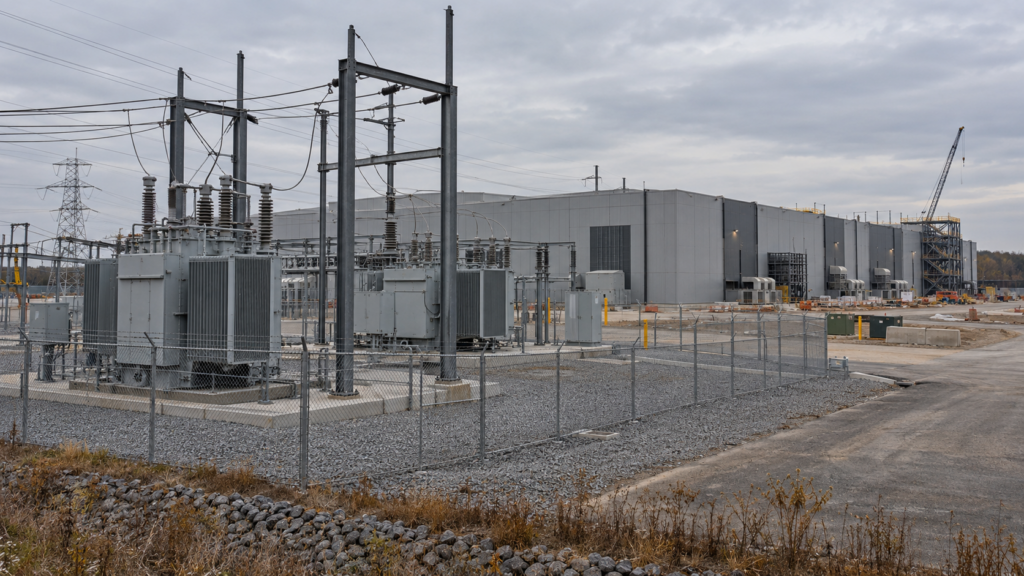
Where that demand arrives matters as much as its scale. Large projects clustered in one area can strain a local grid, even when data centers account for a modest share of global demand [12].
The timing is difficult to match, too. AI software can improve faster than new power infrastructure can be built [12]. Forecasts can change while power plants and networks are still being planned and financed.
The IEA points to shortages of gas turbines, transformers and advanced chips, alongside slow grid connections [1].
Onsite generation is one response to grid-connection delays. The IEA estimates 15–27 gigawatts (GW) of onsite gas-fired capacity could supply data centers by 2030, mostly in the US [1]. Equipment shortages, permitting and financing can still hold those projects back [1].
In April 2026, the IEA also reported conditional agreements covering 45 GW of small modular reactor capacity [13]. Those agreements represent proposed supply, not operating plants.
The demand pipeline carries uncertainty as well. Exelon's July 2026 presentation listed about 11 GW of high-probability data-center load and 25 GW in its future pipeline [14]. Proposed data centers are not certain future electricity customers.
For electricity suppliers, the business opportunity depends on which projects proceed and buy power. Construction and financing costs, contract terms and who pays for added infrastructure then determine whether serving them is profitable.
AI can become more efficient and still need more electricity. The IEA's central outlook anticipates further growth as usage expands and tasks become more demanding [1]. For infrastructure businesses, the challenge is matching the capacity they build to the demand that materializes.
Frequently asked questions
What is the Jevons paradox in simple terms?
Efficiency can make a service cheaper and encourage enough additional use to more than offset the energy saved per unit.
Is AI using less energy per question?
For some tasks, yes. Google's energy per median Gemini Apps text prompt fell 33-fold between May 2024 and May 2025 [2]. That equates to about 97% less energy, although requirements vary substantially by task.
How much electricity do data centers use?
All data centers, including those focused on AI, used an estimated 485 TWh worldwide in 2025, according to the IEA [1].
Could AI power demand fall short of forecasts?
Yes. Faster efficiency gains, slower adoption or construction delays could keep consumption below forecasts [1].
Wealthion is a dba of Greylock Peak Investments, a registered investment adviser. This newsletter is general information only. It is not investment advice or an offer or solicitation, and it is not tailored to your circumstances. Guests’ views are their own and may not reflect those of Wealthion. Wealthion has not verified guest statements, including any performance figures. Investing involves risk, including loss of principal, and past performance does not guarantee future results. Wealthion refers readers to other registered investment advisers and shares in the fees they receive from referred clients, which creates a conflict of interest. Please see our Form ADV Part 2A and consult your own financial advisor before investing.
Sources
[1] IEA: Key Questions on Energy and AI, Executive summary. April 2026. Reported 2025 electricity demand, task mix, central projections, onsite gas-fired generating capacity, and equipment, permitting and financing constraints.
[2] Google Cloud: How much energy does Google's AI use? We did the math. August 21, 2025. Company-reported 33-fold reduction in energy per median Gemini Apps text prompt between May 2024 and May 2025. The approximately 97% reduction is calculated as 100 × (1 − 1/33).
[3] Google I/O 2026: Welcome to the agentic Gemini era. May 19, 2026. Roughly 480 trillion monthly tokens across Google products in May 2025, rising to more than 3.2 quadrillion in May 2026. Company-reported figures.
[4] Google 2026 Environmental Report. June 2026, reporting 2025. Total company electricity consumption rose 37% in 2025. PDF p. 19.
[5] Stanford Institute for Human-Centered Artificial Intelligence (HAI): AI Index 2025, State of AI in 10 Charts. April 7, 2025. Price of matching GPT-3.5 performance on the cited knowledge benchmark; November 2022–October 2024.
[6] Epoch AI: The plunging price of thought. September 22, 2026. Fixed-benchmark cost declines since 2023; qualifications on benchmarks and realized user savings.
[7] William Stanley Jevons: The Coal Question, Chapter VII. First published 1865; linked text is the 1866 second edition.
[8] NPR Planet Money: Why the AI world is suddenly obsessed with a 160-year-old economics paradox. February 4, 2025; republished by KPBS. Secondary reporting of Satya Nadella's January 2025 statement.
[9] Masanet et al.: Recalibrating global data center energy-use estimates. Science, February 2020, pp. 984–986. Open copy of the original paper; DOI 10.1126/science.aba3758.
[10] Wealthion: Broken Market Signals Are Warning of the End Game, Michael Green. May 27, 2026. Original interview with Michael Green.
[11] US Department of Energy: New report evaluating electricity demand from data centers. December 20, 2024. Official release of Lawrence Berkeley National Laboratory's report; 2023 US use and 2028 scenario range.
[12] IEA: Energy and AI, Energy demand from AI. April 2025. Local concentration of data-center electricity demand and energy-infrastructure lead times.
[13] IEA: Data centre electricity use surged in 2025. April 16, 2026. Conditional agreements with small modular reactor projects; planned pipeline, not operating generation.
[14] Exelon: Second-quarter 2026 earnings presentation. July 30, 2026, slide 15: approximately 11 GW of high-probability data-center load and 25 GW of future pipeline. Prospective projects, not actual electricity consumption.
What Serious Investors Are Watching
Dive into expert interviews, market analysis, and long-form content built to help serious investors think long-term.

Why the US Dollar Could Weaken, and What It Means for Investors
Higher US rates can support the dollar, while borrowing needs and reserve diversification create longer-term pressures. The effects of a weaker dollar differ across assets and currencies.
Why More Efficient AI Could Still Need More Power
Efficiency reduces the energy needed for a given AI task, but wider use and more demanding applications can offset those savings. The balance matters for electricity and infrastructure planning.
Where the AI Data Center Building Boom Could Hit Its Limits
Large technology budgets do not immediately become operating data centers. Power connections, equipment, local approvals and financing shape how quickly the AI buildout can proceed.
Enjoyed This? Get More Insights
Expert insights and curated opportunities, delivered to your inbox.
Ready to Position for What's Coming?
Whether you're still learning or ready to act, your next step starts here.
- Independent
- Macro-Informed
- Real Asset Focused


The Wealthion Network
By subscribing, you agree to receive Wealthion emails. Unsubscribe anytime.
Network Discussion
Sign in to share your thoughts and connect with other readers.
Join the Wealthion Network to Comment