

How to Invest in Copper: Funds, Miners and Key Risks
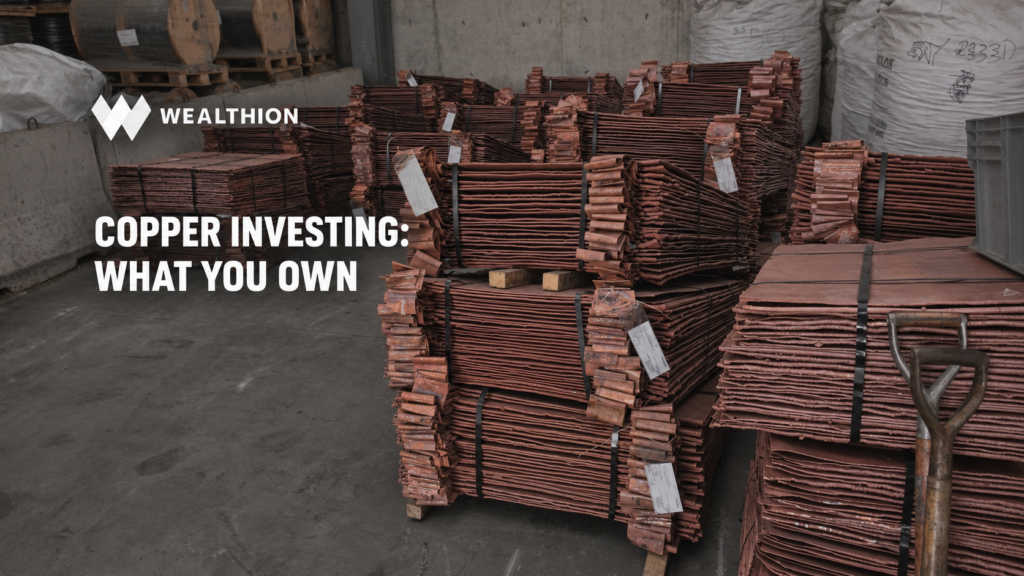
Copper is one metal, but investing in it can mean owning very different things: contracts tied to its price, shares in a working mine or a stake in a project that may take years to produce. Each comes with its own risks.
Copper carries electricity through homes, vehicles, power grids and data centers. Its investment appeal starts with a practical question: can new mines supply what those uses will need? For investors, there is a second question: how much of that demand will reach the investment they actually own?
The case rests on two things. The first is demand, from all that wiring, machinery and grid building. The second is supply, which is slow to respond. The International Energy Agency (IEA) puts the lead time for a new copper project at “around 17 years from discovery to production.” Based on existing and announced projects, it projects a gap of around 25% between mine supply and primary copper requirements in 2035 under its Stated Policies Scenario. Those requirements allow for recycled supply and refining losses.1 Closer to home, US net import reliance was an estimated 57% of apparent copper consumption in 2025, a supply-based measure of domestic use.2
Rudi Fronk, chairman and chief executive officer (CEO) of Seabridge Gold, summed up the investor's interest in a May Wealthion interview: “There's no doubt that the world is going to need a lot more copper going forward. The question is where's that copper going to come from?”3
Believing in copper is one decision. Deciding how to own it is another. Funds and company shares offer exposure without storing the metal. In this article, we walk through the main ways to do that, what each one actually gives you and the risks that come with it.
The numbers at a glance
What are the ways to invest in copper?
Follow copper from rock to wire, and there are five places an investor can step in.
A useful way to picture the choices is to follow copper's journey. It starts as rock in the ground that someone has to find. A company then has to build a mine around it, which can take years. Once the mine is working, the company digs out the ore, processes it and sells the copper. The finished metal is then priced and traded on exchanges. Each way of investing plugs into a different point on that journey.
| Way to invest | What you own | Example |
|---|---|---|
| Copper futures fund | Copper-linked contracts rather than mining shares | United States Copper Index Fund (CPER) |
| Producer shares | Part of a company that runs working mines and sells copper today | Freeport-McMoRan (FCX) |
| Developer and explorer shares | Part of a company that is searching for copper or building a mine that isn't producing yet | Ivanhoe Electric (IE) |
| Copper miners fund | A basket of many mining companies in one exchange-traded fund (ETF) | Global X Copper Miners ETF (COPX) |
| Royalty or streaming company | Shares in a business that holds rights to mine revenue or metal purchases | Royal Gold (RGLD) |
Sources: United States Commodity Funds, Freeport-McMoRan, Ivanhoe Electric, Global X, Royal Gold.5,8,9,10,11 All dollar figures in this article are in US dollars.
Each one responds to copper differently, and each carries its own risks. We take them in turn, starting with the one closest to the metal itself.
How does each way of investing work, and what can go wrong?
Futures funds and mining shares carry different risks. Shares depend on how companies run their businesses, while a fund holding many miners can spread that risk.
1. Copper futures funds: exposure through contracts
A copper futures contract is an agreement to buy or sell copper at a set price on a future date.12 A fund such as CPER holds these contracts on COMEX, a US futures exchange, and replaces them with later contracts under its index rules rather than storing metal.5,13 Its total annual operating expenses are 0.88%.5
This gives exposure to copper prices, but the fund's return is not the metal's price change. It also depends on the contracts held, the effect of moving from one contract to the next, fees and interest earned on cash.5,14 Its returns are not tied to a mining company's operating results. Contracts can still introduce other risks: CPER also held a swap with Macquarie Bank at September 30, 2026, leaving it exposed to the bank's ability to meet that contract.13
2. Producer shares: a working business
A producer is a mining company that already runs mines and sells copper. The price it receives per pound minus its cost per pound gives a margin, not total company profit, which also depends on volumes and other expenses. Price moves can still make a large difference: Freeport-McMoRan said each $0.10 change in the average copper price in the fourth quarter of 2026 would move its 2026 operating cash flow by about $75 million.8
Costs matter as much as price, and they are measured in different ways. Reported copper costs can be reduced by credits from other metals, such as gold or molybdenum. For 2025, Southern Copper reported an operating cash cost of $0.58 per pound produced after by-product credits. Teck reported a net cash unit cost of $2.03 per payable pound sold, deducting by-product cash margins rather than gross revenue.15,16 Hudbay Minerals' figure was minus $0.22 per pound produced because by-product credits exceeded its copper cash costs.17 These are not all-in business costs, and the different definitions prevent a like-for-like ranking.
One risk is that a working mine stops working. Freeport's Grasberg mine in Indonesia has been restarting in phases after a mud-rush incident.8 First Quantum's Cobre Panamá mine was processing stockpiled ore in the third quarter of 2026 while a full restart remained subject to government processes.18 Production is also concentrated: Chile, the Democratic Republic of the Congo and Peru mined an estimated 11.2 million of the world's 23 million metric tons in 2025.2
3. Developer and explorer shares: a mine still to come
An explorer is still searching for copper worth mining. A developer has found a deposit and is working to get a mine built: studying it, winning permits, raising money and constructing it. These projects do not produce copper yet. Their value rests on a mine that may produce years from now.
The cost and timing of that future mine can change. Ivanhoe Electric raised the initial capital estimate for its Santa Cruz project in Arizona from $1,236 million in 2025 to $1,426 million in 2026, and moved the target for first copper from 2028 to 2029.19,9 Big producers building new mines face the same problem. Teck's Quebrada Blanca Phase 2 had an early $4.7 billion estimate; final spending fell within a range of $8.6 billion to $8.8 billion. The early estimate was in 2016 dollars and excluded working capital and construction interest, so this is not a like-for-like cost comparison.6,7 Steve Enders, a mining veteran and former mining engineering department head at Colorado School of Mines, told Wealthion in August: “I never believe the numbers.” He described estimates for building and running mines as “always low.”20,21
Permits and money are the other hurdles. Northern Dynasty Minerals' Pebble project in Alaska was denied a key federal permit in November 2020 and remains in litigation.22 When Hudbay and Mitsubishi approved construction of the Copper World project in Arizona in October 2026, the funding plan included a $600 million equity investment from Mitsubishi, a $230 million deposit from Wheaton Precious Metals for a gold and silver stream, and about $650 million of expected project debt.23 A developer that clears these hurdles can become a producer. One that doesn't may never earn from copper at all.
4. Copper miners funds: many companies at once
A copper miners ETF holds dozens of mining companies, which spreads the risk of any single mine. On November 25, 2026, COPX had 41 holdings and a 0.65% annual expense ratio; its largest holdings included BHP, Teck Resources and Anglo American.10 The Sprott Junior Copper Miners ETF (COPJ) focuses on smaller companies, including producers, developers and explorers. It had 67 holdings on November 23, 2026, and a 0.75% annual expense ratio.24
These funds don't simply follow copper. In 2025, as the futures fund rose, the miners funds rose faster:
| Year | Copper futures (CPER) | Copper miners (COPX) | Junior miners (COPJ) |
|---|---|---|---|
| 2022 | -15.31% | -0.69% | Not launched |
| 2023 | 4.46% | 9.30% | No full-year history |
| 2024 | 4.69% | 3.27% | 12.42% |
| 2025 | 38.09% | 93.00% | 137.40% |
Calendar-year returns on net asset value. COPX and COPJ figures are total returns with distributions reinvested; CPER's are the sponsor's published net asset value returns. Sources: Global X, Sprott Funds Trust, United States Commodity Funds.4,25,5
Other years looked different. In 2024, CPER returned 4.69% and COPX 3.27%. In 2022, CPER fell 15.31% while COPX barely moved. Costs, by-products, disruptions and valuations all sit between the metal and the shares.
5. Royalty and streaming companies: a cut of the output
Royalty and streaming companies generally don't operate mines themselves. They can provide upfront funding, as Wheaton Precious Metals’ Copper World agreement illustrates, or buy existing rights. A royalty gives a share of mine revenue or another agreed measure; a stream gives the right to buy metal at a pre-agreed price, often below market.11,23 Royal Gold, for example, buys 18.75% of the payable copper from the Mount Milligan mine, operated by Centerra Gold, at a base price of 15% of the spot price.26 Their income still depends on the mine producing and the operator meeting its obligations.
For some of these companies, copper is a small part of the business. Copper made up about 9.7% of Royal Gold's third-quarter 2026 revenue, on Wealthion's calculation.11 The amount of copper exposure therefore depends on the company's portfolio of contracts.
What does this mean for investors?
Being right about copper and being right about a copper investment are two different things.
Each route answers to a different mix of risks. A futures fund follows copper futures, not the spot price exactly. A producer adds its own costs and operating risks. A developer adds the final bill, the permits, the financing and the date of first copper. A miners fund spreads those company risks. A royalty company relies on mine operators and the terms of its contracts. Wealthion co-founder and CEO Steven Feldman, discussing what happens to copper if enthusiasm for artificial intelligence cools, put the long-term case simply: “Yes, there'd be less focus on it, but it's not going away.”27
A higher copper price can help a mine without making every copper investment a winner. Costs, construction delays and contract terms determine how much of the metal's performance reaches investors. The investment's structure is part of the copper story.
Frequently asked questions
Do copper miners funds hold physical copper? They generally hold mining shares, but some also have indirect exposure to the metal. The Sprott Copper Miners ETF (COPP), mostly mining shares, held 5.93% of its assets in the Sprott Physical Copper Trust on November 24, 2026.28
Is a royalty company the same as owning copper? Not necessarily. Franco-Nevada's interest in Cobre Panamá, a copper mine, is a gold and silver stream, so it doesn't deliver copper29.
Sources & Disclosure
1 IEA, Global Critical Minerals Outlook 2026, July 16, 2026, p. 135. 2 USGS, Mineral Commodity Summaries 2026: Copper; 11.2 million metric tons calculated from country estimates. 3 Wealthion interview with Rudi Fronk, May 12, 2026. 4 Global X, COPX Summary Prospectus, March 1, 2026; annual returns. 5 USCF, United States Copper Index Fund Prospectus, April 24, 2026, supplemented June 30; expenses and annual returns. 6 Teck, 2016 Fourth Quarter News Release, February 15, 2017; QB2. 7 Teck, 2024 Annual Information Form, February 19, 2025, p. 29. 8 Freeport-McMoRan, September 30, 2026 Form 10-Q, filed November 6. 9 Ivanhoe Electric, Santa Cruz 2026 Preliminary Feasibility Study release, September 23, 2026, Table 3. 10 Global X, COPX fund data, November 25, 2026. 11 Royal Gold, September 30, 2026 Form 10-Q, filed November 5; revenue by metal and business description. 12 Commodity Futures Trading Commission, Futures Market Basics, accessed November 26, 2026. 13 USCF, September 30, 2026 Form 10-Q, filed November 6; CPER holdings. 14 Commodity Futures Trading Commission, Customer Advisory: Commodity ETPs, accessed November 26, 2026. 15 Southern Copper, 2025 Form 10-K, February 27, 2026; operating cash costs. 16 Teck, 2025 Fourth Quarter Results, February 18, 2026, pp. 28 and 39. 17 Hudbay, Fourth Quarter and Full Year 2025 Results, February 20, 2026; cash costs. 18 First Quantum, Third Quarter 2026 Results, October 28, 2026. 19 Ivanhoe Electric, Santa Cruz 2025 Preliminary Feasibility Study release, June 23, 2025. 20 Wealthion interview with Steve Enders, August 12, 2026. 21 Society for Mining, Metallurgy & Exploration, 2025 Fellow Awards; M. Stephen Enders. 22 Northern Dynasty, Q3 2026 MD&A, November 16, 2026; Pebble permitting. 23 Hudbay and Mitsubishi Approve Copper World Project Construction, October 21, 2026. 24 Sprott, COPJ fund data, November 23, 2026. 25 Sprott Funds Trust, 2025 Annual Shareholder Reports, filed March 9, 2026; COPJ. 26 Centerra Gold, Q3 2026 Financial Statements, Note 17(a), p. 17. 27 Wealthion interview with Steven Feldman, October 30, 2026. 28 Sprott, COPP holdings, November 24, 2026. 29 Franco-Nevada, Q3 2026 Results, November 11, 2026, p. 3.
Wealthion is a dba of Greylock Peak Investments, a registered investment adviser. This article is general information only. It is not investment advice or an offer or solicitation, and it is not tailored to your circumstances. Guests’ views are their own and may not reflect those of Wealthion. Wealthion has not verified guest statements, including any performance figures. Investing involves risk, including loss of principal, and past performance does not guarantee future results. Wealthion refers readers to other registered investment advisers and shares in the fees they receive from referred clients, which creates a conflict of interest. Please see our Form ADV Part 2A and consult your own financial advisor before investing.
What Serious Investors Are Watching
Dive into expert interviews, market analysis, and long-form content built to help serious investors think long-term.
How to Invest in Copper: Funds, Miners and Key Risks
Copper is one metal, but investing in it can mean owning very different things: contracts tied to its price, shares in a working mine or a stake in a project that may take years to produce. Each comes with its own risks.

What US Debt Means for Investors: What Lyn Alden, Ed Yardeni and Steven Feldman Say
US debt can affect borrowing costs and purchasing power even when payments arrive on time. Six Wealthion guests discuss the risks, alongside current primary data.

Global Index Funds and AI: The Semiconductor Exposure Investors Can Miss
Your international fund may own more of the AI boom than you'd expect. Some of its largest holdings make the chips, memory and machines the boom runs on.
Enjoyed This? Get More Insights
Expert insights and curated opportunities, delivered to your inbox.
Ready to Position for What's Coming?
Whether you're still learning or ready to act, your next step starts here.
- Independent
- Macro-Informed
- Real Asset Focused

The Wealthion Network
By subscribing, you agree to receive Wealthion emails. Unsubscribe anytime.
The Wealthion Network
By subscribing, you agree to receive Wealthion emails. Unsubscribe anytime.
Network Discussion
Join the Wealthion Network to Comment