

Is a Major Oil Shock Coming? Four Experts Weigh In
Key Moments
00:00 - Iran, $120 oil and a 10% stock-market drop The scenario the panel gathers to assess.
00:12 - Art Berman: why oil markets eventually force demand destruction Adaptation is not a solution.
02:10 - Steve Hanke: inventories are masking the real shortage risk Wells, drawdowns and the SPR at a 1983 low.
03:39 - When an oil deficit becomes an outright shortage Why running out of inventory forces a price spike.
04:24 - David Woo: why Iran wants oil prices higher The market-pressure strategy behind the conflict.
05:13 - Marc Faber: oil, inflation and why rates may stay high The inflation spiral he sees.
05:34 - Why money printing could make inflation worse Supporting the bond market at a price.
Is a Major Oil Shock Coming? Four Experts on Iran, $120 Oil and Your Portfolio
With Iran tensions flaring again, Wealthion brought together four voices, energy expert Art Berman, economist Steve Hanke, strategist David Woo and investor Marc Faber, to assess one question: is a major oil and market shock coming? Their answers, summarized and attributed below, converge on a worrying picture, higher oil, pressure on stocks, and stubborn inflation, though each arrives from a different angle. These are their attributed views, not investment advice.
Is a major oil shock coming?
The panel's collective answer is that the risk is real and rising. Berman explains why the market's adaptations only postpone it, Hanke shows how drawn-down inventories are hiding a looming shortage, Woo lays out Iran's incentive to force prices higher, and Faber explains why the result would keep inflation and interest rates elevated. The individual cases follow.
Why does Art Berman say adaptation won't prevent it?
Because, in his framing, working around a supply constraint is not the same as solving it. "The bottom line," Berman says, is that "adaptation is not a solution," and the only real fixes are removing the constraint, which does not restore the old normal, or cutting demand. When supply and demand fall out of balance, he argues, the market must clear, either by prices rising until some buyers are priced out, or through logistical limits that prevent supply from reaching buyers regardless of price. Either way, "the default is demand reduction." His full argument appears in his interview on why oil prices are rising and the global energy order is breaking, and see also his earlier warning that Hormuz is gone.
Why does Steve Hanke warn about inventories?
Because they are quietly running out. Hanke explains that oil reaches the market from two sources, current production from wells and drawdowns of stored inventory, and that when production falls, inventory drawdowns cushion the blow so there is no immediate spike. But that only lasts so long: the US Strategic Petroleum Reserve, he notes, is at its lowest level since 1983, and private inventories have been drawn down too. Once those run low, "you no longer have a deficit, you have a shortage," and the only way to ration a shortage is a price increase that destroys demand. If the conflict and the shipping-lane disruptions continue, he expects another spike. His wider view is in his interview on why the bond market is flashing a warning.
Why does David Woo think Iran wants higher oil?
Because higher oil is leverage. Woo argues Iran does not want a prolonged stalemate; its objective is "to push oil price up as fast as possible," and it "would love to see a $100, $120 basically Brent right now" in order to "push the US stock market down 10%" and force a US response. On that logic, he expects Iran to lean on proxies to resume attacks on Red Sea traffic soon. His full analysis is in his interview on the Iran risk that could shock stocks.
What does Marc Faber say it means for inflation and rates?
Faber's takeaway is that the shock would entrench inflation. "Interest rates are unlikely to go down," he says, because the inflationary pressures are real with or without higher oil, and he expects food prices to keep rising. He adds that governments can print money electronically to support the bond market, but only partially, and that doing so is itself inflationary. His conclusion is stark: it is "very difficult to come out of an inflationary spiral, and that's where we are."
What Investors Should Watch
- Oil inventories and the SPR: Hanke's signal that a deficit is turning into a shortage.
- Red Sea and Hormuz shipping: the disruptions Woo and Berman say would trigger the next spike.
- The oil-to-inflation link: Faber's warning that higher energy keeps inflation and rates elevated.
- Equity exposure to an oil shock: the roughly 10% stock-market drop the panel discusses.
- Demand destruction: Berman's point that the market ultimately clears by reducing demand.
FAQ
Is a major oil shock coming? The four experts on this Wealthion panel see a rising risk. Berman argues supply workarounds only delay the reckoning, Hanke says drawn-down inventories are masking a shortage, Woo expects Iran to push prices higher, and Faber says the result would keep inflation and rates elevated. These are their attributed views.
Could oil reach $120 a barrel? David Woo argues Iran would like to see Brent near $100 to $120 to pressure US stocks and force a response, and expects renewed Red Sea attacks that could drive prices there.
Do high oil prices cause inflation? Marc Faber argues inflation pressures are real regardless of oil, but that higher energy prices and money printing to support the bond market would reinforce them, making an inflationary spiral hard to exit and keeping interest rates from falling.
Why do inventories matter for oil prices? Steve Hanke explains that inventory drawdowns, including a Strategic Petroleum Reserve at its lowest since 1983, have cushioned lost supply, but once inventories run out a deficit becomes a shortage and prices must rise to destroy demand.
Which experts and interview does this article reference? This article draws on a Wealthion panel featuring Art Berman, Steve Hanke, David Woo and Marc Faber: "Iran Erupts Again: Is a Major Oil & Market Shock Coming?"
Full Transcript (cleaned)
This is a panel compilation. Speakers are the four featured experts, identified by the chapter markers: Art Berman (energy consultant), Steve Hanke (Johns Hopkins economist), David Woo (founder, Unbound) and Marc Faber (investor and editor). ASR errors corrected and filler removed; meaning preserved. A closing Wealthion membership message has been noted rather than reproduced.
David Woo (cold open): They would love to see a $100, $120 basically Brent right now and push the US stock market down 10% to force a response.
Art Berman: It's hugely complex, but the bottom line, the part I think investors need to understand, is that adaptation is not a solution. Ultimately the solution is that you make the constraint go away, which doesn't mean you ever go back to where you were, or you cut demand. Is adaptation reaching exhaustion? The answer is no, adaptations never do, because the default is demand reduction. That's ultimately how the market clears. If supply and demand are out of balance, the market has to find a way to clear, and it does so either by raising price, creating scarcity so that some buyers are left out of the market, or by logistical limitations, where you simply can't get the supply to where it's going regardless of price, which also reduces demand because you can't get what you want.
Steve Hanke: One flow of oil comes from the wells, and the other comes from inventory you have stored. If the flow from the wells goes down and inventory drawdowns replace that shortfall, you get a cushioning effect; you don't get an immediate spike. That's basically what's happened: inventories have made up for the deficiency coming from the Persian Gulf and other producing areas. But eventually you put the dipstick in the tank and there's nothing in it. The US Strategic Petroleum Reserve is down to its lowest level since 1983, and private inventories have been run down too. If the war continues, or the straits stay plugged up, both the one connecting the Persian Gulf and the one connecting the Red Sea, we will eventually get inventories down to very low levels, and I think we'll see another spike in the price of oil. We've been running a deficit accommodated by these inventory drawdowns, but once you run out of inventory, you no longer have a deficit, you have a shortage. When that happens, the only way to ration and bring things back into balance is a price increase that destroys demand.
David Woo: From the Iranian standpoint, they don't want a prolonged stalemate; their objective is to push the oil price up as fast and as much as possible. They would love to see a $100, $120 Brent right now, and to push the US stock market down 10% to force a response. So you have to assume they're leaning on the Houthis or others to start attacking Red Sea traffic, and I'd assume that happens soon. If it does, that supports being long oil; if it doesn't, maybe something else is going on that we don't know, which would make me think twice.
Marc Faber: Interest rates are unlikely to go down, because the inflationary pressures, with or without oil going up or staying at a high level, are real, and I would expect food prices to continue to go up. You can print money electronically and use it to buy bonds and support the bond market to some extent, not fully, but that is inflationary. It's very difficult to come out of an inflationary spiral, and that's where we are.
What Serious Investors Are Watching
Dive into expert interviews, market analysis, and long-form content built to help serious investors think long-term.
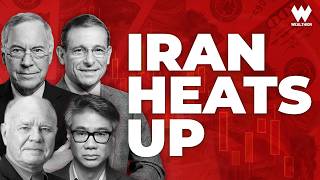
Is a Major Oil Shock Coming? Four Experts Weigh In
Key Moments 00:00 - Iran, $120 oil and a 10% stock-market drop The scenario the...
How to Avoid Capital Gains Tax: Opportunity Zones, Brett Rentmeester
Key Takeaways Opportunity Zones can defer and potentially eliminate capital gains tax. Rentmeester describes them...

Is NVIDIA a Good Investment? David Woo
Key Takeaways Woo says the AI trade rests on a winner-take-all bet and fear. He...
Enjoyed This? Get More Insights
Expert insights and curated opportunities, delivered to your inbox.
Ready to Position for What's Coming?
Whether you're still learning or ready to act, your next step starts here.
- Independent
- Macro-Informed
- Real Asset Focused

The Wealthion Network
Stay ahead of the curve. Subscribe to Wealthion’s newsletter and get timely videos, articles, and alerts featuring insights from the world’s leading experts in investing and wealth-building.
Network Discussion
Sign in to share your thoughts and connect with other readers.
Join the Wealthion Network to Comment