

Is NVIDIA a Good Investment? David Woo
Key Takeaways
Woo says the AI trade rests on a winner-take-all bet and fear. He argues valuations assume one dominant winner, and warns that "fear has no logic" and "fear has no limit," which is what is driving the capital-spending boom.
He does not think AI has a durable moat. Woo sees "cannibalization, commoditization" rather than a defensible advantage, and argues even a top model will not be as dominant as Google once was in search, "I don't see a natural moat here."
A break in the AI narrative would hit the whole market. Because AI dominates the index, Woo says an AI bust "would be a catastrophe" for the S&P 500, to which nearly every investor is heavily exposed.
He questions the quality of AI earnings. Woo flags accounting choices, including a change to depreciation schedules, and one-time gains, arguing the numbers are "being dressed up."
He warns it is still dangerous to short. Despite his skepticism, Woo says circular financing and strong momentum make betting against the trade risky, so he has stepped aside for now.
Key Moments
00:31 - AI valuations and the winner-take-all bet Why Woo says the whole AI valuation rests on one dominant winner.
01:00 - Why Google could lose the AI race His view that even search is vulnerable to AI.
01:23 - Does AI actually have a competitive moat? Cannibalization and commoditization instead of a moat.
01:50 - What an AI bust could mean for the S&P 500 The concentration risk sitting in the index.
03:03 - Microsoft's AI capex and accounting concerns The depreciation change Woo questions.
03:55 - AI spending, FOMO and the fear trade Why he says fear, not economics, drives the capex.
04:20 - NVIDIA, OpenAI and the data-center boom The circular guarantees he distrusts.
05:05 - Are AI earnings being "dressed up"? Stripping out revaluation gains and tariff rebates.
Is NVIDIA a Good Investment? Why David Woo Warns an AI Break Would Be a "Catastrophe"
After a closely watched NVIDIA earnings season, the question of whether the chipmaker and the AI trade it anchors are still worth owning is front of mind. Strategist David Woo, founder of the research firm Unbound, gave Wealthion a pointedly bearish answer in August 2026: he doubts AI has a durable competitive moat, believes its earnings are being flattered by accounting, and warns that if the narrative breaks, the damage would extend to the whole S&P 500. This is his strongly contrarian view, attributed throughout, and not investment advice.
Is NVIDIA and the AI trade overvalued?
Woo argues the valuation rests on a fragile assumption. The whole AI trade, he says, is priced for "a winner-take-all outcome" and driven by fear of missing out, and "the only thing I know about fear is that fear has no logic, economic logic, and fear has no limit." He notes he has been short and intends to be again, but is "getting out of the way right now just to see where the chip lands," wary of the momentum behind the trade. In other words, he sees the prices as a fear-driven bet rather than a reflection of durable economics.
Does AI actually have a competitive moat?
This is the crux of Woo's skepticism, and his answer is no. "I don't see a natural moat here," he says; instead he sees "cannibalization, commoditization." Even the best models, in his view, will not achieve the dominance Google once had in search, and he argues that AI threatens even Google, whose search he still rates highly but calls a likely "big loser" from AI commoditization. Without a natural moat, he contends, attempts to protect these businesses will simply prove costly. For a sharply opposing, bullish case, see Brett Rentmeester on AI's $920 billion gamble.
What could an AI bust mean for the S&P 500?
Woo does not mince words: "it would be a catastrophe." Because the AI complex now dominates the index, he argues almost every investor carries large exposure even if they simply hold an S&P 500 fund, so a break in the AI narrative would ripple through the entire market. It is the same concentration risk other Wealthion guests have flagged, including Jim Bianco on how AI is holding up a broken market.
Are AI earnings being "dressed up"?
Woo thinks so, and points to specifics. He questions a decision by Microsoft to extend the depreciation lifetime of AI data-center spending from 15 to 25 years, which he says pushed reported depreciation sharply lower and made the numbers "look amazing," even though roughly 60% of data-center cost is chips that he believes have a useful life of only two to three years, implying depreciation should be fast, not slow. He calls it an "accounting gimmick." He goes further on the headline growth: strip out investment income from the revaluation of Amazon's and Google's stakes in AI labs, he says, and earnings growth falls about 30%, and removing tariff rebates cuts it roughly another 30%, so the numbers are, in his words, "being dressed up." Peter Boockvar has raised related concerns about the AI spending boom cracking.
Why is the AI trade so hard to short?
Because, Woo argues, the spending is driven by fear rather than economics, and reinforced by circular financing and strong momentum. He points to reports of large vendor guarantees within the ecosystem, including a roughly $125 billion guarantee from NVIDIA to OpenAI and a reported guarantee tied to SpaceX's next data centers, arguing that such arrangements, together with policy tailwinds, keep the trade aloft regardless of fundamentals. His blunt verdict is that the whole thing "just stinks to seven heavens," but that it is "dangerous to short this stuff," which is why he has stepped aside rather than pressing the bet. Kevin Muir has similarly described why some investors are selling AI stocks. As always on Wealthion, this is Woo's attributed analysis, not advice.
What Investors Should Watch
- AI concentration in the S&P 500: the exposure Woo says makes an AI break a market-wide event.
- Depreciation and accounting choices: changes like the one he flags at Microsoft that shift reported earnings.
- Earnings quality: how much growth remains after stripping out revaluation gains and tariff rebates.
- Circular financing: vendor guarantees among chipmakers, AI labs and data-center builders.
- Momentum and policy support: the forces Woo says make the trade dangerous to short.
FAQ
Is NVIDIA a good investment right now? David Woo is skeptical. He argues the AI trade NVIDIA anchors is priced for a winner-take-all outcome and driven by fear, lacks a durable moat, and rests on earnings he considers flattered by accounting. He has been short and is currently stepping aside. This is his attributed view, not advice, and other investors are far more bullish.
Does AI have a competitive moat? In Woo's view, no. He sees cannibalization and commoditization rather than a defensible advantage, and argues even a leading model will not be as dominant as Google once was in search.
What would an AI bust mean for the stock market? Woo says "it would be a catastrophe" for the S&P 500, because the AI complex dominates the index and nearly every investor is heavily exposed, even through a simple index fund.
Are AI earnings being dressed up? Woo argues they are, citing a Microsoft depreciation change and one-time gains. Stripping out revaluation income and tariff rebates, he says, would cut reported earnings growth substantially.
Which expert and interview does this article reference? This article draws on Wealthion's interview with strategist David Woo, founder of Unbound: "NVIDIA Earnings Put the AI Boom to the Test."
Full Transcript (cleaned)
Speakers: Maggie Lake (Wealthion host) and David Woo (founder, Unbound). ASR errors corrected and filler removed; meaning preserved. A closing membership message has been noted rather than reproduced, and a partisan aside was generalized.
David Woo (cold open): It would be a catastrophe. Right now the whole valuation of the AI trade is based on the assumption of a winner-take-all outcome, on fear of losing out. The only thing I know about fear is that fear has no logic, no economic logic, and fear has no limit.
David Woo: Right now the whole valuation of the AI trade, including a roughly $2 trillion target attached to one leading AI lab, is based on the assumption of a winner-take-all outcome. People are thinking, we're going to get another Google or another Apple. One thing I'm very certain about is that, as good as a leading AI lab may be, there's zero chance it will be as dominant as Google is in search. And even Google, I'd argue, is now in trouble, because as good as Google search still is, compared with AI it has maybe 10% of the capability. So I think Google ends up a big loser from the commoditization of AI. The point is, if you can protect something that has a natural moat, that's one thing, but I don't see a natural moat here. What I see is cannibalization and commoditization, and any attempt to protect it will just be costly and wasteful.
Maggie Lake: This is really important, because you're describing something central to the US equity market that almost every investor is heavily exposed to, even if they just hold the S&P 500. What does it look like if that scenario plays out?
David Woo: It would be a catastrophe. I've been short, and I'm going to go back to shorting, but I'm getting out of the way right now to see where the chip lands, because I worry about the hype machine and the strong momentum and policy support behind the trade, which make it hard to fight. But it's not just that. Look at what happened this earnings season; it was ridiculous. Microsoft spent hundreds of billions on capex, yet its capex depreciation this last quarter was essentially zero, because it decided to extend the depreciation lifetime of some AI data-center projects from 15 years to 25 years. Are you kidding me? That feels like an accounting gimmick, because we know roughly 60% of data-center cost is chips, and those chips have a useful life of maybe two or three years at most, so the depreciation should be very fast. Instead, all of a sudden their numbers look amazing.
David Woo: On top of that, this whole capex story has been driven by fear, the fear of losing out, rather than by economic considerations. And the only thing I know about fear is that it has no economic logic and no limit, which is exactly why it's dangerous to short this stuff. These companies have strong backing, and then you see NVIDIA reportedly willing to give a roughly $125 billion guarantee to OpenAI. Look at SpaceX: after evaluating Google's chips and Amazon's chips, they now say they'll work exclusively with NVIDIA, and you have to ask whether that's because NVIDIA is offering a very large guarantee toward building out their next data centers. This whole thing just stinks to seven heavens, but how do you fight it? It's very, very difficult.
David Woo: When you look at the earnings numbers, they're being dressed up. Once you take out the investment income from the revaluation of Amazon's and Google's holdings in a leading AI lab, earnings growth already falls by about 30%. Take away the tariff rebates, and you lose roughly another 30%. So the earnings numbers are just being dressed up to impress the market. That's what's going on.
What Serious Investors Are Watching
Dive into expert interviews, market analysis, and long-form content built to help serious investors think long-term.
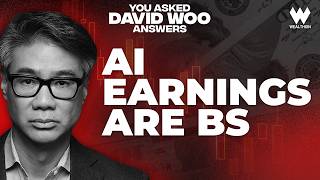
Is NVIDIA a Good Investment? David Woo
Key Takeaways Woo says the AI trade rests on a winner-take-all bet and fear. He...
How Do Leveraged ETFs Work? Kevin Muir Explains
Key Takeaways Leveraged ETFs deliver the daily return, not the total return. Muir stresses this...

How to Invest in Commodities: Jonathan Wellum
Key Takeaways Commodities are highly cyclical, so discipline comes first. Wellum warns they "go up...
Enjoyed This? Get More Insights
Expert insights and curated opportunities, delivered to your inbox.
Ready to Position for What's Coming?
Whether you're still learning or ready to act, your next step starts here.
- Independent
- Macro-Informed
- Real Asset Focused


The Wealthion Network
Stay ahead of the curve. Subscribe to Wealthion’s newsletter and get timely videos, articles, and alerts featuring insights from the world’s leading experts in investing and wealth-building.
Network Discussion
Sign in to share your thoughts and connect with other readers.
Join the Wealthion Network to Comment