

How to Invest in Commodities: Jonathan Wellum
Key Takeaways
Commodities are highly cyclical, so discipline comes first. Wellum warns they "go up and down like yo-yos" and that investors should stay within their circle of competence, the Charlie Munger idea he leans on, rather than chase every trade.
He focuses on the majors, higher up the value chain. Rather than speculative names, Wellum concentrates on copper, uranium, silver and gold, plus some agricultural inputs and a little oil and gas.
He is cautious on rare earths and junior miners. He sees opportunity there for genuine experts, but calls picking individual junior miners "highly speculative," and notes rare earths are cyclical because supply is underdeveloped, not truly scarce.
For most investors, ETFs may beat stock-picking. Wellum says a professionally managed ETF is "a more sane way to go into the space" than trying to pick junior miners in remote locations.
Real due diligence means visiting the asset. As a value investor, he talks to management and, as he puts it, eventually you "put the steel-toed boots on and go out and see some of these facilities."
Key Moments
00:24 - Gold, silver and critical minerals: where's the opportunity? How Wellum frames precious metals versus industrial and critical minerals.
00:59 - Why commodities are so cyclical The boom-bust nature that catches investors out.
01:18 - Copper, uranium, silver and gold The major metals he concentrates on and why.
02:23 - Rare earths: opportunity or speculative trade? Why he sees them as cyclical rather than truly scarce.
03:32 - Know your investing "circle of competence" The honesty he says commodity investing demands.
03:47 - Commodity ETFs vs. junior mining stocks Why he thinks ETFs are the saner route for most.
05:24 - How professional investors evaluate mining stocks Management, value discipline and getting on site.
How to Invest in Commodities Without Getting Burned: Jonathan Wellum's Approach
The commodity boom has drawn a wave of new investors, but Jonathan Wellum, CEO and chief investment officer of RockLinc, told Wealthion in August 2026 that it is also where enthusiasm most easily turns into losses. His central message is about discipline: commodities are highly cyclical, and the way to participate without getting burned is to know your limits, favor quality, and, for most people, use professionally managed vehicles rather than speculative stock-picking. Wellum's firm is part of Wealthion's advisor network, and he references positions his firm holds; the views below are his, are not personalized advice, and specific holdings are disclosed and generalized.
How can you invest in commodities without getting burned?
Wellum's first rule is self-honesty. "You just can't know everything," he says, invoking Charlie Munger's idea of a circle of competence, and warns that commodities are intensely cyclical, prone to swinging "up and down like yo-yos," because, in the classic adage, the cure for low prices is low prices. The practical implication, he argues, is to size your involvement to your genuine expertise, and if that expertise is limited, to get exposure through diversified, managed vehicles rather than betting on individual speculative names. This is his framework, not a recommendation.
Where does Wellum see the opportunities?
He deliberately stays "higher up the value chain." Wellum says his firm concentrates on a handful of major metals: copper, which he considers more predictable; uranium, for nuclear energy; silver, which he ties to electric vehicles, data centers and conductivity; and gold, as what he calls a monetary substitute. He also invests a little in agricultural inputs like potash and some oil and gas. As a small value shop, he says, that focus is partly a matter of head space, staying with what they know well rather than spreading into every corner of the sector. His broader bull case on the metals appears in his companion Wealthion conversation on silver and commodities.
Are rare earths a good investment?
Wellum sees potential but urges caution. He argues there is opportunity in rare earths for investors with real expertise, but stresses they are cyclical rather than genuinely scarce: the issue is that processing has been underdeveloped in the West, with China long dominating the supply chain and Western development slowed by environmental-policy priorities. As that changes and more Western supply comes online, he expects prices to moderate, so the opportunities will "come and then go." For the policy backdrop, see the White House pivot to domestic copper, and for the broader bull thesis, Jeff Currie's gold and silver supercycle.
Should you buy commodity ETFs or individual mining stocks?
For most retail investors, Wellum favors ETFs. He calls a professionally managed fund "a more sane way to go into the space than to try to pick off some junior mining company" located in a remote spot, which he describes as "highly speculative." As one route, he points to owning a specialist commodity asset manager and ETF provider, naming Sprott, a company his firm owns, whose funds span the commodity spectrum and which recently launched a rare-earth ETF, so that professional managers select the better-financed operators in lower-risk jurisdictions. He adds that investors who do want direct exposure should work with someone experienced, noting the decades of expertise on display at the Rick Rule Symposium. For more from that event, see Wealthion's recap of the 2026 Rick Rule Symposium.
How do professional investors evaluate mining stocks?
Wellum describes a hands-on, value-based process: as long-term compounders, he and his firm favor the elite producers and royalty companies, talk directly to management, and get on site. Eventually, he says, you have to "put the steel-toed boots on and go out and see some of these facilities." He offers a current example, a planned visit to the Prairie Creek project in Canada's Northwest Territories, an old silver deposit once developed by the Hunt brothers and abandoned after the early-1980s silver collapse, now held by a company he does not own but is watching to see whether it can, as he puts it, tick off the boxes, including the roughly $250 million cost of building a highway to reach it. He contrasts that scrutiny with a past visit to a major producing mine, underscoring that even a self-described finance guy behind a desk needs to see the asset. Related timing discipline appears in Rick Rule's view on why falling gold stocks can be an opportunity. As always on Wealthion, this is Wellum's attributed approach, not investment advice.
What Investors Should Watch
- Commodity cyclicality: the boom-bust swings Wellum says catch investors out.
- Your own circle of competence: matching exposure to genuine expertise, his central discipline.
- The ETF-versus-juniors choice: whether a managed vehicle fits better than individual mining stocks.
- Rare-earth supply developing in the West: which he expects to moderate prices over time.
- Project fundamentals: management quality, jurisdiction and the practical costs of getting a deposit into production.
FAQ
How can you invest in commodities without getting burned? Jonathan Wellum says to stay within your circle of competence, respect how cyclical commodities are, favor quality over speculative names, and, if your expertise is limited, use professionally managed vehicles rather than picking individual miners. This is his attributed view, not advice.
Where does Wellum see the best commodity opportunities? He concentrates on the major metals, copper, uranium, silver and gold, plus some agricultural inputs and a little oil and gas, deliberately staying higher up the value chain rather than chasing smaller, speculative plays.
Are rare earths a good investment? Wellum sees opportunity for experts but cautions that rare earths are cyclical rather than truly scarce, since the shortfall is in Western processing. As more supply develops, he expects prices to moderate.
Should I buy commodity ETFs or individual mining stocks? For most retail investors, Wellum considers a professionally managed ETF a saner route than picking junior miners, which he calls highly speculative. He points to owning a specialist commodity asset manager, a holding of his firm, as one way to get diversified exposure.
Which expert and interview does this article reference? This article draws on Wealthion's interview with Jonathan Wellum, CEO and CIO of RockLinc: "The Commodity Boom Is Here, But Investors Could Get Burned."
Full Transcript (cleaned)
Speakers: Maggie Lake (Wealthion host) and Jonathan Wellum (CEO and CIO, RockLinc). ASR errors corrected (names, terms) and filler removed; meaning preserved. A brief policy aside has been softened to its substantive point.
Jonathan Wellum (cold open): You do have to be careful when you go into commodities. You have to know your circle of competence. A professionally managed fund is probably a more sane way to go into the space than to try to pick off some junior mining companies. That's very difficult and highly speculative. Eventually, you have to put the steel-toed boots on and go out and see some of these facilities.
Maggie Lake: These are the things that keep me up at night, which is why we talk about leaning into your portfolio and diversifying into things that are real and scarce. Do we need to differentiate between precious metals and the critical or industrial minerals that President Trump has been talking about, or do you look at mining as a whole?
Jonathan Wellum: Great question, and it depends on your knowledge and expertise. You have to be careful in commodities, because low prices cure low prices: when prices are low, people stop developing supply, and then prices rise and everyone piles in, so the space is very cyclical and can move up and down like yo-yos. Because of that, we focus on some of the key areas: copper, which is more predictable; uranium, for nuclear energy; silver, which is so important for electric vehicles, data centers and conductivity; and gold, as a monetary substitute. We've zeroed in on the major ones rather than going down into a lot of the smaller names and rare earths. There are opportunities in rare earths for people with more knowledge and expertise, but we stay a little higher up the value chain, partly because we're a small investment group and we also invest in other sectors, so it's a matter of head space. If you're sharp in those other areas, there'll be good opportunities in rare earths for a period, but it will be cyclical, because there's no real shortage of rare earths; they just haven't been developed in the Western world. China has dominated the supply chain, and Western development and processing were slowed by environmental-policy priorities. That's changing quickly, and as it does, prices should moderate and the opportunities will come and then go. So we stay with gold, silver, uranium, copper and some of the main metals and minerals, and in agriculture, potash and some of the nutrients used in farming, plus a little oil and gas. Those are where we focus most of our attention.
Maggie Lake: This is why it's good to gut-check your risk profile. You can reach, especially working with someone who understands the area, but there are also ways to diversify without going all in and getting over your skis.
Jonathan Wellum: You have to know your circle of competence and be very honest. Charlie Munger said that if you don't know where your circle of competence begins and ends, you don't have one. You just can't know everything. If people are excited about the space, one thing I'd suggest is that one of the companies we own is Sprott, the parent company behind a family of commodity ETFs. We think it's one of the best commodity plays, because you're buying a management company with fee-based revenue from investments across the whole commodity spectrum, and they've just issued a rare-earth ETF. For a retail investor, going into an ETF, where management picks what it believes are the best-financed companies in good jurisdictions, is probably a more sane way into the space than trying to pick off a junior mining company in some remote spot for a bit of rare-earth exposure. That's very difficult and highly speculative, so be careful.
Maggie Lake: And if you do want that, there are great opportunities, but you need to work with someone who knows what they're doing. We were at Rick Rule's conference, and there are people with years of expertise who really understand which teams can make it work. If you're new to the area, work with someone with decades of experience. One thing I love is that you're always talking to management, and you're headed up to a mine in your own country.
Jonathan Wellum: We typically don't look at smaller mining companies; we buy some of the elite producers and the royalty companies, and we're careful value investors and long-term compounders. But I had an opportunity to visit a mine that Honey Badger has purchased. Chad Williams, its CEO, is a respected mining executive, and they invited me and a few other institutional investors up to the Prairie Creek project in the Northwest Territories. I haven't been that far north. It's one of the larger silver deposits, with the analysis done back in the late 1970s and early 1980s when silver was high; it was developed by the Hunt family, who famously cornered the silver market, and abandoned when silver collapsed in the early '80s. It also has lead, zinc, germanium and some tungsten, so there are interesting metals up there. With prices rising, it shows how underinvestment leaves opportunities to revisit these assets, though there's a cost to reach them; they'd ultimately need a highway in, on the order of $250 million, to open up what is a very large mine. So I'm flying in to take a look this week. I like to get my hands dirty in a few cases, because you learn a lot more being on site with the executive team. A few years ago I visited the Canadian Malartic mine in Val-d'Or, Quebec, the big Agnico Eagle open pit, and it's phenomenal to see. I'm a finance guy who sits behind a desk and a computer, but eventually you have to put the steel-toed boots on and see the facilities. We don't own Prairie Creek in any of our portfolios; we're watching to see if they can tick off the boxes. The silver is there; the question is whether they can get it out cost-effectively. The indigenous communities and the government both want the development, so there's support, because a mine like that is a 20-, 30-, even 40-year investment that generates a lot for the region.
What Serious Investors Are Watching
Dive into expert interviews, market analysis, and long-form content built to help serious investors think long-term.

Is NVIDIA a Good Investment? David Woo
Key Takeaways Woo says the AI trade rests on a winner-take-all bet and fear. He...
How Do Leveraged ETFs Work? Kevin Muir Explains
Key Takeaways Leveraged ETFs deliver the daily return, not the total return. Muir stresses this...
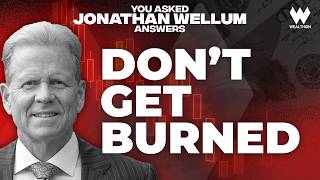
How to Invest in Commodities: Jonathan Wellum
Key Takeaways Commodities are highly cyclical, so discipline comes first. Wellum warns they "go up...
Enjoyed This? Get More Insights
Expert insights and curated opportunities, delivered to your inbox.
Ready to Position for What's Coming?
Whether you're still learning or ready to act, your next step starts here.
- Independent
- Macro-Informed
- Real Asset Focused

The Wealthion Network
Stay ahead of the curve. Subscribe to Wealthion’s newsletter and get timely videos, articles, and alerts featuring insights from the world’s leading experts in investing and wealth-building.
Network Discussion
Sign in to share your thoughts and connect with other readers.
Join the Wealthion Network to Comment