

Is the Stock Market in a Bubble? Steve Hanke
Key Takeaways
Hanke says stocks are in a bubble by every measure, and higher rates are the pin. He argues bubbles are almost impossible to time, with one dependable exception: "higher interest rates you usually are associated with bubbles popping."
The bond vigilantes are back. After years of dormancy, Hanke says rising Treasury yields show the bond market is finally pricing in risks that stock and oil markets have shrugged off.
Inflation is not beaten. By his monetarist framework, the broad money supply (the Divisia M4 measure) is growing around 6.7% a year, above the pace consistent with 2% inflation, so "the inflation genie is out of the bottle."
Rising yields ripple straight into housing and valuations. Because mortgage rates and discount rates key off the 10-year Treasury, Hanke notes mortgage rates are the highest since before the 2008 crisis and warns that a higher discount rate lowers the value of everything.
Revaluing US gold would not fix the debt. Hanke dismisses the popular idea as "just a bookkeeping entry," explaining that only actually selling gold at the market price would raise cash, and his real solution is a constitutional debt brake.
Key Moments
00:20 - Why markets are ignoring major risks Hanke's view that investors are complacent about a long list of unpriced risks.
01:12 - Bond yields, inflation and the return of the bond vigilantes The three forces he says are pushing Treasury yields higher.
05:16 - Oil prices, supply risk and inflation Why drawn-down inventories could set up another oil spike.
15:15 - Could Treasury bonds become America's biggest weakness? Treasuries as a pressure point, and the deficit behind rising yields.
22:30 - China, tariffs and critical-materials leverage Why Hanke thinks Beijing holds the stronger hand on trade.
30:43 - Why the bond market could trigger a stock selloff The link between higher rates and a popping bubble.
31:57 - Can revaluing gold solve America's debt problem? Why Hanke calls the idea a bookkeeping entry that changes nothing.
38:16 - Steve Hanke's solution to the debt crisis The case for a constitutional debt brake modeled on Switzerland.
Is the Stock Market in a Bubble? Why Steve Hanke Says the Bond Market Will Decide
A stock market bubble is a period when prices rise well above what underlying earnings and cash flows can justify, and by that standard economist Steve Hanke, professor of applied economics at Johns Hopkins University and author of Making Money Work, told Wealthion in early August 2026 that the market is squarely in one. His larger point is that the trigger to watch is not in the stock market at all. It is in the bond market, where he says rising yields are flashing a warning that equity, oil and housing investors are still ignoring.
Is the stock market in a bubble?
Hanke's answer is unequivocal: yes, on every gauge. "We know the stock market's in a bubble," he says, and "any measure of bubbles" points the same way. The difficulty, he stresses, is timing, because bubbles are almost impossible to predict, with one reliable exception: "higher interest rates you usually are associated with bubbles popping." That is why he watches yields so closely, and why he expects "the bond market is going to call a tune" that eventually forces a repricing of stocks.
Why is the bond market flashing a warning?
Because, in Hanke's telling, the bond vigilantes have come out of hibernation. He argues markets in general are "complacent about all these risk," with a long list of dangers not priced in, but that Treasury yields have moved up sharply as the bond market starts to reflect them. He attributes the move to three forces working together: resurgent inflation, tariffs, and the economic fallout of the conflict involving Iran, later adding a fourth, the US fiscal deficit. For related reads on what the long end is signaling, see Michael Green on the bond market hiding a banking crisis and George Goncalves on stealth tightening hitting markets.
Is inflation coming back?
Hanke, a monetarist, argues it never really left, because the money supply is still growing too fast. He explains that large changes in the money supply drive nominal GDP with a lag, and that the broad Divisia M4 measure, which he considers the best gauge, is growing around 6.7% a year, above the roughly 5% to 6% range consistent with hitting a 2% inflation target. His conclusion is blunt: "the inflation genie is out of the bottle," and he does not expect it back in soon. Tariffs and the risk of higher oil prices, he adds, only reinforce the pressure.
How do rising yields hit housing and stocks?
Directly, because so much is priced off the 10-year Treasury. Hanke notes that mortgage rates are geared to the 10-year yield and are now the highest since before the 2008 financial crisis, leaving the housing market flat. The same mechanism threatens equities: a higher discount rate reduces the present value of future cash flows, so as yields rise, the justified value of stocks falls. That, he argues, is how elevated rates start "either popping bubbles or letting the air come out of bubbles." For the backdrop on monetary policy, see Wealthion's coverage of a Fed now led by Kevin Warsh.
Could oil spike again?
Hanke thinks the risk is underappreciated. He explains that the market has been cushioned because supply gaps from the Persian Gulf have been filled by drawing down inventories, both commercial stocks and the US Strategic Petroleum Reserve, which he says is at its lowest level since 1983. The problem is that inventory drawdowns only postpone the reckoning: once stocks run low, a deficit becomes an outright shortage, and the only way to balance the market is a price increase that forces "demand destruction." If shipping through key chokepoints stays disrupted, he expects another spike in the oil price. The energy angle connects to the AI buildout as well, as covered in why AI's dirty secret is oil.
Are US Treasuries becoming a vulnerability?
This is where Hanke sees the market finally waking up. He argues the recent conflict has weakened the US position both strategically and economically, going so far as to say "we've already lost the war" when measured by outcomes such as a closed Strait of Hormuz and strengthened rivals. The market-relevant point is that Treasuries have become a visible pressure point: he cites reports that a major foreign holder could use Treasury sales as leverage, which would push yields sharply higher, and notes similar concerns around foreign selling to fund currency intervention. Underlying it all is the fiscal deficit, swollen by war costs he estimates near a trillion dollars and by tariff revenue that never balanced the budget. As the Treasury issues more debt, he argues, buyers demand a higher yield to compensate for the added risk.
Does China hold the leverage?
On the economy, Hanke is not especially positive on China: he notes its money supply is growing too slowly to hit its roughly 7% nominal GDP target (2% inflation plus 5% real growth), so its economy remains in the doldrums. Geopolitically and strategically, though, he sees China gaining ground while global perceptions of the US decline. His trade view follows from that: he argues the US has little real leverage in a tariff fight because China controls critical materials whose loss could disrupt both the US and European economies, and he regards tariffs and sanctions as weapons of economic warfare that mostly create adversaries. He frames both as long-running policies that have continued across administrations rather than as a partisan issue.
Can revaluing gold solve America's debt problem?
No, Hanke says flatly, calling the popular idea "just a bookkeeping entry." US gold is carried on the books at a statutory $42.22 an ounce, a value set by Depression-era legislation, with the Federal Reserve holding gold certificates valued as of 1973 and the Treasury owning the metal itself. Simply marking the gold up to the market price, he explains, changes the ledger but raises no cash. To actually reduce the deficit, "they would have to sell the gold," and only at the prevailing market price, not a number chosen by Congress or the Treasury. It would, he adds, excite gold enthusiasts, but it would not change anything real.
What is Steve Hanke's solution to the debt?
His answer is structural, not financial: a constitutional debt brake. Hanke argues that enough US states have already applied for a limited Article V constitutional convention to force the issue, but that Congress has stonewalled it. His model is the Swiss debt brake, approved by referendum, which requires the budget to balance over the business cycle and caps the growth of government spending at the growth rate of the economy, so the state cannot expand faster than the country it serves. He points to Switzerland's strong record on inflation, growth and productivity as evidence it can work, and notes he sits on the board of the Federal Fiscal Sustainability Foundation, which is pushing for exactly that. As always on Wealthion, these are Hanke's attributed views, not recommendations.
What Investors Should Watch
- Broad money supply growth (Divisia M4): Hanke's leading indicator for inflation, currently running above the range consistent with a 2% target.
- The 10-year Treasury yield: the rate that drives mortgages and discount rates, and, in his view, the trigger for a repricing of stocks.
- Oil inventories and the Strategic Petroleum Reserve: drawn-down stocks that he says raise the risk of another price spike.
- Foreign Treasury demand and the deficit: whether buyers keep demanding higher yields as issuance rises.
- Interest rates as the pin: the one condition Hanke says is reliably associated with bubbles popping.
FAQ
Is the stock market in a bubble? Steve Hanke says yes, by every measure he looks at. He cautions that bubbles are almost impossible to time, but notes that higher interest rates are the condition usually associated with bubbles popping, which is why he watches bond yields so closely.
Is inflation coming back? In Hanke's monetarist view, inflation is not beaten. He points to the broad Divisia M4 money supply growing around 6.7% a year, above the pace consistent with 2% inflation, and says "the inflation genie is out of the bottle."
Why is the bond market a warning sign? Hanke argues the bond vigilantes have returned, pushing Treasury yields higher to reflect inflation, tariffs, geopolitical risk and the fiscal deficit, risks he says stock and oil markets have been too complacent about.
Can the US revalue its gold to pay off the debt? No, according to Hanke. He calls it "just a bookkeeping entry," explaining that gold is on the books at a statutory $42.22 an ounce and that only selling it at the market price would raise cash, so a revaluation alone would not reduce the deficit.
What is Hanke's solution to the debt? He favors a constitutional debt brake modeled on Switzerland's, requiring the budget to balance over the business cycle and capping government spending growth at the rate of economic growth, pursued through a limited Article V convention.
Which expert and interview does this article reference? This article draws on Wealthion's interview with Steve Hanke, professor of applied economics at Johns Hopkins University: "The Bond Market Is Flashing a Major Warning."
What Serious Investors Are Watching
Dive into expert interviews, market analysis, and long-form content built to help serious investors think long-term.

Why the US Dollar Could Weaken, and What It Means for Investors
Higher US rates can support the dollar, while borrowing needs and reserve diversification create longer-term pressures. The effects of a weaker dollar differ across assets and currencies.
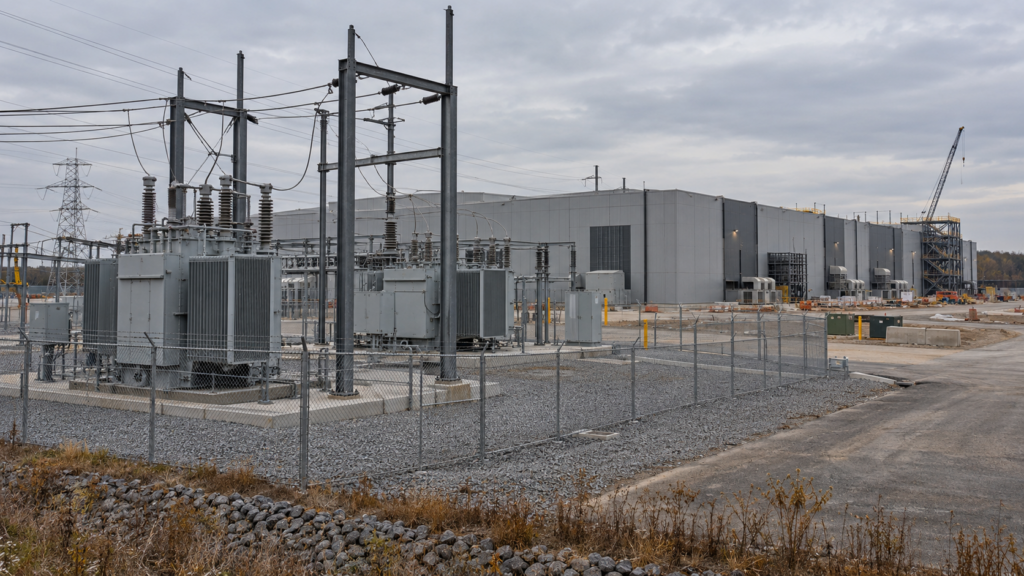
Why More Efficient AI Could Still Need More Power
Efficiency reduces the energy needed for a given AI task, but wider use and more demanding applications can offset those savings. The balance matters for electricity and infrastructure planning.

Where the AI Data Center Building Boom Could Hit Its Limits
Large technology budgets do not immediately become operating data centers. Power connections, equipment, local approvals and financing shape how quickly the AI buildout can proceed.
Enjoyed This? Get More Insights
Expert insights and curated opportunities, delivered to your inbox.
Ready to Position for What's Coming?
Whether you're still learning or ready to act, your next step starts here.
- Independent
- Macro-Informed
- Real Asset Focused


The Wealthion Network
By subscribing, you agree to receive Wealthion emails. Unsubscribe anytime.
Network Discussion
Sign in to share your thoughts and connect with other readers.
Join the Wealthion Network to Comment