

Is There a Copper Shortage? Steven Enders Explains
Key Takeaways
A long-term copper deficit looks baked in. Enders argues that on virtually any forecast, copper demand out to 2050 exceeds what existing mines and shovel-ready projects can supply, leaving "a big gap" that price or substitution may not fully close.
Mining's real bottleneck is people, not geology. His signature point is that management teams, not rocks, make or break projects, and that while the market will supply enough bodies, "It's the quality of the people that really make a difference."
Strategic fit is how he screens a management team. Enders looks past a company's homepage to its board and management, checking track record and whether the team matches its stage, an all-geologist team heading into an engineering-heavy phase is a red flag.
AI is a useful tool, not a cure. He welcomes new technology but insists "there's no silver bullets out there," and that AI can help target work across a mine's life without solving the industry's fundamental problems.
Treat project cost estimates with deep skepticism. After 50 years, Enders says "I never believe the numbers," arguing capex and opex figures are almost always too low, with overruns of 25% to 40% on the large majority of projects.
Key Moments
00:40 - The looming copper supply deficit Why demand out to 2050 outstrips what the industry can deliver.
02:12 - Why Steven Enders is bullish on copper Substitution limits and the case for higher copper prices.
03:43 - Mining's hidden talent problem Why quality of people is the real constraint.
05:38 - How to evaluate a mining management team The board, the track record, and strategic fit.
07:58 - Critical minerals and government support Where public money is starting to back the sector.
08:50 - Can AI transform mining and exploration? Enders on tools versus silver bullets.
10:51 - M&A, commodity cycles and "the crazies" Reading where we are in the cycle.
14:56 - Why mining project costs are often too low Why he never believes the numbers.
Is There a Copper Shortage? Steven Enders on Mining's Hidden Bottleneck
A copper shortage is a sustained gap between how much copper the world needs and how much the mining industry can actually produce, and veteran geologist Steven Enders told Wealthion, at the Rick Rule Symposium in 2026, that one is coming into view. With 50 years in exploration and production and a second career training the next generation, Enders makes two arguments: the supply deficit is real, but the harder constraint is talent, the quality of the people who run mining projects. For more from the event, see Wealthion's recap of the 2026 Rick Rule Symposium.
Is there a copper shortage?
Enders' answer is yes, structurally. He says it does not matter which forecast you use: copper demand out to 2050 exceeds what current mines and the projects that are shovel-ready or imminent can supply, leaving "a big gap." He is candid that he is "not exactly sure what's going to break." Higher prices could coax more marginal copper out of existing resources, and there is talk of substitution, some companies weighing aluminum instead of copper in EVs, but he suspects the long-run reality is simply that the world will not have all the copper it needs. That, he warns, will be "a cold splash in the face" for politicians who assume the industry can deliver whatever they want, whenever they want it.
Why is Enders bullish on copper?
Because demand is durable and supply is hard. He calls copper a superior metal and is skeptical of substitution as a real fix, a view echoed in how investors talk about silver, while acknowledging "society will get what society needs somehow." The catch for miners, he stresses, is that they are "price takers" operating on thin margins, unable to pass along rising costs, including the growing costs of meeting sustainability requirements. He does not expect prices to spike enough to kill demand, since the world cannot easily do without these products, and he sums up the setup as fundamentally strong for copper. The demand side is reinforced by electrification and the data-center buildout, a theme explored in the AI resource rush.
What is mining's "hidden bottleneck"?
For Enders, the real constraint is human, not geological: management teams, not rocks, make or break projects. He argues the market will supply enough people, often from non-traditional backgrounds such as civil rather than mining engineers, so the shortage is not about headcount. What matters is quality: "It's the quality of the people that really make a difference." A geologist by training, he says his own career has shifted from science toward the people and business side, and he notes the industry is highly leveraged to a relatively small number of capable leaders, which is why education efforts, both Rick Rule's investor training and his own university teaching, matter so much.
How do you evaluate a mining management team?
Enders offers a concrete screen. Before he even reads a company's homepage, he goes to its board and management: does he know them, or know someone who does, and what is their track record of success in financing, building mines or making discoveries. He looks for a team whose members round out each other's gaps, and above all for strategic fit with the company's stage. His example of a red flag: a team that is all geologists taking a project into preliminary feasibility, a phase that is about engineering, not geology. In that case he would ask about their plans for engineering and development staffing, and he notes that some companies lack any environmental or community-relations people when their stage clearly requires them. The test, in short, is whether the team matches where the business actually is.
Are governments finally supporting mining?
Yes, and Enders finds it encouraging. He points to growing interest in the United States, Canada, Australia and even Europe in supporting "critical minerals," a category he notes is now so broad it covers almost everything, with public-sector money increasingly flowing into private projects. That policy shift, tied to the domestic-supply push seen in moves like the White House pivot to domestic copper, is a meaningful tailwind for the sector.
Can AI transform mining?
Enders is measured. He describes AI and new exploration technologies as tools, welcomes the flood of interest, and says he is pitched almost weekly by young professionals convinced they have the "silver bullet." His response, delivered with a geologist's patience, is that "there's no silver bullets out there," and that the probability any single new tool works is relatively low, much like greenfield exploration itself. His bottom line: "AI is a wonderful tool to help us, but it will not solve our problems." It can help target work across the whole mine life, from discovery through closure, but it will not dramatically change the business.
Where are we in the commodity cycle?
More mature than many assume, in his reading. Enders notes that mergers and acquisitions tend to come early in a cycle, and that activity has already moved off that phase, which he takes as a possible sign of maturity. His other tell is behavioral: as a cycle matures, "the crazies come out," pitching schemes like mining asteroids for platinum or the ocean floor. After 50 years he observes that the industry is slow to recognize down cycles and even slower to invest in up cycles, because it does not quite believe the recovery, which creates lags and, as he puts it with a laugh, makes for a volatile and interesting business. A more emphatically bullish cycle view runs through Jeff Currie's commodity supercycle case.
Should investors believe mining project numbers?
Enders' answer is a flat no, and it may be his most useful investor lesson. He notes that swings in the paper market, driven by ETFs, can create a volatility narrative even when the physical market barely moves, which makes it hard to carry investors and boards through the decade-long journey from discovery to a producing mine. On the projects themselves, he says companies should be judged on relative as well as absolute value: a project that looks good at a given copper price may not rank against its peers. And on the headline economics, he is blunt: "I never believe the numbers," because "the capex and opex costs are always low." Every project that reaches production, he argues, is marginal, since better ones would have been built sooner. As a rough benchmark, he cites studies showing capital cost overruns of 25% to 40% on about 80% of projects. As always on Wealthion, this is Enders' attributed framework, not investment advice.
What Investors Should Watch
- The copper supply-demand gap: the deficit to 2050 that Enders says no current pipeline of projects can fill.
- Management strategic fit: whether a team matches its project's stage, his central red-flag test.
- Government critical-minerals support: public funding flowing into private projects across the US, Canada, Australia and Europe.
- Capital cost overruns: his 25% to 40% benchmark, and the tendency of estimates to run too low.
- Cycle signals: M&A activity and the appearance of "the crazies," which he reads as markers of cycle maturity.
FAQ
Is there a copper shortage? Steven Enders argues a long-term copper deficit is building: on essentially any forecast, he says, demand out to 2050 exceeds what existing mines and near-term projects can supply. He is unsure exactly how it resolves, through higher prices, substitution or simply going without, but considers the shortfall real.
Why is Enders bullish on copper? He views copper as a superior metal with durable demand and difficult supply, is skeptical that substitution can fully replace it, and notes miners are price takers on thin margins. He does not expect prices to rise enough to kill demand, since the world cannot easily do without copper.
What is mining's hidden bottleneck? Talent, specifically the quality of management teams. Enders argues that management, not geology, makes or breaks projects, and that while the market will supply enough people, quality is what truly matters and the industry is highly leveraged to a small number of capable leaders.
How do you evaluate a mining management team? Enders checks the board and management first, looking for a track record of success and, above all, strategic fit with the project's stage. An all-geologist team entering an engineering-heavy phase, or a team missing environmental and community-relations expertise, is a warning sign.
Should investors believe mining project cost estimates? No, in Enders' view. He says capex and opex figures are almost always too low, that every project reaching production is marginal, and that studies show cost overruns of 25% to 40% on roughly 80% of projects, so estimates should be treated with heavy skepticism.
Which expert and interview does this article reference? This article draws on Wealthion's interview with Steven Enders, a veteran geologist and mining educator: "Soft Jobs. Hard Talent: Mining's Hidden Bottleneck."
Full Transcript
Speakers: Maggie Lake (Wealthion host) and Steven Enders (veteran geologist and mining educator). ASR errors corrected and filler removed; meaning preserved.
Steven Enders (cold open): The market will supply the talent we need. I'm a huge bull on copper, from a demand perspective and a price perspective. There's a big gap there. I'm not exactly sure what's going to break, but my sense is it's about quality. It's the quality of the people that really make a difference.
Maggie Lake: Steve, it's great to see you, thanks for stopping by in person. Rick Rule was talking about you earlier and said there isn't anybody who knows more about exploration and production than you.
Steven Enders: That's probably an overstatement, but I'm flattered.
Maggie Lake: We've heard a lot at this conference about the demand-supply imbalance. Talk to me about the supply side, and what kind of deficits we're looking at.
Steven Enders: The best thing I can speak to is the deficit in copper looking forward. It doesn't really matter which forecast you look at: demand for copper out to 2050 is more than we can supply with what we currently have, and it's hard to see any of the projects that are shovel-ready or imminent being able to supply what we need. So there's a big gap, and I'm not exactly sure what's going to break. Copper prices could increase, and then we can make more marginal copper from what we already have. There could be some substitution; a couple of companies are thinking about using aluminum instead of copper in EVs. They frame it on price, but frankly I think long term it might just be that we don't have all the copper we need.
Maggie Lake: People push back hard on substitution. We've heard the same about silver, that you can't simply replicate it. So it seems unlikely to help much.
Steven Enders: I'm not a fan of it. I actually think copper is a superior metal, but society will get what it needs somehow. I'm a huge bull on copper from a demand and price perspective, and I think it's a challenge for the industry to deliver. It's going to be a cold splash in the face for some politicians and government people to realize we can't always deliver exactly what they want, when they want it.
Maggie Lake: With a spike in prices, is it inevitable that gets passed along to all of us, since copper is in so much?
Steven Enders: I wish it were. We're price takers, and that's the issue, so we're always dealing with the margin in our operations. It would be nice to pass down the costs of everything we have to do on sustainability, but people don't want to pay for that.
Maggie Lake: Will prices spike enough to kill demand, or can we not do without these products?
Steven Enders: I don't think we can do without the products. As human beings we adapt well to a lot of things, so we could in theory, but I don't know how it plays out. What I do know is that the fundamentals are really strong for copper.
Maggie Lake: You've said rocks don't make or break projects, management teams do, and you've focused lately on talent in the sector. Are we facing a deficit there too?
Steven Enders: The market will supply the talent we need, and it will come from non-traditional sectors, civil engineers instead of mining engineers, for example. But my sense is that it's about quality. It's the quality of the people that really make a difference. I'm a geologist, and I've forgotten more than I ever learned about geology, but I learn something new about people every single day. My career has moved toward the people and business side rather than the science and technology. What Rick Rule is doing, educating at least 20,000 knowledgeable investors, is a great approach, and at this end of my career I'm at the university training new people. In the end we don't need that many new mining engineers to supply what the world needs; we're highly leveraged to a relatively small number of capable people.
Maggie Lake: What makes a good management team, and where do you see strong leadership?
Steven Enders: It's easier to point out bad leadership, which I'm not going to do. But I can give you parameters. When I look at a company, before I even read their homepage I go find out who's on the board and in management. First, do I know them, or know someone who knows them. Then, what's their experience and track record of success, whether in financing, building a mine or making discoveries. I look for who rounds out the team so there are no gaps, and for strategic fit with where they are in the business. For instance, if you have a company where the CEO, the chairman, the VP of exploration and several board members are all geologists, and they're taking a project into preliminary feasibility, that stage is about engineering, not geology. That's a flag to me. I'd ask what their plan is for staffing the engineering and development side. Sometimes they don't even have environmental or community-relations people yet. So I'm looking for an imbalance relative to where they are in their strategy.
Maggie Lake: How are you feeling about jurisdictional risk and government cooperation?
Steven Enders: In the United States, Canada, Australia and even Europe, there's a lot more interest in government support, particularly around critical minerals, which frankly is almost all of them. We're seeing money flow from the public sector into the private, and that's a big encouragement.
Maggie Lake: What about technology and AI? We talk about it for investing, but is the industry using it, and will it help with exploration or production?
Steven Enders: Let's set my students aside and talk about the industry. These are all tools, and there's huge interest. Almost every week another group of young professionals contacts me convinced they have the best tool, AI or otherwise, that will be the silver bullet. Of course, as you can tell from my white hair, we know there are no silver bullets out there, though we'll take a bullet that works. I applaud all the R&D in exploration, mineral processing and mining, but just like greenfield exploration, the probability that any one of them works is relatively low. AI is a wonderful tool to help us, but it will not solve our problems. Everyone thinks it will be the panacea for mineral exploration; really it will only help us target work across the whole mine life, discovery, development, production and closure. It won't dramatically change the business, but we should use it where we can.
Maggie Lake: There's a lot of talk about M&A. Do you expect a lot of it this cycle, or is it already happening?
Steven Enders: I think we've seen it already. One of the first things that happens in a cycle is M&A, and it's moved off that a bit, which makes me wonder where we are in the cycle. When a cycle is more mature, the crazies come out: people who want to bring an asteroid full of platinum back to the US, or do something on the ocean floor, or say they have a mine in their backyard. The crazies come out at this point. I know we're in a mature cycle once the M&A has passed and the crazies appear.
Maggie Lake: So while others expect the start of a commodity supercycle, you think we might be somewhere more mature?
Steven Enders: I've been doing this for 50 years and seen a lot of cycles. We're reluctant to recognize a down cycle when it happens, and only afterward do we lay off staff and cut budgets. And we're even more reluctant to invest in up cycles, because we don't quite believe it's getting better. So you see these lags, which makes the business really interesting, and volatile.
Maggie Lake: I just spoke with Nomi Prins about the gap between paper prices and the physical market, big swings in the paper market for something like silver even when physical doesn't change much. Does that volatility make it harder to fund long-term projects?
Steven Enders: It does. Managing expectations about how long our process is, exploring, discovering, developing, financing, permitting and building a mine, is really quite long, and managing investors, boards and C-suite executives is a challenge, because we always want it all and we want it now. You also have to look at both the absolute value of a project and its relative value. A project might look great at $6 copper in absolute terms, but relative to all the other projects at the same price it might not rank, or it might. Many companies will pitch by comparing their metrics to peers at the same stage or in production, which is helpful, if you believe the numbers.
Maggie Lake: And should we believe the numbers?
Steven Enders: I never believe the numbers. No, I think they're always low. The capex and opex costs are always low, and I think every project that's put into production is marginal, because if it were better it would have been built earlier. Very few are stunners right off the bat.
Maggie Lake: For investors starting out, do you have a benchmark, like adding 20% or doubling the estimate the way you would on a home renovation?
Steven Enders: It depends on the granularity I need. If it's a project I own or am investing in, I'll look at it in excruciating detail. If I'm just checking whether someone is making sense, I'll take a higher-level view. There are a few studies on this, and the capital cost overruns I've seen range from 25% to 40% on about 80% of projects.
Maggie Lake: Really valuable experience to share. Thank you so much for stopping by.
Steven Enders: Thank you very much, Maggie. It's enjoyable to be here.
What Serious Investors Are Watching
Dive into expert interviews, market analysis, and long-form content built to help serious investors think long-term.
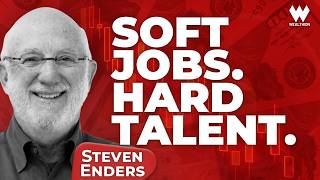
Is There a Copper Shortage? Steven Enders Explains
Key Takeaways A long-term copper deficit looks baked in. Enders argues that on virtually any...
What Are Bond Vigilantes? Ed Yardeni
Key Takeaways Bond vigilantes are the market's discipline on government, and Yardeni named them. He...
Is My 401(k) Safe? Chris Casey on the Real Risk
Key Takeaways The bigger threat to a 401(k) is government and tax risk, not the...
Enjoyed This? Get More Insights
Expert insights and curated opportunities, delivered to your inbox.
Ready to Position for What's Coming?
Whether you're still learning or ready to act, your next step starts here.
- Independent
- Macro-Informed
- Real Asset Focused

The Wealthion Network
Stay ahead of the curve. Subscribe to Wealthion’s newsletter and get timely videos, articles, and alerts featuring insights from the world’s leading experts in investing and wealth-building.
Network Discussion
Sign in to share your thoughts and connect with other readers.
Join the Wealthion Network to Comment