

Should I Sell My Stocks Now? Mark Skousen
Key Takeaways
Skousen says he is fully invested and staying that way. "I'm fully invested. I'm 100% invested," he says, arguing the market is in "this golden era of technology" and that he will "stay with the trend until it ends."
He calls inflation a permanent policy, not a temporary problem. "We have a permanent inflation policy. That is our policy," he says, arguing the Fed's 2% target and chronic deficits guarantee rising prices year after year, requiring net worth to grow 8% to 10% annually just to keep pace.
He is candid that bubbles are hard to spot from inside. "Do you know you're in a bubble? When you're in a bubble, it's really hard to tell," and he warns that "tech stocks could fall in half and still be overvalued."
His diversification is by sector and asset class, not the standard 60/40. He mixes dividend-paying stocks, energy, mining, and speculative small caps rather than holding bonds, since he expects rates to stay elevated.
One specific signal would make him sell. Not a price level, but "financial firms, hedge funds, private equity firms that are running into trouble and they declare bankruptcy," the kind of credit-market contagion seen in 2008.
Should I Sell My Stocks Now? Why Mark Skousen Stays 100% Invested at All-Time Highs
With markets at record highs, many investors ask whether it is time to take profits and step aside. Mark Skousen, author of the Skousen Report at the Oxford Club and professor of economics at Chapman University, gave Wealthion a direct answer in September 2026: no, and he has not, staying fully invested through a market he openly admits could be a bubble. What follows is his attributed approach; the individual stocks and funds he mentions are his own newsletter picks, not a Wealthion recommendation, and none of this is personalized financial advice.
Should you sell your stocks now?
Skousen's own answer is no. "I'm fully invested. I'm 100% invested," he says, aside from some cash reserved for opportunistic situations. His reasoning is that he is riding what he calls "this golden era of technology," with AI-driven productivity supporting both the economy and corporate profits, and that trying to call the exact top is a loser's game: "I'm going to stay with the trend until it ends." He is candid about the risk in that stance, invoking contrarian investor Humphrey Neill's line that "the public is right during the trends but wrong at both ends," and adding the uncomfortable truth that "do you know you're in a bubble? When you're in a bubble, it's really hard to tell."
Why does Skousen call inflation "permanent"?
Because he views it as embedded policy, not a passing shock. "We have a permanent inflation policy. That is our policy," he says, arguing that since the Fed adopted a 2% inflation target and the government runs chronic deficits on a fiat currency, prices are guaranteed to rise every year, just at varying speed. He frames it as a decision, not an accident: policymakers "prefer a little inflation," which shows up in the grocery store, at the pump, and in housing. His practical takeaway for investors is blunt: net worth needs to grow roughly 8% to 10% a year just to stay ahead of it.
How does Skousen diversify against it?
Not with the traditional 60% stocks, 40% bonds split; he avoids bonds entirely right now because rising rates hurt bond prices, and instead favors dividend-paying stocks he says out-yield Treasuries and bank CDs, spread across financials, energy and other sectors. He also holds positions across sectors tied to what he sees as durable trends, including copper, uranium, energy and biotech, plus growth and technology names that pay little or no dividend, alongside a smaller allocation to speculative small caps he says he sizes carefully rather than "backing up the truck." He also prefers gaining exposure to commodities like gold and copper through mining or royalty companies rather than owning the physical metal directly, citing the security concerns of holding bullion. All of this is presented as Skousen's own portfolio construction, drawn from decades of writing his newsletter, and specific names he mentioned are his examples, not something Wealthion is recommending.
What would make Skousen start selling?
Not a valuation level or a percentage decline, but a credit-event warning sign. He says he watches for "financial firms, hedge funds, private equity firms that are running into trouble and they declare bankruptcy," the kind of failure that preceded the 2008 financial crisis, and specifically flags the yen carry trade (borrowing cheaply in yen to fund Treasury purchases) as a potential trigger if a falling yen forces a rapid unwind. If that kind of contagion starts, he says he would raise cash but keep his dividend-paying, income-producing holdings, quoting market veteran Richard Russell that "in a bear market, the winner is he who loses the least."
Should you buy the individual stocks the guest mentions?
Skousen names a number of companies and funds through the conversation as illustrations of his own approach: dividend-paying financials and energy names, a business-development company, a royalty company, a commodity-linked ETF, and a small speculative mining stock he says he is recommending to his own newsletter subscribers. These are disclosed here as his professional stock-picking business (he writes a paid investment newsletter), not as a Wealthion recommendation, and none of it is personalized advice; any individual security carries its own risk that this summary does not evaluate. He is explicit that speculative, story-driven positions should be small ("you don't bet the farm"), a caution worth taking as seriously as the picks themselves.
What Investors Should Watch
- Credit-market stress, not price levels: Skousen's actual sell signal is a financial-firm bankruptcy or contagion event, not a specific index level.
- The yen carry trade: a currency-driven unwind he flags as a plausible trigger.
- Fed policy under Kevin Warsh: whether rate decisions are delayed until after the midterms, as Skousen expects.
- The 10-year Treasury refinancing wall: the roughly $7 trillion in debt he says needs refinancing this year.
- Your own portfolio's income cushion: dividend-paying holdings that can soften a drawdown, in his framework.
FAQ
Should I sell my stocks now? Mark Skousen has not; he remains fully invested, arguing it is nearly impossible to call a market top and that riding the trend has been more reliable than timing an exit. This is his personal approach, not advice tailored to any individual's situation.
Is the stock market in a bubble? Skousen thinks it may be, but stresses that bubbles are very hard to identify from the inside, and that even a 50% decline in tech stocks might still leave them overvalued by historical measures.
Why does Skousen call inflation permanent? He argues that a 2% Fed target combined with chronic government deficits guarantees ongoing inflation as a matter of policy, not a temporary shock, and says investors need roughly 8% to 10% annual net-worth growth just to keep pace.
How does Skousen diversify his portfolio? He avoids bonds given rising rates, favoring dividend-paying stocks across financials and energy, exposure to commodities like copper and gold through mining and royalty companies, and small, carefully sized speculative positions.
What would make Skousen sell his stocks? Not a price target, but signs of financial-sector contagion, such as a hedge fund or private-equity firm failing, similar to the run-up to the 2008 crisis. Even then, he says he would keep his income-producing holdings.
Full Transcript
Speakers: Maggie Lake (Wealthion host) and Mark Skousen (author, the Skousen Report at the Oxford Club; professor of economics, Chapman University). ASR errors corrected (names, terms) and filler removed; meaning preserved. A mid-interview membership message has been noted rather than reproduced. Several partisan asides about specific political figures and parties have been softened to their economic substance, and language directing the viewer to "check out" specific stocks has been reframed as the guest's own attributed examples.
Mark Skousen (cold open): Do you know you're in a bubble? When you're in a bubble, it's really hard to tell. We have a permanent inflation policy. That is our policy. Tech stocks could fall in half and still be overvalued. I'm fully invested. I'm 100% invested.
Maggie Lake: We've had a lot of moves recently by the Treasury Department and Scott Bessent, a Fed meeting coming up, and inflation data this week. What's your view on the state of the US economy right now?
Mark Skousen: I think it's in fairly good shape. My gross-output statistic, which includes business-to-business spending that GDP leaves out, is robust; business spending is actually growing faster than GDP, which is a good sign, and corporate profits are at record highs. There are a lot of good things going on that the bears seem to ignore. I think we're entering a golden era, especially led by technology, which is why the stock market is at an all-time high. That's overlooking rising interest rates and a potential crisis in the Treasury market, because the government is spending money like water, running huge deficits. Can we manage that? That's the real question, and I think that's why Bessent is engaged in a buyback policy, similar to what companies do with their own stock, trying to keep interest rates low. I don't think he'll achieve it; it's more the Federal Reserve's policies that determine inflation and interest rates.
Maggie Lake: So you think people are too bearish on both the economy and stocks. How are you weighing opportunity against risk?
Mark Skousen: We came out of an era of super-easy, zero-rate money, then had to raise rates because of the pandemic; the money supply grew 40% in a couple of years, which brought inflation, and 2022 was the correction phase. We seem to be moving out of that. The overwhelming factor moving the market and the economy is AI-driven technology, creating new productivity, though it hasn't helped the labor market much, which is sluggish, as is growth in general, which is expected when you're pulling back from inflation. The key is watching the Fed. I'm actually optimistic under Kevin Warsh, though he has a political balancing act, since he was appointed by President Trump, who wants lower rates, and you're not going to get those while market rates are rising. If anything the Fed may be tempted to raise, though I doubt they will before the midterms, since that would draw criticism. I think Warsh postpones a hike as long as possible, but all bets are off after the midterms; if inflation persists, rates stay elevated because the market is telling the Fed it has to.
Maggie Lake: Do we have an inflation problem in the US?
Mark Skousen: We have a permanent inflation policy. That is our policy. The Fed doesn't have price stability as its actual goal; ever since the 2% rule was adopted, and Paul Volcker, who lived to see it, thought it was a stupid policy. For the first 200 years of the country prices didn't have to rise, but after World War II, for a variety of reasons, we entered an era of permanent inflation. With a fiat currency, off the gold standard, running huge deficits, you're going to get inflation every year; the only question is how much. It's like a hockey stick that never comes back down, and that is the government's preferred policy, a little inflation, even though it means higher prices everywhere, at the grocery store, the pump, in housing. Even gold, the ultimate inflation hedge, and Bitcoin have been elevated; commodity prices are rising, with copper and uranium at or near record levels. So we have a built-in, permanent inflation problem, and investors need to see their net worth grow 8% to 10% a year just to stay ahead of it. That's part of why people reach for equities and look for help managing a portfolio.
Mark Skousen: I'd add, from an investor's point of view, that this year has been unpredictable month to month as to which asset class does well, gold one month, stocks another, bonds, then Bitcoin, they all take turns. My own approach holds a bit of everything, because you don't know which one will protect you from that inevitable, permanent inflation.
Maggie Lake: Is the economy strong enough to tolerate this kind of inflation?
Mark Skousen: The biggest issue is a black-swan event. We saw that with real estate in 2008 and the pandemic in 2020; bubbles form, the marketplace has to respond, and sometimes there's a collapse that spreads. I'm not complacent enough to think the last crisis is the last one. One current example is the yen carry trade: institutions borrow yen at low rates and invest in Treasuries paying more, but they still have to repay in yen, and the yen has dropped sharply against the dollar, which is why Bessent intervened to buy yen and help avoid a crisis where leveraged funds could go under, similar to Long-Term Capital Management in 1998. I think Bessent and Warsh are probably working together to anticipate these kinds of events and keep them contained; whether they can pull it off is unproven, but that's why I keep a diversified portfolio with hedges like a gold position. I don't hold bonds right now, since rising rates mean falling bond prices, and I prefer dividend-paying stocks with rising payouts, several of which yield more than Treasuries or bank CDs.
Maggie Lake: When you diversify, are you spreading broadly across equities, or is most of the opportunity concentrated in the AI trade?
Mark Skousen: It's hard to find high dividend yields in technology; tech stocks could fall in half and still be overvalued, so I protect myself with financial and energy names that pay well above the S&P 500's dividend yield. What I like about them is that even though they'll fall in a correction like everything else, the dividends cushion the decline, and some companies even raise their payouts through a downturn, which is a signal to hold on because they tend to come back strongly. So you want to diversify and generally stay away from double-digit yields that look unsustainable, since those are often cut in a crisis. [Membership message noted.]
Maggie Lake: It sounds like you favor fortress balance sheets, dividends and diversification across sectors rather than concentration. Is there any sector you'd avoid even if you liked a company in it?
Mark Skousen: There are companies losing money and financially struggling that have still rallied hard on hype, and some of the largest AI-linked companies are pouring billions into data centers and AI infrastructure with the risk of a correction before those investments pay off, so you have to be careful. I look for rising earnings, rising sales and growing dividends for the core of the portfolio, but I also hold growth stocks that pay little. The market has wanted to go up through this third year of a bull run; every negative event triggers a brief dip before a fresh record high, so any positive catalyst, labor data or lower rates, tends to be met with new highs.
Maggie Lake: Is that resilience, or a sign things have gotten too frothy and narrow?
Mark Skousen: That's the problem: do you know you're in a bubble? When you're in one, it's really hard to tell. Humphrey Neill, the father of contrarian investing, said the public is right during the trends but wrong at both ends, extreme bullishness near a top like 1999, extreme bearishness near a bottom like March 2009. Those turning points happen maybe once a decade, and it's hard to say when the next one comes, but I think we're in the middle of a bull market, this golden era of technology, and we need to take advantage of it. I'm fully invested, I'm 100% invested, aside from some cash for special situations. In my own newsletter I actually split my model roughly in half between an index fund and individual stocks, ETFs and special situations, and track every year whether the stock-picking side beats the index, which keeps investing engaged. If you're a purely passive investor who doesn't care to watch markets closely, a well-diversified index-fund portfolio and leaving it alone is a perfectly reasonable choice too.
Maggie Lake: You're more bullish than I expected. Are there risks you're watching?
Mark Skousen: There are two policy issues that have weighed on markets: a trade war through tariffs, which raises costs, and prolonged conflict in the Middle East. The administration's second-term approach has combined an America-first economic push with an assertive foreign policy, and it remains to be seen how that plays politically; a poor midterm result for the governing party could bring real scrutiny to both.
Maggie Lake: How do you use diversification to manage those geopolitical risks?
Mark Skousen: Not through the traditional 60/40 stock-bond split; I hold a position in a major copper producer, since copper is at an all-time high and ties into infrastructure and data-center buildout. I'm also seeing renewed interest in Bitcoin, though I access that through a blockchain-and-crypto-companies ETF rather than the coin directly, since those companies have outperformed Bitcoin itself. I like uranium for nuclear power, which I see as a better long-term answer than wind and solar, especially as smaller modular reactors develop. AI and technology names are largely money-losers right now, a short-term cost for a long-term payoff in my view, so I try to avoid companies that lose money indefinitely. I also hold a biotech position, since drug development continues to advance even though it must clear a long FDA approval process; my favorite Dow-listed name in that group is a large biopharmaceutical company.
Maggie Lake: Do you prefer to express these trends through equities rather than owning the commodity directly?
Mark Skousen: Yes. Even with gold, I'd rather own a position in mining or royalty companies than the metal itself, since gold and silver coins are a fine private holding but create a theft and storage concern as a bearer asset. I like the royalty-company model as a comparatively conservative way to gain exposure, since mining shares at the earliest production stage tend to be quite volatile, higher beta than the broad market. Overall my portfolio's beta is a bit above one, but not by much.
Maggie Lake: If we're in a higher-inflation period, is that cyclical, tied to energy and supply chains and geopolitics, or is it structural?
Mark Skousen: At some point Congress and the White House will have to confront a national debt near $40 trillion and roughly $2 trillion annual deficits; even Keynesian economists argue you should run a surplus at full employment, not a large deficit, but that advice is being ignored. Public-choice economists like James Buchanan and Gordon Tullock explained decades ago why deficits are the natural outcome when spending is popular and taxation is not. The last real fiscal discipline was the late-1990s surplus era, undone by the aftermath of September 11, new wars, and expanded entitlement and benefit spending, which has become very expensive. We're heading toward a reckoning; Bessent buying back Treasuries to hold rates down artificially ahead of the midterms is a short-term measure that doesn't appear to be working, since rates keep rising. Warsh, unlike his predecessor, has said the Fed needs to watch the money supply again, after a period when it was allowed to expand sharply following the pandemic, which is part of why we had this bout of inflation. The Treasury has to refinance about $7 trillion this year, and if global buyers start preferring gold, Bitcoin, or other currencies to Treasuries at the margin, that pressure builds. Eventually Washington will need structural reform to entitlement programs; other countries have partially privatized health coverage with lower cost as a share of GDP, though the US has been reluctant to follow that path.
Maggie Lake: Given all that, I'm surprised you're comfortable being fully invested in equities.
Mark Skousen: Because we can get out of equities at any time with the click of a button. Liquidity today is extraordinary, so I plan to stay with the trend until it ends. If I simply held on no matter what happened, I wouldn't have much of a newsletter to write; readers want to know how to read the signs of the times, even though timing a top is extremely difficult. People are always forecasting a specific date for a collapse; I'd rather see the market actually start to drop meaningfully before treating that as the signal. Until then, I stay fully invested.
Maggie Lake: What would cause you to lighten your equity position? Is there a pain threshold?
Mark Skousen: I watch for financial firms, hedge funds or private-equity firms running into serious trouble and declaring bankruptcy, the kind of event that preceded 2008 and can spread quickly. When that starts, it's time to raise cash, though I wouldn't get completely out; I'd keep income-producing holdings that cushion the decline. As the market historian Richard Russell put it, in a bear market the winner is the one who loses the least. You stay with dividend payers and move a larger share to cash while riding out the storm.
Maggie Lake: What about small caps? Do you stick to large, dividend-paying names, or look further down the ladder?
Mark Skousen: I like to take small positions in speculative names; every large technology leader was once a small company, and finding the next one is part of the fun, even though most don't work out. Right now I'm looking at a small mining company with what looks like a promising discovery, and I've flagged it to my own newsletter subscribers as a speculative position, sized small rather than a large bet. New investors often make the mistake of getting excited and putting too much into a story after building real wealth; a small position that doesn't work out is easy to accept, and a small position that does work out is still a win. The same logic applies to small defense and drone companies benefiting from higher defense spending, and to unprofitable AI infrastructure names hoping to become profitable, a little exposure keeps investing interesting without betting the portfolio.
Maggie Lake: Do people ask you about the OpenAI or Anthropic IPOs? Would a small position there appeal to you?
Mark Skousen: If you can access a pre-IPO private placement the way some early investors did with Tesla or SpaceX, that's interesting, but once a company actually goes public, insiders are often selling into that same offering, and it's harder to make money after that point; the phrase on Wall Street is that the easy money has already been made. Buying after an IPO is often described as "the burning match," since somebody tends to get burned once it's passed around, frequently retail investors buying late. As one example from my own income sleeve, I hold a business-development company that is the only stock I'm aware of paying both a monthly and a quarterly dividend, investing in private, pre-IPO companies with a strong track record on credit losses. It yields around 7% and has outperformed the market since inception; it's not a stock that will multiply quickly, but a steady high-single to low-double-digit annual return including dividends is a reasonable outcome, and one I'm satisfied with as one piece of a diversified income sleeve.
Maggie Lake: Mark, it was a pleasure. I love the enthusiasm you still bring to this work.
Mark Skousen: Thank you, Maggie. I enjoy the social side of investing too, speaking at various financial conferences through the year; it's an exciting field, and every day is different.
Maggie Lake: We'll have you back soon. Thanks so much.
Mark Skousen: My pleasure. Take care.
If you want a professional read on how short-term funding risk fits your own portfolio, you can request a free portfolio review from an advisor who understands real assets at https://www.wealthion.com/advisors/.
This article is educational and is not investment, tax, or legal advice. It does not recommend any security. Advisory services are provided by Greylock Peak Investments, LLC, a subsidiary of Wealthion. Wealthion is compensated for advisor introductions; see the Solicitor's Disclosure Document, ADV Part 2A and Form CRS. That arrangement does not influence editorial coverage.
What Serious Investors Are Watching
Dive into expert interviews, market analysis, and long-form content built to help serious investors think long-term.
Why Is the National Debt a Problem? Jonathan Wellum
Key Takeaways Wellum calls this a debt bubble, plainly. "We're in a debt bubble," he...
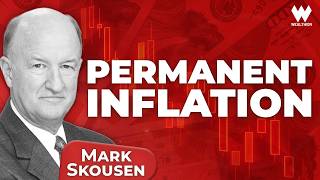
Should I Sell My Stocks Now? Mark Skousen
Key Takeaways Skousen says he is fully invested and staying that way. "I'm fully invested....
America Builds It — China Sets the Price
FROM THE DESK OF STEVEN FELDMAN OPEN POSITION The largest capital cycle in corporate history...
Enjoyed This? Get More Insights
Expert insights and curated opportunities, delivered to your inbox.
Ready to Position for What's Coming?
Whether you're still learning or ready to act, your next step starts here.
- Independent
- Macro-Informed
- Real Asset Focused


The Wealthion Network
By subscribing, you agree to receive Wealthion emails. Unsubscribe anytime.
Network Discussion
Sign in to share your thoughts and connect with other readers.
Join the Wealthion Network to Comment