

Why Is Gold Going Up? Grant Williams
Key Takeaways
Williams says gold's rise is really about falling currency values. In his framing, "gold tells you the value of your currency," not the other way around, so a rising gold price is a signal about money, not the metal.
He casts gold as a warning, the "howling wolf." Using a Yellowstone-wolves analogy, Williams describes gold as an apex predator removed from the financial system in 1971, whose return is a warning to change behavior.
Central bank behavior changed after 2022. He points to the sanctioning of Russian central bank assets as the trigger for central banks doubling gold purchases and repatriating reserves, which he says has broken the old crisis playbook of buying dollars and Treasuries.
He argues investors should own gold, not trade it. Williams' repeated message is "forget the price. Just own it," framing gold as protection against currency debasement rather than a bet on price appreciation.
These are his attributed, and contested, views. Gold pays no income and can be highly volatile, and not everyone shares the debasement thesis; the page presents Williams' case alongside that caution.
Key Moments
00:00 - The Yellowstone wolves and the trophic cascade The ecology metaphor at the heart of Williams' argument.
01:13 - Gold as the apex predator, removed since 1971 Why he says taking gold out of the system let excess build up.
03:23 - Gold as the howling wolf: a warning to change behavior What a rising gold price is really signaling, in his view.
05:16 - How central bank behavior changed after 2022 Sanctions, gold buying and repatriation.
08:22 - Did we miss the peak in gold? Why he thinks that is the wrong question.
08:53 - Why the 20% bear-market rule misses the point His critique of measuring gold by price.
12:07 - Debasement and the case for owning gold The purchasing-power argument, in his words.
13:55 - Own versus buy, and bullion versus gold miners The mindset shift he urges, and how the two approaches differ.
Why Is Gold Going Up? Grant Williams on the Warning the Financial System Is Sending
Gold is going up, but according to financial commentator Grant Williams, speaking with Wealthion in August 2026, the more useful way to read the move is that currencies are going down. His argument is that gold's price is a mirror held up to money, and that its recent strength, along with a shift in how central banks behave, is a warning worth heeding. What follows is Williams' view, attributed to him; gold is a volatile asset that pays no income, and his debasement thesis is not universally shared.
Why is gold going up?
Williams' answer reframes the question. "Gold tells you the value of your currency," he says, "it's not the other way around." Because gold is an inert metal that generates no cash flow, he argues its rising price is really a reflection of falling currency values, not a change in gold itself. In his words, the move is "saying okay, you need to be worried," a signal to pay attention rather than a simple price story. Mike McGlone made a similar point in gold is flashing a warning.
What is the "gold is warning us" thesis?
It rests on an ecology metaphor. Williams recounts how reintroducing wolves to Yellowstone triggered a "trophic cascade": the wolves changed the behavior of prey animals, which let vegetation regenerate and even stabilized rivers. His analogy is that gold is the apex predator of the financial system, removed in 1971 when the dollar's link to gold was severed, after which, he argues, the "deer" of finance grazed the landscape bare. Now, he says, "Gold is the howling wolf," a warning that the predator is back and behavior needs to change, though he stresses this is a slow-moving trend, not something that happens overnight.
How has central bank behavior changed since 2022?
This is the concrete shift Williams points to. He dates it to February 2022, when the US sanctioned Russian central bank assets, which he says changed how central banks think about reserves. Since then, he argues, they have doubled their gold purchases and begun repatriating gold to hold it under their own control, while China has offered to custody gold in Shanghai vaults, something he says would once have been laughable. His point is that each time the US uses financial sanctions, rival custodians look relatively less risky. He also notes gold has beaten its inflation-adjusted 1980 peak for the first time in 45 years, and that the old crisis "reaction function" of buying dollars and Treasuries is breaking down, with a recent stretch of stocks down, bonds down and gold up. The de-dollarization angle is explored in Ronnie Stoeferle's the dollar system is losing trust.
Did we miss the peak in gold?
Williams thinks that is the wrong question. He argues the popular rule that a 20% decline equals a bear market is meaningless for gold, pointing out that gold has corrected sharply many times (such as roughly 30% after its 2011 high) within longer uptrends. His deeper objection is to measuring gold by price at all: using Weimar-era Germany as an illustration, he notes the paper mark went from 475 to an ounce of gold in 1917 to trillions by 1923, yet along the way gold routinely rose more than 100% in a month and then fell 20% the next, so price-based "bear market" labels tell you little. For a more cautious, price-aware take that balances this, see Chris Vermeulen on a shakeout before the next big rally.
Should you own gold, and how much?
Here Williams makes his central, and clearly opinionated, case. Unless there is a credible path to resolving government debt without inflating it away, he argues, savers' currencies will keep losing value, noting the dollar has lost about 95% of its purchasing power over 50 years. His conclusion is to "own gold as protection against the debasement" of currency, and to treat it as part of a portfolio rather than a trade. He calls gold "chronically" underowned. Importantly, this is his framework, not personalized advice, and the counterpoint stands: gold produces no income, can be volatile, and its role and sizing depend entirely on an individual's situation and goals.
Bullion or gold miners?
Williams draws a sharp distinction based on intent. If the goal is to preserve purchasing power and, as he puts it, sleep at night, he favors physical bullion held as liquid reserves in place of a cash savings account. If the goal is to make money, he says the right gold mining companies can offer leverage to the gold price and "juice your returns" once a cycle gets going, but he is emphatic that investors must do their own due diligence, and that miners "will not help you sleep at night." A related timing perspective appears in Rick Rule's buy gold before the crowd comes back. As always on Wealthion, these are Williams' attributed views, not investment advice.
What Investors Should Watch
- Currency purchasing power, not just the gold price: Williams' preferred lens, since he views the price as a reflection of the currency.
- Central bank gold buying and repatriation: the post-2022 behavior shift he says signals a deeper change.
- The crisis "reaction function": whether investors keep buying gold in stress rather than only dollars and Treasuries.
- Gold versus its inflation-adjusted 1980 peak: the level he says was finally surpassed after 45 years.
- Own versus buy: whether holders treat gold as a long-term reserve or a short-term trade, which he says changes everything.
FAQ
Why is gold going up? Grant Williams argues gold's rise mainly reflects falling currency values rather than a change in gold itself, since gold is an inert asset. He says "gold tells you the value of your currency," so a higher price is a warning about money. This is his attributed view.
What does Williams mean by gold being a "warning"? He uses a Yellowstone-wolves analogy, calling gold the apex predator removed from the financial system in 1971. Its return, "the howling wolf," is a signal that behavior needs to change, though he stresses it is a slow-moving trend.
How has central bank behavior around gold changed? Williams dates the shift to the 2022 sanctioning of Russian central bank assets, after which, he says, central banks doubled gold buying and began repatriating reserves, with China offering to custody gold in Shanghai.
Did we miss the peak in gold? Williams considers that the wrong question, arguing the 20% bear-market rule is meaningless for gold and that measuring the metal by price is misleading. He points to sharp corrections within long uptrends as normal.
Should I own gold, and how much? Williams makes a debasement-based case for owning gold as protection of purchasing power, calling it chronically underowned, but this is his view, not advice. Gold pays no income and is volatile, so sizing depends on individual circumstances.
Which expert and interview does this article reference? This article draws on Wealthion's interview with financial commentator Grant Williams: "Gold Is Warning Us: The Financial System Is Changing."
Full Transcript (cleaned)
Speakers: Maggie Lake (Wealthion host) and Grant Williams (financial commentator). ASR errors corrected and filler removed; meaning preserved. A mid-interview Wealthion membership message has been noted rather than reproduced.
Grant Williams (cold open): Gold is the howling wolf, and it always has been. We've had a period where stocks are down, bonds are down, gold up. Forget the price. Just own it.
Maggie Lake: Grant, it's great to see you and catch up.
Grant Williams: Years ago I talked about the similarities between the reintroduction of wolves to Yellowstone National Park, which caused a great fuss back in the 1990s, and the monetary ecosystem. When they announced they were bringing the wolves back, everyone was up in arms, saying it would be a disaster, that the wolves would kill the livestock and decimate the park. They went ahead, and what happened was extraordinary, what's called a trophic cascade. The wolves ate some deer and elk, but more importantly they changed the animals' behavior: the places the prey used to graze, where they could be trapped easily, they abandoned because the wolves were there, so those areas regenerated. The park came back to life astonishingly fast, more trees, then more birds, then more predators, and it even changed the course of the rivers, because as the shrubs grew back the soil and banks got firmer. I talked about gold as the apex predator of the financial system. Gold has been taken out of the system since 1971, and the deer of the financial world, the bankers and the people creating all these financial products, have grazed the landscape bare. So the idea was the reintroduction of an apex predator, gold, to the monetary system as a stabilizing device. Eight years on, I want to revisit what I said, how things have changed, and what I think happens next. It's the talk more people have asked me to follow up on than any other I've done.
Maggie Lake: Why now? What has this so front of mind for you?
Grant Williams: It just happened to line up this year, and as I dug into it, a lot of interesting charts and comparisons came up, and it felt like a good time to revisit it. That doesn't mean it's happening tomorrow, which is what everyone wants to know, so they can set an alarm and buy the day before. But these are journeys, not overnight events, and the journey toward this potential event has continued. I want to explain the steps we've taken in the eight years since, so you get a sense of where we go from here.
Maggie Lake: A lot of alarm bells seem to be going off for people. Is it strange to feel we're in a moment where the things you've talked about for years are coming to fruition?
Grant Williams: The warning in the park is the howl of the wolves. No one had heard them for a long time, and if you're an elk or deer you hear it and wonder what it is, and then you see one taken away, and it gets your attention. In the financial system, gold is the howling wolf, and always has been; it's just been marginalized for so long. The change in the price of gold, which is really nothing compared with the change in the price of currencies, isn't really about gold. It's saying you need to be worried, because the wolf is in the park again, and you need to change your behavior.
Maggie Lake: [Membership message noted.] When we imagine the financial system breaking down, all the debasement and deficits, we picture a dramatic event that sends everyone stampeding into protection like gold. But you've raised the possibility that it's something slower and harder to see, which is scarier.
Grant Williams: There's a scene in Monty Python and the Holy Grail where two guards watch Lancelot charging from far off; the camera keeps cutting, he's still distant, still distant, and then suddenly he's on them. It's a brilliant way of showing how something you've seen coming all along can suddenly jump out at you. With gold, we went through a long period where only so-called gold bugs paid attention. Then central bank behavior changed, the same way the deer changed in Yellowstone. That goes back to February 2022, when the US sanctioned Russian central bank assets. Since then central banks have doubled their gold purchases and started bringing gold home; there's a lot of repatriation, because people want it in their own country, under their own control, where it's safe. China is offering to custody gold for nations in Shanghai vaults, which would have been laughable decades ago. Every time the US does something like sanction reserves, China looks like less of a problematic partner, maybe the lesser of two evils. When behavior like that changes, you have to pay attention. It doesn't mean something happens overnight, but these are big, slow-moving trends. We're talking about gold finally beating an inflation-adjusted peak it last beat in 1980; no gold bull market in 45 years managed that, and we just did. Once behavior changes, you can't rely on the old reaction function, where any crisis meant people buy dollars and Treasuries. That's not happening the same way; we've had stretches of stocks down, bonds down, gold up. People got conditioned to "if X then Y," and now it's "if X then Y, or maybe Z." Markets are nothing more than a reflection of the behavior of everyone involved, so recognizing behavior change is important.
Maggie Lake: Because of the extraordinary move in gold, even people who agree with you ask, "Did we just see the peak and miss it? When do I get back in?" It went from steady to volatile. Is that the new environment?
Grant Williams: Great question. Go back and look at the gold chart since 2000; there have been plenty of peaks. In 2011 it went to about 1,920 and then corrected 30%, and people said that's it, it's over. We have this ingrained belief that a 20% correction is a bear market, thanks in part to financial television, and it's nonsense, but it's the accepted framing. This comes back to measuring everything by price, which is dangerous, particularly with gold. It's fine for stocks, commodities and bonds, because you buy those for price appreciation. But gold tells you the value of your currency; it's not the other way around. Gold is inert, it doesn't change your cash flows, so its price moving is a reflection of the currency's value. Take Weimar Germany. In 1917 they severed the link and brought in the paper mark; the gold mark had been fixed at 475 to an ounce. Between 1917 and 1923 it went from 475 to about 3 trillion paper marks per ounce. On a log scale it looks like a straight line up. But overlay the volatility, the monthly percentage change, and gold regularly climbed more than 100% in a month and then fell 20% the next. So this whole 20% rule is nonsense. If you're a trader, price is the most important thing, and that's fine, you trade. But if you want to own gold to protect your purchasing power, forget the price. Just own it. Hold your liquid reserves in gold, and over time it will do what it's supposed to do.
Maggie Lake: So you saw the spike earlier this year as a short-term crisis of confidence in the dollar, and then it also became speculative, the next meme.
Grant Williams: It became that too, but the people who owned it are doing better than if they'd held currency; it more than protected their purchasing power. They're not thinking about the price; they're just accruing their savings in gold instead of currency.
Maggie Lake: Even with the volatility and crashes, in your mind this is an upward channel?
Grant Williams: Unless someone can give me a credible explanation of how they stop debt-funding everything without inflating it all away, yes. If you tell me we've achieved nuclear fusion and abundant free energy, or there's a credible growth miracle to shrink the debt, great, I'm all for it. But until I hear a credible path, my fear is that the dollar, pound, yen or euro in your pocket will be worth less, and that's demonstrably true: over 50 years the dollar has lost 95% of its purchasing power, and it can keep losing purchasing power every year without ever going to zero. So buy your shares and bonds and look for the price to move, but own gold as protection against the debasement of the currency and the loss of purchasing power.
Maggie Lake: As part of a portfolio. Is gold still underowned?
Grant Williams: Chronically. The underowning of gold is chronic, in my view, and it doesn't take much to change. Once it's moving and people start looking at it the right way, worrying about the loss of purchasing power rather than the price, the whole thing changes, because people simply realize they need to own it, not buy it. Those two words convey very different things to our monkey brains: "buy" implies you'll sell, "own" implies you'll hold onto it. That's the mindset shift people need.
Maggie Lake: The original hodlers. And people do this in different ways at different points of the cycle.
Grant Williams: Right. You can buy and hold bullion to maintain your liquid reserves; instead of a dollar savings account, own gold coins and put them away, if you're prepared to do the work, and as Rick was saying, you do need to do the work. If you're looking to make money, the right gold mining companies give you leverage to the gold price and can juice your returns massively once the cycle gets going, but do your own due diligence. If you're looking to preserve purchasing power, the miners won't help you sleep at night.
Maggie Lake: I love it, and the image of the wolf reintroduced to the park will stay with people. Great to see you, Grant.
Grant Williams: If the tomatoes start raining in from the back row, we'll know we're both wrong. Always a pleasure.
What Serious Investors Are Watching
Dive into expert interviews, market analysis, and long-form content built to help serious investors think long-term.
Is the US Economy in a Recession? David Rosenberg
Key Takeaways Rosenberg says the economy is far weaker than record markets suggest. He argues...
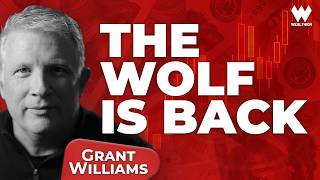
Why Is Gold Going Up? Grant Williams
Key Takeaways Williams says gold's rise is really about falling currency values. In his framing,...
Is Oil a Good Investment? David Woo
Key Takeaways Woo thinks Iran has an incentive to spike oil, and that would hit...
Enjoyed This? Get More Insights
Expert insights and curated opportunities, delivered to your inbox.
Ready to Position for What's Coming?
Whether you're still learning or ready to act, your next step starts here.
- Independent
- Macro-Informed
- Real Asset Focused

The Wealthion Network
Stay ahead of the curve. Subscribe to Wealthion’s newsletter and get timely videos, articles, and alerts featuring insights from the world’s leading experts in investing and wealth-building.
Network Discussion
Sign in to share your thoughts and connect with other readers.
Join the Wealthion Network to Comment