

Why Mining Stocks Can Lag the Metal They Mine
Why Mining Stocks Can Lag the Metal They Mine
A mining company is not a leveraged bet on the metal in the ground. It is an operating business whose margin happens to depend on a commodity price it does not control. Four things break the link between the metal and the equity: production cost inflation, jurisdictional risk, capital allocation, and the time horizon of the people who own the shares.
Only the last of those is about the price at all.
Why does the metal rise while miners do not?
Because a higher metal price raises revenue and, very often, costs at the same time.
Mining consumes diesel, electricity, steel, chemicals and labour. Many of those inputs rise in the same inflationary conditions that lift the metal. A producer can see a twenty percent revenue increase and keep almost none of it, because the cost base moved with it.
That is why all-in sustaining cost is the number specialists read first. It captures what it actually takes to keep producing, rather than the cash cost of digging up one more ounce.
Are miners cheap relative to the metal?
Rick Rule argued in June 2026 that they are, on conventional measures: "And the gold stocks themselves, I would suggest by traditional valuation metrics, are at a discount to their values relative to the price of gold and their future cash flows."
That is his view and it is contested. A persistent discount can mean an opportunity, and it can also mean the market is pricing risks the traditional metrics do not capture, including declining grades, longer permitting and higher future capital requirements.
Michael Oliver noted in September 2026 that the relationship has recently run the other way: "So, if by the way, when that spread advances, meaning when the miners do outperform gold, and frankly, over the last couple years, they've been outperforming gold."
Both can be true. Miners can outperform over a stretch and still trade below the value implied by the metal.
What does investor behaviour have to do with it?
More than most analysis admits.
Rule made a pointed observation in June 2026 about the mismatch between thesis and holding period: "They think the copper price has to go up over five years or the gold price has to go up over five years, but they have trauma holding stock over a long weekend."
That is the behavioural gap. A mining thesis is a multi-year proposition about supply, grade and development timelines. The shareholder base frequently is not multi-year. When short-horizon holders own a long-horizon asset, the price gets set by the impatient rather than by the fundamentals.
What risks does the equity carry that the metal does not?
Four, in rough order of how often they cause damage.
Operational. Mines flood, grades disappoint, mills break. The metal has no operations to fail.
Jurisdictional. A deposit sits where it sits. Tax changes, permitting delays, royalty regimes and outright expropriation are risks the bar in a vault does not carry.
Capital allocation. Mining has a long history of destroying value at cycle peaks through expensive acquisitions and overbuilt projects. Discipline is a management variable, not a commodity variable.
Dilution. Developers without cash flow fund themselves by issuing shares. An investor can be right about the metal, right about the deposit, and still own a shrinking fraction of it.
Why hold miners at all?
Because when the relationship works, it works with force.
A producer with fixed costs sees the entire increase in the metal price fall to the margin. That operating leverage is the reason miners can outrun the metal substantially in a sustained move. Producers can also pay dividends, which the metal cannot.
Durrett framed the underlying reason he holds the metals at all in June 2026: "The only reason I own gold and silver is because of the weakness in the US bond market."
If the thesis is monetary rather than operational, the metal expresses it more directly and the equities add a layer of risk that has nothing to do with the thesis. That is the judgment each investor has to make for themselves.
How should an investor read a mining company?
By asking where it sits and what it controls. Is it producing or developing? What is its all-in sustaining cost relative to peers? Where are the assets, politically? How has management allocated capital through the last cycle? And is it funded, or will it need the market's permission to continue?
Those questions matter more than the metal price forecast, because the metal price is the one variable every company in the sector shares.
FAQ
Do mining stocks always follow the metal price? No. Costs, jurisdiction, management decisions and shareholder behaviour can break the link for long periods in either direction.
What is all-in sustaining cost? A measure of what it costs to maintain production, including sustaining capital, rather than just the cash cost of extracting an additional ounce. It is the standard comparison across producers.
Why do miners underperform in an inflationary period? Because the same inflation that lifts the metal also lifts diesel, power, steel and labour. Revenue and costs can rise together, leaving the margin unchanged.
Are mining stocks leveraged exposure to the metal? They offer operating leverage when costs are controlled, but they add operational, political and dilution risks the metal does not carry. That is not the same as leverage.
Why do junior miners dilute shareholders? Developers without production fund exploration and construction by issuing shares. Investors can be right about the deposit and still see their ownership share shrink.
Do miners pay dividends? Established producers often do. That is one genuine advantage over holding the physical metal, which generates no income.
Should I own the metal or the miners? That depends on whether the thesis is monetary or operational. A monetary thesis is expressed more directly by the metal. An operational thesis about a specific business is expressed by the equity.
Which experts and interviews does this article reference? Wealthion interviews from June to September 2026: Rick Rule on gold and mining equities; Michael Oliver on precious metals; Don Durrett on bonds and gold, 23 June 2026.
If you want a professional read on how mining exposure fits your own portfolio, you can request a free portfolio review from an advisor who understands real assets at https://www.wealthion.com/advisors/.
This article is educational and is not investment, tax, or legal advice. It does not recommend any security. Advisory services are provided by Greylock Peak Investments, LLC, a subsidiary of Wealthion. Wealthion is compensated for advisor introductions; see the Solicitor's Disclosure Document, ADV Part 2A and Form CRS. That arrangement does not influence editorial coverage.
What Serious Investors Are Watching
Dive into expert interviews, market analysis, and long-form content built to help serious investors think long-term.
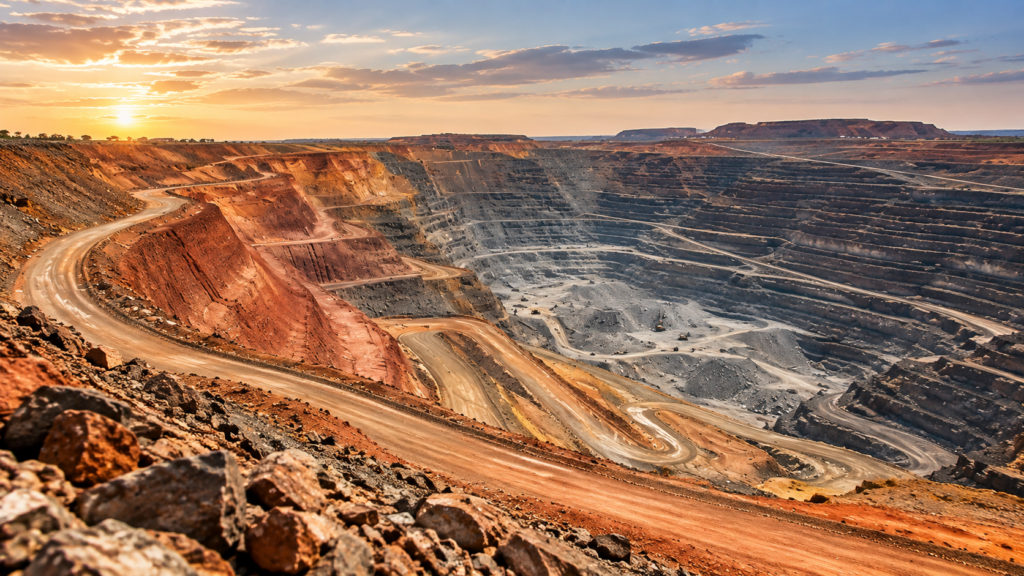
Why Mining Stocks Can Lag the Metal They Mine
Why Mining Stocks Can Lag the Metal They Mine A mining company is not a...

What Drives the Silver Price
What Drives the Silver Price Silver is priced as two different things at the same...

What Causes Treasury Yields to Rise
What Causes Treasury Yields to Rise A Treasury yield is four things added together: the...
Enjoyed This? Get More Insights
Expert insights and curated opportunities, delivered to your inbox.
Ready to Position for What's Coming?
Whether you're still learning or ready to act, your next step starts here.
- Independent
- Macro-Informed
- Real Asset Focused

The Wealthion Network
By subscribing, you agree to receive Wealthion emails. Unsubscribe anytime.
Network Discussion
Sign in to share your thoughts and connect with other readers.
Join the Wealthion Network to Comment