

Why This Inflation Is Energy-Led, Not Demand-Led
Why This Inflation Is Energy-Led, Not Demand-Led
Headline inflation is running at 3.4 percent while core inflation has eased to 2.4 percent. That gap is almost entirely energy, and it is the single most important fact about the current price environment. Demand-driven inflation responds to interest rates. Supply-driven inflation does not.
The distinction decides what monetary policy can fix and what it can only contain.
What does the split between headline and core show?
Two different economies inside one number.
Ed Yardeni summarised the latest reading in September 2026: "Today's CPI showed prices rising 3.4% from a year ago, while core inflation eased to 2.4%."
Core strips out food and energy. On an annual basis core has eased to 2.4 percent, the lowest since March 2021, while headline held at 3.4 percent. Gasoline alone rose 3.9 percent in August and accounted for more than a third of the monthly increase, and fuel oil is up 52 percent over the year. Brent crude has traded around $107 after drone strikes forced Saudi Arabia to shut its East-West pipeline.
That is not an economy running hot. It is an economy paying more for fuel.
One caveat belongs here, because it is the reason the Federal Reserve raised rates rather than waited. The monthly core reading came in at 0.3 percent against a 0.2 percent forecast, and non-housing services accelerated to their strongest month since January, still running above 3 percent over twelve months. The annual core trend is improving. The monthly detail underneath it is not.
What had been holding inflation down?
Cheap goods, and that support is now under attack.
Barry Knapp, founder and managing partner of Ironsides Macroeconomics, identified the mechanism in July 2026: "The only reason we had inflation anywhere near this 2% target was because goods prices were zero because China has mass massive excess capacity."
That is the offset almost nobody prices properly. Services inflation has been persistently firmer than the headline suggested, and flat goods prices were masking it. Energy is an input to goods, so an energy shock attacks the offset directly. Remove it and the underlying services rate becomes visible.
How long has this been going on?
Longer than the current oil move.
David Rosenberg, founder of Rosenberg Research, put the duration plainly in August 2026: "They're just focused on the inflation mandate and inflation's been above target for five years in a row."
Five consecutive years matters because it changes the nature of the problem. A one-off shock leaves expectations intact. A persistent overshoot starts to move them, and once expectations move, the inflation becomes self-sustaining regardless of where it started.
Does an energy shock feed into other prices?
Yes, with a lag, and food is usually first.
Art Berman, a geologist and energy consultant, expected the pass-through to continue in August 2026: "The inflationary pressures are for real and I would expect food prices to continue to go up."
The chain is mechanical. Diesel moves freight. Freight moves food. Natural gas is a feedstock for fertiliser. Energy is embedded in packaging, refrigeration and processing. A crude move shows up in the grocery bill several months later, which is why the headline number moves first and the broader measures follow.
That lag is what makes an energy shock dangerous for a central bank that judges the situation early.
Can raising interest rates fix this?
Not the cause. Possibly the consequence.
Higher rates do not produce more oil. They cannot reopen a pipeline or end a conflict. What they can do is suppress demand elsewhere in the economy so that a rise in one relative price does not become a rise in the general price level.
That is precisely how the Federal Reserve framed its September 2026 decision to raise rates, with Chair Kevin Warsh saying the Fed cannot affect any individual price but can prevent changes in relative prices from broadening into second and third order effects.
Whether that works is genuinely uncertain. It has worked before. It has also produced recessions.
What would tell us the character of the inflation has changed?
Three things, in order of importance.
Core inflation turning back up, which would mean the energy shock has broadened rather than stayed contained. Services inflation accelerating, which would mean it is reaching wages. And inflation expectations moving, measured through breakeven rates in the bond market, which would mean the anchor has slipped.
If annual core keeps drifting down while headline runs at 3.4 percent, this remains an energy story and it will fade when energy fades. If the monthly core prints keep beating expectations, as August's did, it has already become something else.
What does this mean for a portfolio?
The honest framing is that energy-led inflation is unusually awkward, because it raises the price level while weakening real income and growth.
It tends to support energy producers and real assets, pressure long-duration bonds, and squeeze companies for which energy is a cost rather than a revenue, which is most of them. It also raises the risk that a central bank tightens into a slowdown, which is the combination that historically produces the worst outcomes for a conventional balanced portfolio.
That is the case the experts interviewed on Wealthion have been making. It is a view, not a certainty, and the alternative case, that energy prices normalise and core keeps falling, remains entirely plausible.
FAQ
What is energy-led inflation? Inflation driven by rising fuel and power costs rather than by excess demand. It shows up as a gap between headline inflation, which includes energy, and core inflation, which excludes it.
What is the difference between headline and core inflation? Headline includes all items. Core excludes food and energy, which are the most volatile. Comparing the two shows whether price pressure is broad or concentrated.
What is the current US inflation rate? Headline CPI was 3.4 percent year on year and core was 2.4 percent in the September 2026 release.
Why can the Fed not fix energy inflation? Because interest rates affect demand, not supply. Raising rates does not produce more oil. The Fed's stated aim is to stop a relative price rise from broadening into general inflation.
How does oil affect food prices? Through diesel for freight, natural gas for fertiliser, and energy embedded in processing, packaging and refrigeration. The pass-through typically takes several months.
Why were goods prices holding inflation down? Knapp argues Chinese manufacturing overcapacity kept goods price growth near zero, which offset firmer services inflation and made the headline number look tamer than the underlying trend.
Is this inflation temporary? That depends on whether it reaches core. If core inflation stays near 2.4 percent, the energy effect should fade. If core rises, expectations may have shifted.
Which experts and interviews does this article reference? Wealthion interviews from July to September 2026: Art Berman on oil prices; Barry Knapp on cutting tech; David Rosenberg on the US economy; Ed Yardeni on bond vigilantes.
If you want a professional read on how inflation risk fits your own portfolio, you can request a free portfolio review from an advisor who understands real assets at https://www.wealthion.com/advisors/.
This article is educational and is not investment, tax, or legal advice. It does not recommend any security. Advisory services are provided by Greylock Peak Investments, LLC, a subsidiary of Wealthion. Wealthion is compensated for advisor introductions; see the Solicitor's Disclosure Document, ADV Part 2A and Form CRS. That arrangement does not influence editorial coverage.
What Serious Investors Are Watching
Dive into expert interviews, market analysis, and long-form content built to help serious investors think long-term.

When Governments Take Equity Stakes in Their Own Suppliers
When Governments Take Equity Stakes in Their Own Suppliers A tariff changes a price. A...

Is a Recession Coming? What the Labour Market Is Signalling
Is a Recession Coming? What the Labour Market Is Signalling Nobody can date a recession...
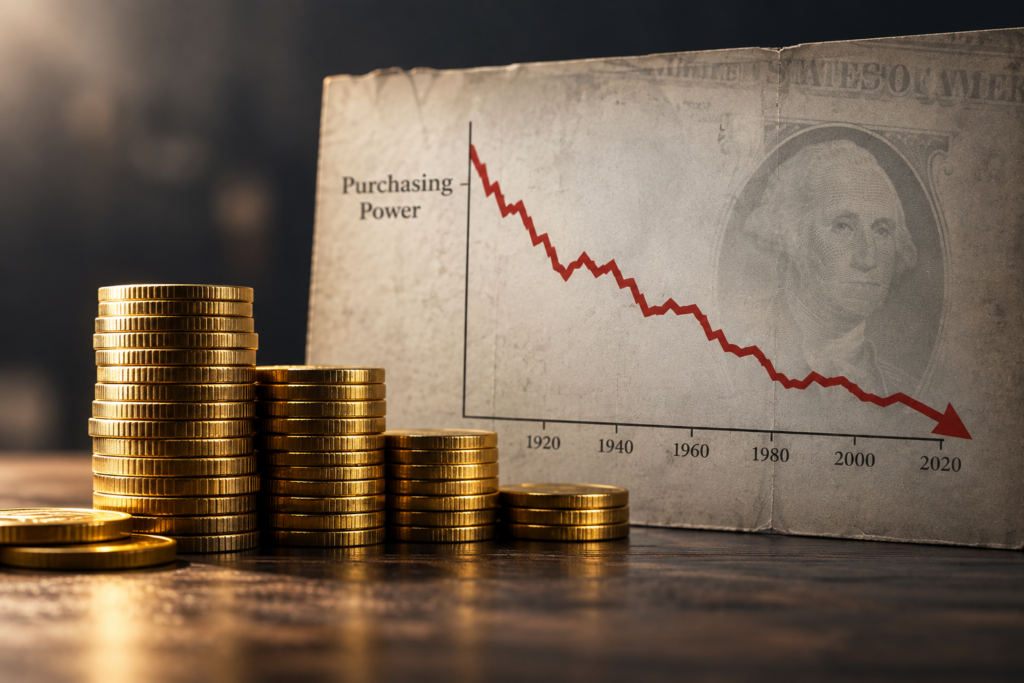
Why Purchasing Power Matters More Than the Gold Price
What Causes Treasury Yields to Rise A Treasury yield is four things added together: the...
Enjoyed This? Get More Insights
Expert insights and curated opportunities, delivered to your inbox.
Ready to Position for What's Coming?
Whether you're still learning or ready to act, your next step starts here.
- Independent
- Macro-Informed
- Real Asset Focused

The Wealthion Network
By subscribing, you agree to receive Wealthion emails. Unsubscribe anytime.
Network Discussion
Sign in to share your thoughts and connect with other readers.
Join the Wealthion Network to Comment