

ELECTION WEEK What Doesn’t Reverse on Tuesday | Open Position by Steven Feldman
OPEN POSITION
FROM THE DESK OF STEVEN FELDMAN
The vote will change the rhetoric. It will not change the direction.
Brent crude traded near $113 on Friday, up about 10% for October. On Tuesday, Americans vote. My bet is that by the end of the week, regardless of who wins, the price of oil will matter more to investment portfolios than the election results. That doesn’t mean elections don’t matter. Of course they do. But I think investors are making a mistake if they assume a different Congress can restore the economic conditions we spent decades taking for granted.
For most of my investing life, I operated with a reasonably stable understanding of the world: open shipping lanes, relatively cheap energy, dependable allies, and a dollar everyone wanted to own. It was like playing in a domed stadium. You didn’t have to worry much about the weather. Well, someone opened the roof, and I’m not convinced it’s going to close again. A lot of investors seem to think the old conditions are simply on hold. I think they’re being renegotiated, with or without us.
WHY TUESDAY WON’T REVERSE IT
The obvious objection is that much of this uncertainty is a function of the Trump administration’s temperament, and that a Democratic Congress might restore the “old world order”. I don’t think so. The CHIPS Act, tighter export controls on China, and incentives to bring manufacturing home have crossed administrations and party lines. Resource security, industrial policy, and higher defense spending are increasingly bipartisan priorities. The parties disagree on the methods, sometimes profoundly, but the underlying direction is remarkably similar.
Forecasters have Democrats favored to take the House, with the Senate also in play. A Democratic Congress could constrain the administration through spending decisions, oversight, and legislative negotiations. It could change the tone and the speed of policy. Those are meaningful differences. But it cannot legislate away the competition with China, reopen every supply chain, or restore the trust that has been lost.
And trust may be the hardest part to rebuild. For decades, America’s allies organized their defense, trade, and financial relationships around the assumption that the United States was a reliable partner. That assumption has been tested by tariffs, sanctions, demands for greater defense self-sufficiency, and the growing use of the dollar-based financial system as an instrument of foreign policy.
Our allies still need the American military, access to our markets, and the dollar. But they are increasingly hedging against dependence on all three. Trust is slow to build and quick to spend. It does not refill on a Tuesday in November.
Then there is the fiscal mess, which Tuesday will do almost nothing to fix. We borrowed roughly $2 trillion in the fiscal year that just ended. Gross federal debt has passed $40 trillion. Annual interest costs now exceed $1 trillion. And something like $10 trillion in marketable Treasury debt must be refinanced over the coming year. This isn’t a Trump problem or a Biden problem. It’s the cumulative result of decades of decisions made by both parties, with very little appetite for either higher taxes or serious spending reform.
The Fed held rates last week, but two members wanted to raise them. With oil above $100 and growth running hot, the central bank faces another uncomfortable inflation problem, and I think the next move is more likely a hike than a cut. Markets agree, putting a December hike at about three in four. And here’s the worrying part: Washington can vote on spending, but it cannot vote on the interest rate at which the world will lend it money.
WHAT COULD ACTUALLY CHANGE
There are outcomes on Tuesday that could matter quite a lot in the short run. A Democratic Congress could increase pressure on the administration to de-escalate the conflict with Iran. Perhaps Washington and Tehran find a face-saving arrangement over the Strait of Hormuz, accompanied by vague nuclear commitments. Both sides declare victory.
Oil could fall sharply. Inflation pressures could ease. The Fed might regain some room to maneuver, and markets would likely welcome the relief. I wouldn’t dismiss that possibility. Nor would I bet on it. The alternative is a prolonged confrontation, continued shipping disruptions, and persistently expensive energy. That would leave the Fed in an unenviable position and put additional pressure on consumers and corporate margins.
Neither outcome puts the world back where it was. Countries that have watched their energy supplies threatened aren’t going to forget the experience because oil drops $20. Companies that have discovered the vulnerability of far-flung supply chains aren’t suddenly going to stop diversifying. Governments that have watched relatively inexpensive drones challenge extraordinarily expensive military equipment aren’t going to abandon the lessons. And the competition between the United States and China for technology, critical minerals, industrial capacity, and regional influence isn’t going away.
For decades, the global economy was organized around efficiency. Find the cheapest producer. Minimize inventories. Stretch supply chains across continents. Capital flowed toward the lowest cost of production. Increasingly, we’re organizing around resilience represented by redundant factories, domestic mineral processing, hardened electrical grids, reliable baseload power, bigger defense budgets, alternative shipping routes. Even the AI revolution, which seems to transcend all of this, keeps running into the same physical constraints of electricity and infrastructure, as well as access to capital.
This is an expensive endeavor. Some of the spend will no doubt be wasteful. But enormous amounts of capital are going to be deployed to make governments and businesses less vulnerable to a world they no longer fully trust. Somebody will make a lot of money building that resilience. Somebody else will have to pay for it. That is a much bigger investment story than who wins Congress on Tuesday.
WHAT I WOULD DO
First, don’t make any investments based on Tuesday. I could probably end the newsletter right there. But the harder question is how to invest in a world where the assumptions we’ve relied upon are changing.
I say this with considerable humility. These markets are very hard to predict. I’ve been arguing in this newsletter and in recent Wealthion interviews that investors should consider taking some profits in the AI hyperscalers. Last week’s market action supported that caution, but one week doesn’t prove an investment thesis, and the long-term opportunities in AI remain extraordinary. The question is what you own alongside those investments, and where you redeploy capital. I keep coming back to two principles.
First, genuine diversification.
For more than a decade, I told anyone who would listen not to own bonds. Return-free risk, and I didn’t invent that description. The calculation is better today, especially at shorter maturities. But in taxable accounts, the real returns remain less compelling than the nominal yields suggest, and I am still cautious about lending long-term to governments running enormous deficits.
More fundamentally, owning stocks and bonds isn’t necessarily diversification if both get hurt by the same inflationary shock. I want assets that respond differently to different economic outcomes. And I want to avoid building a portfolio that depends entirely on falling interest rates, continued multiple expansion, or the return of cheap energy.
Second, real assets.
Yes, I’m talking my book when I say gold belongs in a diversified portfolio. GBI, which I co-founded, sells physical gold, and I have business interests in farmland and mining, so take this grain of salt if you need it. Gold had already come down considerably from its high when I leaned in around $4,300 an ounce. Well, wouldn’t you know it, the “gold guy” is underwater on those purchases. Gold is now around $3,960.
I continue to have high conviction in the longer-term case, but the market is reminding me that being right about the world and being right about an asset’s price are two very different things. In the short run, a hawkish Fed, elevated real yields, a stronger dollar, and changes in investor positioning can overwhelm the structural case for gold. I can’t tell you when that reverses, but I can tell you that buying at $4,000/ounce is a better price than $5,000.
I can also tell you is that governments continue to accumulate extraordinary amounts of debt, central banks are diversifying reserves, and trust in the international financial system is being tested. Central banks bought 289 tonnes of gold in the second quarter, a record for a second quarter, even though purchases over the full first half were slower than the record purchases of recent years (which may have been a result of the high price). I don’t think those forces disappear because gold has a bad month.
Beyond gold, I remain interested in energy infrastructure, critical minerals, electrical equipment, and businesses that benefit from defense-related reindustrialization. But I am not suggesting that every company with a compelling geopolitical narrative is a good investment. Quite the opposite. These themes are increasingly well understood, and plenty of stocks already reflect years of anticipated growth.
I’d rather own a very good company at a reasonable valuation than an exciting story at an unreasonable one. I want cash flows, durable competitive advantages, and balance sheets that can withstand the unexpected. I am particularly interested in the businesses that get paid to build the infrastructure of a less trusting world, regardless of which political party is in power.
We have spent decades rewarding efficiency. We’re entering a period in which resilience commands a premium. That will create opportunities, but also costs, inflationary pressures, and plenty of investment mistakes. The trick is distinguishing the beneficiaries from those who will simply bear the expense.
Which brings me back to Tuesday. The election matters. Its consequences will be real. But I would be very careful about confusing a change in the political weather with a change in the economic climate.
Tuesday is weather. Own the climate.
Steven Feldman is the co-founder & CEO of Wealthion. This article is for informational purposes only and does not constitute investment advice.
Wealthion is a dba of Greylock Peak Investments, a registered investment adviser. This article is general information only. It is not investment advice or an offer or solicitation, and it is not tailored to your circumstances. Guests’ views are their own and may not reflect those of Wealthion. Wealthion has not verified guest statements, including any performance figures. Investing involves risk, including loss of principal, and past performance does not guarantee future results. Wealthion refers readers to other registered investment advisers and shares in the fees they receive from referred clients, which creates a conflict of interest. Please see our Form ADV Part 2A, and consult your own financial advisor before investing.
What Serious Investors Are Watching
Dive into expert interviews, market analysis, and long-form content built to help serious investors think long-term.
ELECTION WEEK What Doesn’t Reverse on Tuesday | Open Position by Steven Feldman
OPEN POSITION FROM THE DESK OF STEVEN FELDMAN The vote will change the rhetoric. It...
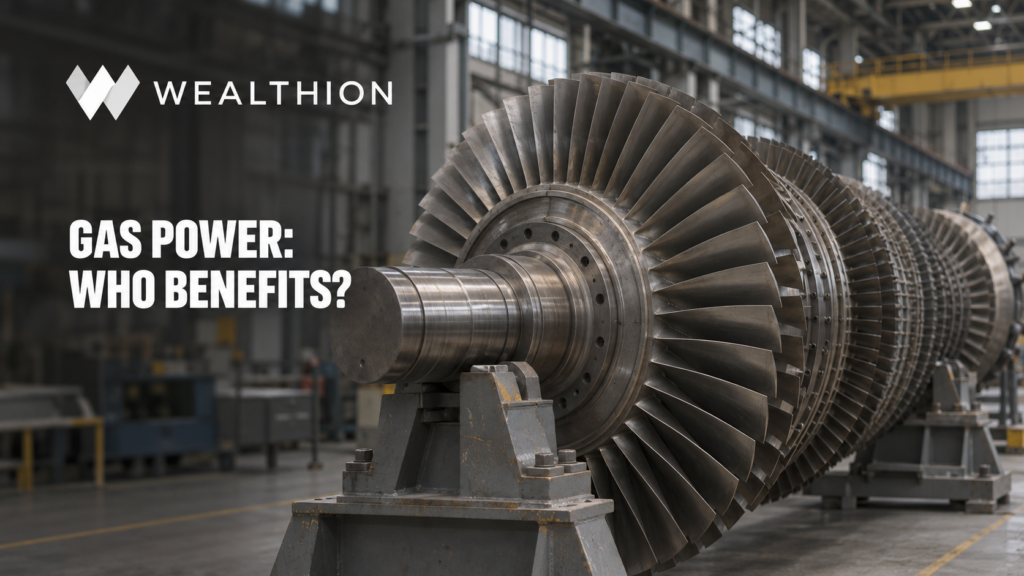
Natural Gas and Data Centers: The Near-Term Power Trade
How gas producers, pipeline operators, turbine makers and power generators are paid, and when data-center demand reaches each business's revenue.
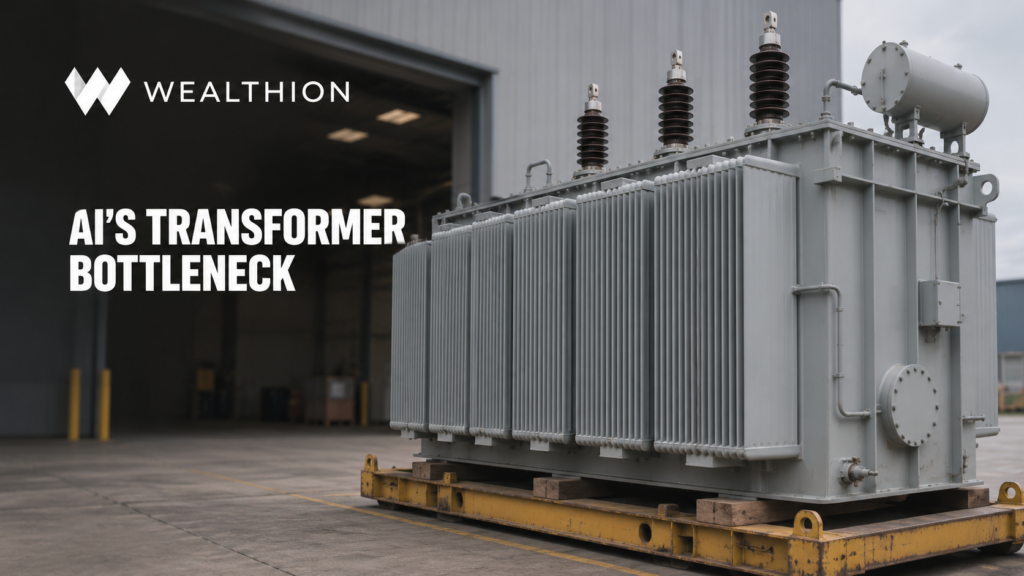
The Transformer Shortage: What It Means for the AI Buildout
A generator step-up transformer ordered in early 2026 could take more than three years to...
Enjoyed This? Get More Insights
Expert insights and curated opportunities, delivered to your inbox.
Ready to Position for What's Coming?
Whether you're still learning or ready to act, your next step starts here.
- Independent
- Macro-Informed
- Real Asset Focused


The Wealthion Network
By subscribing, you agree to receive Wealthion emails. Unsubscribe anytime.
The Wealthion Network
By subscribing, you agree to receive Wealthion emails. Unsubscribe anytime.
Network Discussion
Sign in to share your thoughts and connect with other readers.
Join the Wealthion Network to Comment