

Precious Metals Investing: Vehicles and Tradeoffs
Precious metals exposure comes in three broad forms, and they are not interchangeable. Physical bullion is the metal itself, held directly. An exchange-traded fund is a claim on metal held by a custodian, traded like a stock. A mining equity is a business that extracts the metal, carrying its own operational and financial risk on top of the metal price.
Choosing between them is a decision about what risk you actually want to hold, not just which one is more convenient.
Why does the vehicle matter if the underlying metal is the same?
Because each vehicle changes what you are actually exposed to, beyond the metal price itself.
Physical bullion carries no counterparty risk and no operational risk. But it carries storage and insurance costs, and it is the least liquid of the three in a genuine emergency. An ETF is liquid and easy to trade. But you own a claim on metal held by someone else, which introduces a layer of trust in the custodian and the fund structure. A mining equity can move far more than the metal price, in either direction. It adds a business on top of the commodity exposure, with its own costs, management decisions and jurisdictional risk.
Why do some investors insist on physical metal specifically?
Because they are treating a stress scenario, not a normal market, as the relevant test case.
Rick Rule pointed to central bank behaviour as informative here, describing what large sovereign holders actually do with their own reserves in June 2026: they are "the largest non-governmental holder of treasuries on the planet and what they're doing with their own money is buying gold." His point is that the institutions with the deepest access to every financial instrument available are still choosing to add physical gold, which he reads as a signal about what they believe protects value when trust in paper claims is tested.
Rule also flagged a specific stress point in physical markets themselves in July 2026: "there's a there's definitely a problem in the physical markets and they woke up to that." Even within physical holdings, delivery and settlement can tighten under stress, which is a reason some investors prefer allocated, segregated storage over pooled arrangements.
What is the actual reasoning behind holding metals at all?
For Don Durrett, the answer is specific rather than general: "The only reason I own gold and silver is because of the weakness in the US bond market."
That is a falsifiable, mechanism-based reason rather than a blanket enthusiasm for the asset class. It means the position has a condition attached to it, implicitly. If the bond market stabilises and real yields turn durably positive, the reasoning that justified the holding changes with it.
Does portfolio construction discipline still apply to metals?
Yes, and Jonathan Wellum's broader approach to position sizing applies here as much as anywhere else. Discussing how he evaluates positions generally in July 2026, he said: "if you have a portfolio of stocks and you're picking different businesses, then value them on their own merit, their own intrinsic value."
That discipline, sizing each holding on its own merits rather than on a theme alone, matters more with mining equities than with the metal itself, because a mining company can be a poor investment even inside a sound thesis about the metal price, if its own costs, balance sheet or management are weak.
Should exposure be concentrated in a single country's supply?
Wellum's broader supply-chain reasoning, applied to metals and minerals generally, argued against dependence on any single source: "it makes complete sense not to be dependent on any other nations but your own and maybe a handful of other very friendly countries for your metals and minerals and your resources." That is a diversification argument about where metal supply originates, distinct from the question of which vehicle to hold it in, but relevant to anyone building a real-assets allocation rather than a single position.
What should you actually weigh before choosing?
Three questions to weigh. Are you hedging a genuine tail scenario? Then physical metal's lack of counterparty risk matters most. Do you want liquid exposure you can adjust quickly? An ETF fits better. Will you accept business risk for a shot at outperforming the metal? That is the mining equity trade, covered in more depth elsewhere on this site.
None of the three is categorically correct. Each answers a different question about what you are actually trying to protect against.
What should you watch?
Storage and insurance costs if holding physical metal directly. The specific custodian and redemption terms of any ETF, since not all structures offer the same claim on underlying metal. And, for mining equities, the same operational and cost metrics that apply to evaluating any business, not just its correlation to the metal price.
FAQ
What is the difference between physical gold and a gold ETF? Physical gold is the metal itself, held directly with no counterparty risk. An ETF is a claim on metal held by a custodian, more liquid but dependent on trusting that structure.
Are mining stocks a good way to invest in precious metals? They add operational, cost and jurisdictional risk on top of metal price exposure. They can outperform or underperform the metal substantially depending on company-specific factors.
Why do central banks buy physical gold instead of paper claims? Sovereign reserve managers have access to every financial instrument available. They still choose physical gold, which is often read as a signal about what protects value under genuine system stress.
Is there a "problem" in the physical metals market? Rule has pointed to occasional stress in physical delivery and settlement. That is one reason some investors prefer allocated, segregated storage over pooled holdings.
What is the case for owning precious metals in the first place? Reasons vary by investor. Durrett's stated reason is specifically the weakness of the US bond market, a falsifiable, mechanism-based rationale rather than a general enthusiasm.
Does diversification apply within a precious metals allocation? Yes. Position sizing still applies. Evaluating each holding, including any mining equity, on its own merits remains standard portfolio discipline, not something to abandon just because a holding fits a broader theme.
Should metals supply be geographically diversified too? Some experts argue for reducing dependence on any single country for metals and minerals supply, as a distinct diversification question from which vehicle to hold.
Which experts and interviews does this article reference? Wealthion interviews from June to August 2026: Rick Rule on gold and mining equities; Don Durrett on bonds and gold.
If you want a professional read on how precious metals fit your own portfolio, you can request a free portfolio review from an advisor who understands real assets at https://www.wealthion.com/advisors/.
This article is educational and is not investment, tax, or legal advice. It does not recommend any security. Advisory services are provided by Greylock Peak Investments, LLC, a subsidiary of Wealthion. Wealthion is compensated for advisor introductions; see the Solicitor's Disclosure Document, ADV Part 2A and Form CRS. That arrangement does not influence editorial coverage.
What Serious Investors Are Watching
Dive into expert interviews, market analysis, and long-form content built to help serious investors think long-term.

Precious Metals Investing: Vehicles and Tradeoffs
Precious metals exposure comes in three broad forms, and they are not interchangeable. Physical bullion...

What Copper Is Used For, and Why Demand Is Changing
Copper conducts electricity better than almost any affordable metal, which is why it sits inside...
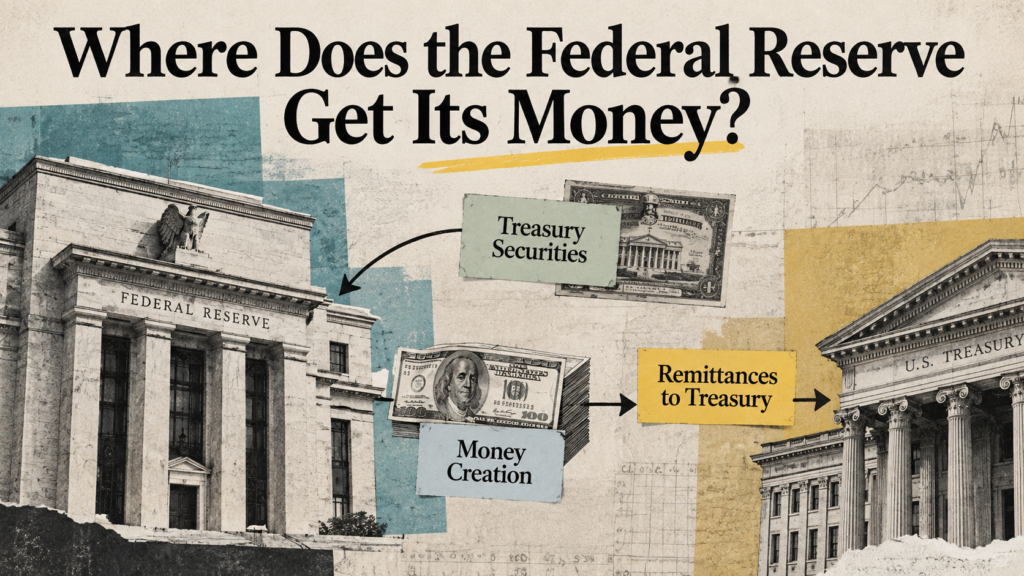
Where Does the Federal Reserve Get Its Money?
The Federal Reserve does not get its money the way a household, a company or...
Enjoyed This? Get More Insights
Expert insights and curated opportunities, delivered to your inbox.
Ready to Position for What's Coming?
Whether you're still learning or ready to act, your next step starts here.
- Independent
- Macro-Informed
- Real Asset Focused


The Wealthion Network
By subscribing, you agree to receive Wealthion emails. Unsubscribe anytime.
Network Discussion
Sign in to share your thoughts and connect with other readers.
Join the Wealthion Network to Comment