

What to Invest in During High Inflation? Jesse Felder
Key Takeaways
Felder believes the Fed has started a new, sustained rate-hiking cycle. He points to Chair Kevin Warsh echoing former New York Fed president Bill Dudley's view that "the rationale for tightening has rarely been so clear-cut," with nominal GDP running hotter than at any point in 30 years.
He thinks the 10-year Treasury yield could reach 6% to 7%. Historically a hike cycle lifts the 10-year by 100 to 200-plus basis points from its starting level, which in this cycle began near 5%.
Rising rates favor value stocks over growth. Higher discount rates hit long-duration growth earnings harder than value earnings, a dynamic he says last reversed only once, during the final year of the dot-com bubble.
The market's AI exposure is extreme, by his count. He cites data showing AI infrastructure stocks are "40% of the S&P 500," three chip stocks make up "28% of emerging markets," and half of this year's investment-grade bond issuance is tied to AI.
His answer to "what to own" is real assets. "If I don't want to own treasuries, I don't want to own corporate bonds, your really only other choice outside of these kind of financial assets is real assets," pointing to commodities, energy and gold as the sectors that historically do well when financial assets struggle.
Key Moments
00:33 - Is the Fed starting a new rate-hike cycle? Why Felder thinks this is more than a one-and-done hike.
02:53 - Could the 10-year Treasury yield hit 7%? The historical range a hike cycle typically produces.
08:00 - Private credit risks and the shift from growth to value Why rising rates favor value stocks, and the 2000 parallel.
12:15 - Could higher rates burst the AI bubble? The accounting concerns and credit-market strain he flags.
22:25 - How investors can hedge massive AI exposure The concentration statistics behind his real-assets case.
26:06 - Is AI heading for a dot-com-style overinvestment bust? Why overbuilding, then rapid efficiency gains, is the historical pattern.
34:56 - The supply shortage driving the commodity supercycle Why he says the cycle is supply-driven, not demand-driven.
41:02 - Gold outlook: rate hikes, Fed policy and the next rally Why gold leads the broader commodity complex.
What to Invest in During High Inflation? Jesse Felder on Real Assets and the AI Bubble
If inflation is proving stickier than expected and interest rates are heading higher rather than lower, the obvious question is what to actually do with a portfolio. Jesse Felder, founder of The Felder Report, gave Wealthion a direct answer in his second appearance on the channel: financial assets, stocks and bonds alike, tend to struggle during high inflation, while real assets, commodities, energy and gold, tend to do "phenomenally well." Getting there, he argues, runs through a new Fed rate-hiking cycle that could be the very thing that bursts the AI bubble. This is his attributed, contrarian analysis, not investment advice.
Is the Fed starting a new rate-hike cycle?
Felder thinks so, and the evidence is already in the data. He notes Fed Chair Kevin Warsh has echoed a view from Bill Dudley, former head of the New York Fed, that "the rationale for tightening has rarely been so clear-cut as it is today," since the Fed has missed on the inflation side of its mandate since March 2021 even as unemployment stays low. He points to nominal GDP running at a pace seen in only six quarters since 1990, including just before the 2000 dot-com bust and the 2005 housing bubble, alongside record diesel prices, rising import and producer prices, and import prices climbing at their fastest pace in decades. His blunt summary: "the economy is literally running... hotter than we have at any point in 35 years."
How high could the 10-year Treasury yield go?
Potentially to 6% or 7%, in Felder's framing. He notes a rate-hike cycle historically lifts the 10-year yield by at least 100 basis points on average, 50 at the low end and 200-plus at the high end, from wherever it started. Since this cycle began with the 10-year near 5%, he argues "on average it would probably go to six," though "you could argue it could go to six and a half, seven," purely based on historical pattern. He also flags a specific risk inside that move: a highly leveraged "basis trade" between cash Treasuries and futures that hedge funds use, which the New York Fed has reportedly been probing with major banks, and which could produce what he calls "an accident in the Treasury market" if bond volatility rises sharply.
Why does Felder favor value stocks over growth?
Because rising rates hit growth valuations harder. He explains that higher discount rates reduce the present value of earnings expected far in the future, which is why "rising discount rates have much more of an impact on the valuation of growth stocks than they do on value stocks." He notes the only period in recent history when growth kept leading despite rising rates was 1999 to 2000, at the very end of the dot-com bubble, right before value stocks "did phenomenally well" in the rotation that followed its collapse. He also flags early cracks already showing in the private-credit market, with Fitch reporting default rates near 6.5% and PIMCO estimating close to 20% once payment-in-kind loans are included.
Could higher rates burst the AI bubble?
This is Felder's central warning, and he is direct about the mechanism: "there's really nothing like rising interest rates to burst a speculative bubble," and "everything is now dependent on the AI bubble." He points to strain already visible in credit markets, reported distress in Oracle-linked bonds and financing tied to a major data-center buildout, and a prominent cloud provider reportedly seeking a junk-rated bond sale to help fund OpenAI, as early signals that "the money is potentially starting to run out for the AI trade." He is also skeptical of profitability claims from AI labs, arguing some rely on accounting approaches that exclude major expense categories, and notes a Bloomberg Opinion comparison of AI labs' stated addressable market to tobacco companies' pre-litigation claims, questioning what the "negative TAM," or liability side, might look like if the technology does not deliver as promised. This article does not take a position on the business prospects of any specific company Felder names as an example of this dynamic.
How exposed is the broader market to AI?
Extremely, by the statistics Felder cites. He says AI infrastructure stocks now make up "40% of the S&P 500," three chip-related stocks account for "28% of emerging markets" indexes, roughly half of this year's investment-grade bond issuance is tied to AI, and about 90% of venture capital funding this year has gone into AI. He frames this as the reason pension funds are struggling to diversify away from the theme, and as a key driver of investor demand for gold, since, as he puts it, if an investor does not want to own Treasuries or corporate bonds, "your really only other choice outside of these kind of financial assets is real assets." For a related view on this concentration risk, see Wealthion's piece on whether the AI bubble will burst.
Is AI heading for a dot-com-style overinvestment bust?
Felder argues the pattern is already familiar from history. Every investment boom, he says, tends to overshoot into overinvestment and then force a painful efficiency improvement, exactly what happened with fiber-optic capacity during the dot-com era, when massive oversupply combined with better utilization to crush prices. He sees the same dynamic starting in AI: companies using memory and compute more efficiently, smaller models achieving results on local hardware that once required large data centers, and some customers reportedly shifting to open-source models over cost and intellectual-property concerns. His view is nuanced rather than purely bearish: he considers himself a genuine technology enthusiast, and argues that some of the most important companies of the internet era, citing Google and Facebook as examples, were actually born out of the cheap infrastructure left over from the dot-com bust. In his words, a major AI bust that drives the cost of compute toward zero "would set the groundwork for some real beautiful business models going forward," even though "there's real pain in between."
Is the commodity supercycle still intact?
Yes, and supply, not demand, is the reason, according to Felder. He argues these cycles are driven by the capital cycle: supply only becomes a problem once companies invest massively in new production, and in oil, gas and copper, that investment still has not happened after roughly 15 years of underinvestment. He is careful to note that demand for commodities is historically far less elastic than people assume, even falling only modestly during the 2008 financial crisis. On oil specifically, he argues $100 a barrel may still be cheap in context: oil relative to the S&P 500, and oil relative to gold, both sit near record lows, and the inflation-adjusted oil price remains close to its 40-year average, well below levels he considers genuinely problematic, which he puts above $120 to $150 a barrel. He also points to the energy sector's roughly 3% weight in the S&P 500, versus a single AI chipmaker's market value exceeding the entire sector, as evidence of how underowned real assets remain. Related reads include Wealthion's explainer on why this inflation is energy-led, not demand-led and why bond yields are rising.
Is gold still a buy here?
Felder's answer has two timeframes. Near term, he expects gold to stay under pressure as markets price in a sustained hiking cycle rather than a single move, since gold trades heavily on the monetary cycle and already peaked earlier in the year as rate-cut expectations faded. Longer term, he remains structurally bullish, arguing "gold leads and the rest of the commodities market follows," and that the broader commodity complex is still playing catch-up to gold's prior rally. The catalyst he is watching for the next leg higher is a forced Fed intervention in the bond market, for example around stress in the basis trade, which would mark the next dovish pivot gold typically senses before it is announced. As always, this is Felder's attributed outlook, not a recommendation; gold and commodities are volatile, and any allocation decision depends on individual circumstances. For related gold context, see Wealthion's pieces on why gold corrected from its record and why purchasing power matters more than the gold price.
What Investors Should Watch
- The 10-year Treasury yield: Felder's marker for how far this hike cycle runs, with 6% to 7% on the table by historical pattern.
- Credit-market stress (the basis trade, private credit defaults): the mechanism he says could turn an orderly rate rise into "an accident."
- AI-linked credit and equity issuance: the roughly 40% S&P and 28% emerging-markets concentration he flags as systemic risk.
- Energy sector weighting versus history: its roughly 3% S&P share, which he expects to grow as capital rotates into real assets.
- Gold versus the Fed's next pivot: the signal he watches for the metal's next sustained advance.
FAQ
What should you invest in during high inflation? Jesse Felder argues that financial assets, both stocks and bonds, tend to perform poorly during high inflation, while real assets such as commodities, energy and precious metals tend to do well. This is his attributed view, not personalized advice.
Is the Fed starting a new rate-hike cycle? Felder believes it is, citing hawkish commentary echoed by Fed Chair Kevin Warsh, nominal GDP growth at a 30-plus-year high, and building inflationary pressure across diesel, import and producer prices.
Could higher interest rates burst the AI bubble? Felder thinks this is a real risk, pointing to strain already appearing in AI-linked credit markets and questioning the accounting behind some AI labs' profitability claims. He is not predicting a specific date, only flagging the mechanism.
Why do value stocks do better than growth stocks when rates rise? Because higher discount rates reduce the present value of earnings expected far in the future, which hits growth stocks harder than value stocks, a pattern Felder says last reversed briefly only at the peak of the dot-com bubble.
Is gold still a good investment? Felder is cautious near term, expecting pressure as markets price in a sustained hike cycle, but remains structurally bullish long term, arguing gold leads the broader commodity complex higher once the Fed is eventually forced to pivot. This is his attributed view, not advice.
If you want a professional read on how exposed your own portfolio is to the AI trade, and how real assets might fit alongside it, you can request a free portfolio review from an advisor who understands real assets at wealthion.com/advisors.
Full Transcript
Speakers: Maggie Lake (Wealthion host) and Jesse Felder (founder, The Felder Report). ASR errors corrected (names, terms) and filler removed; meaning preserved. A mid-interview Wealthion membership message has been noted rather than reproduced.
Jesse Felder (cold open): There's really nothing like rising interest rates to burst a speculative bubble. Everything is now dependent on the AI bubble. You know, if I don't want to own treasuries, I don't want to own corporate bonds, your really only other choice outside of these kind of financial assets is real assets.
Maggie Lake: If we are on a new rate-hiking cycle, do you believe it's going to be a series of hikes? There's some disagreement: some think the Fed is hiking into a demand slowdown that's already late to the game, so there won't really be more. You sound like you're in the camp that says yes, there will be.
Jesse Felder: Yeah, I do think this is a new rate-hike cycle, and I think it's because when you listen to Warsh, he echoed something Bill Dudley, former head of the New York Fed, wrote last week: the rationale for tightening has rarely been so clear-cut as it is today. The Fed is only missing on one side of the mandate. Unemployment is really low, but they've missed on the inflation side since March of 2021, core PCE has been running above target, and now inflation is threatening to rise again in the short term. I think people right now don't appreciate these inflationary dynamics building. Nominal GDP is running at a pace we've only seen in six quarters since 1990, including 2005 right before the housing bubble burst and 1999 right before the dot-com bubble burst. The economy is literally running hotter than at any point in 35 years. Financial conditions are as loose as they've ever been while the economy runs this hot. And we now have one of the greatest fuel crises on record, diesel prices hitting record highs. Import prices, a lot driven by AI spending, are rising at the fastest pace in decades. Producer prices are ripping higher, manufacturing surveys all talk about pricing pressures building again, and food prices are starting to turn higher, with a new El Nino potentially causing a real spike next year.
Maggie Lake: So much of consumer borrowing, mortgages, credit cards, car loans, student loans, is pegged off the 10-year. We're talking about a seven-handle as the appropriate rate.
Jesse Felder: The 10-year historically, during a rate-hike cycle, rises at least 100 basis points on average, 50 at the low end and 200-plus at the high end. This cycle started with the 10-year at 5%, so on average it would probably go to six, but you could argue six and a half or seven, based purely on historical pattern. Last time we spoke you were concerned about signals from the bond market. Now the 10-year has been hovering around 5%, climbing above it consistently, and global bond yields, not just in the US, have been pushing higher. What does that tell you about the global economy?
Jesse Felder: There's been so much talk about what's driving long-term yields higher, so many different factors. I think it makes sense to apply an Occam's razor framework: the simplest explanation is usually the most accurate, and what drives prices is supply and demand. I think we're seeing an oversupply of Treasury debt coming to market amid an oversupply of corporate debt at the same time, to fund the AI boom. Supply is outpacing demand, and that's driving yields higher. With the Fed meeting last week and inflationary pressures building, I think investors don't fully appreciate that the Fed is starting a new rate-hiking cycle that will probably go on longer than currently expected. We've gone from anticipating rate cuts this year to now hiking rates, and I think that hawkish shift continues as people understand what's driving inflation and the Fed's patience runs out.
Maggie Lake: From an investment point of view, is there anything you're bullish on, or what asset classes do well in this kind of run-it-hot, high-inflationary regime?
Jesse Felder: We're probably starting to see a shift toward more defensive names, consumer staples, healthcare, which have started to show some life. That's a problem for markets because consumer discretionary is already the worst-performing sector this year, telling you consumers are already struggling. A rate-hike cycle puts even more pressure on them. For owning long-term bonds here, if yields move to five or six, one thing to worry about, and the Wall Street Journal reported on this last week, is that the New York Fed has been talking to major banks about the basis trade, where hedge funds arbitrage small price differences between cash Treasuries and futures. It's a massively leveraged trade that comes under pressure when rates rise and bond-market volatility increases, so it might not be a smooth ride from five to six; we could see an accident in the Treasury market. At the same time, private credit is an even bigger problem: Fitch says defaults are already hitting 6.5%, and PIMCO says if you include payment-in-kind loans, defaults are already close to 20% of loan portfolios. Rising rates put even more pressure on private credit.
Jesse Felder: But maybe the most important thing for your viewers is that, historically, in an environment of rising interest rates, value stocks do better than growth stocks, because rising rates raise the discount rate on earnings expected well into the future, and that has much more impact on growth valuations than value valuations. Focusing on value is a really important dynamic. The only time we've seen a period of rising rates where growth still led the market was 1999 to 2000, at the end of the dot-com bubble. I think we're in a similar stage now, where growth is still trying to hang on and hoping rates turn in its favor. But if the Fed does what I think it has to do, value stocks will take over, exactly what happened in 2000 when the dot-com bubble started bursting and value did phenomenally well in the rotation that followed, boosting a lot of undervalued old-economy names.
Maggie Lake: In this high-inflationary period, against a backdrop of supply-chain disruption and an uncertain war outlook, how do commodities fit in? It seems like this should be some kind of boom or supercycle, but I don't know if the supply-demand dynamics from high rates factor in.
Jesse Felder: With diesel prices hitting record highs, that's going to strain economies worldwide. I'm a huge commodities bull; I think we're in the midst of a major commodity supercycle, and I don't think we're anywhere near the end, because these supercycles are driven by the capital cycle. The beginning of the end comes when companies say they're going to invest massively in bringing on new oil, gas and copper supply. We haven't gotten to that point yet; they're just not investing massively in new drilling. So there's no supply response yet. Where we are seeing a supply response is in the AI trade: so much demand for so long that every memory supplier worldwide is investing billions bringing new supply to market, and China is investing as a geopolitical security concern to support its chip industry in a way that will bring on massive supply. I'm much more worried about end-of-cycle dynamics there than in the commodity sector. We'll see corrections, but it's still amazing to me that the energy sector is up 50%-plus this year and investors still have no interest; they're still chasing the big tech names.
Maggie Lake: Even as we're recording this, with all the concerns you've mentioned, the AI trade is back in leadership. You were talking earlier about accounting issues, which fits your end-of-cycle view on AI.
Jesse Felder: There's really nothing like rising interest rates to burst a speculative bubble; throughout history, it's always rising rates that crop up to burst a bubble. In terms of where we are in the AI bubble itself, a well-known early tech investor recently gave an interview arguing that the AI labs made a huge bet on artificial general intelligence that hasn't worked; they haven't created superintelligence, open-source competitors are eating their lunch, they've had a disastrous PR cycle around data centers, and markets are reaching the point where they don't want to give them more money. So we're in a desperation phase: distress showing up in some AI-linked corporate bonds and data-center financing, and a major cloud provider reportedly wanting to sell junk-rated debt to help fund a leading AI lab. Credit markets are tightening and telling you the money is potentially starting to run out for the AI trade. If it does, there are major ripple effects, not just for AI but for the broad stock market and economy, which has become so dependent on it.
Maggie Lake: [Membership message noted.] So from the funding side, investors are starting to say they're not seeing the ROI, and executives themselves are talking about slowing down, maybe getting ahead of a capital slowdown. Some people describe this as a violent repricing of assets if that happens. Paired with rising rates and an inflationary environment, that sounds like a toxic brew.
Jesse Felder: It really is. We're in a difficult place inflation-wise; it's very stagflationary. You raise rates with an already-stressed consumer and housing market, one of the main drivers of cyclical GDP, and everything is now dependent on the AI bubble: the economy and stock market are levered to it. There's really no way to slow it down without ripple effects outward, because right now all the semiconductor earnings forecasts are 100% dependent on building out data centers over the next several years. If we slow down, and we already can't build enough, we can't meet those earnings estimates. A lot of the "we're delaying for safety reasons" narrative, like a major AI lab delaying its IPO citing safety, may really be about demand: investment banks reportedly told them the market isn't there yet for a company planning to lose hundreds of billions over the next few years while asking the public to fund it. An IPO might get a little closer because some labs are claiming profitability based on what looks like unconventional accounting, excluding major expense categories, similar to how WeWork once presented an adjusted profitability metric. We're getting close to the end of the cycle because the amount of money needed to fund the next phase is getting too big.
Maggie Lake: The White House seems to be stepping on the gas, saying this isn't slowing down, calling it a national-security matter. Does that change the trajectory, is there a federal put behind the AI trade that buffers the fallout from a reckoning?
Jesse Felder: I don't think so, for two reasons. First, Treasury Secretary Scott Bessent, when asked about recent security concerns, said straightforwardly that the best way to regulate these companies is to make them liable for incidents like hacking, not to indemnify them. Second, one of the most fascinating things about this AI bubble is the bipartisan support for scrutinizing it: figures on the populist right and the progressive left both object to unchecked data-center buildouts, a former FTC chair who pushed antitrust scrutiny of big tech, and a former White House AI advisor, both arguing existing laws just need to be enforced. So there's bipartisan appetite not just to push back on data centers but to hold companies accountable, including treating something like an AI agent causing harm the way any defective product would be treated; a former regulator put it that way directly. A Bloomberg Opinion columnist wrote about this: if an AI lab's addressable market is, by its own telling, equal to US GDP, what's the "negative TAM," the liability side, comparing it to how tobacco companies once framed their market before facing litigation over the harm their products caused. It's genuinely hard to know what that legal liability would even look like.
Maggie Lake: Most of us hold these names, or a portion of the market reliant on this, so it's an exposure we all have. If this is unavoidable math, how do people hedge? What part of the investing universe isn't attached to this?
Jesse Felder: Bloomberg had a piece about pension managers struggling to limit AI exposure, noting AI infrastructure stocks are 40% of the S&P 500. Three chip stocks make up 28% of all emerging-markets indexes. Half of this year's investment-grade bond issuance is tied to AI, and 90% of VC funding this year is AI. If you're a pension fund, how do you diversify? I think that's part of why we're seeing a persistent bid for gold: if you don't want to own Treasuries or corporate bonds, your only other choice outside financial assets is real assets, commodities, precious metals. That's what history says does well during high inflation, while stocks and bonds struggle; it's often an either-or relationship. Investors are so underexposed to real assets. The energy sector is about 3% of the S&P 500 right now, among the lowest levels ever; one AI chipmaker is worth more than the entire energy sector. If money flows out of technology and financial assets into these other sectors, it wouldn't be surprising to see energy go from 3% to 10% of the S&P over time, and institutional gold allocations go from near zero to 5% of the average portfolio. That's really what drives these supercycles.
Maggie Lake: We spoke with Tom Lee a couple of weeks ago, and his view was that most people are just bad growth investors, that individual companies may fail but the overall direction is more compute and more technology everywhere. In a world where AI agents are already running around and everything is digitized off our phones, do the old commodity and real-asset metrics still apply, or are we just moving into a fully financialized, digitized world?
Jesse Felder: Two things. First, in every investment boom, companies always overinvest; that's the history of markets. The question is when we hit that point. It's not just oversupply in data centers; history, including the dot-com boom, shows that extreme price dynamics, like in memory chips, create a huge incentive for companies to become far more efficient and use less of the scarce input. During the dot-com era we saw oversupply of fiber-optic capacity and companies becoming more efficient in using it, which is why we had "dark fiber" sitting unused for years. The same thing is happening in AI already: companies becoming more efficient in memory and compute use, and real strides in running AI models locally on a PC that get similar results to a massive data center using the right technique. Companies are also less willing to use expensive proprietary models partly because open-source alternatives are far cheaper, and partly because they're finding some providers may be using their usage data to replicate their product. So customers are choosing open-source models on local servers to save money and reduce that risk. People aren't appreciating that we're probably going to overbuild and get way more efficient at the same time, which naturally creates the bust that follows every investment boom in history.
Maggie Lake: That's thoughtful, and it suggests you can be optimistic about the technology's direction while still recognizing that overinvestment in the infrastructure layer will cause real damage and fallout, company failures, size reductions, valuation resets, as the next phase of growth looks different. With fiber optics, that didn't stop the internet from producing great apps and services, but it didn't prevent a lot of companies going bust either. So you're not anti-growth, you're really digging into the math of the investment cycle.
Jesse Felder: Absolutely. I've been a technology fan my whole life, since I was eight years old at a computer camp learning to program. I'm an early adopter of many things and I use AI tools regularly in my own work, even though I know they can be wrong sometimes and have real limitations. Another point: some of the most wonderful companies of this technology cycle were born out of the dot-com bust. If you hadn't had a collapse in internet-related pricing to near zero, you don't get some of the most important internet companies of the last 20 years; the overcapacity enabled them. I think that's where AI is headed too: if we get a major AI bust and the cost of compute plunges toward zero, that's when people can build genuinely sustainable business models, instead of today, where people spend tens of thousands of dollars on AI agents that still make basic mistakes, like booking the wrong hotel room, and have to be refunded. We're just not there yet. I think, deep down, some of the industry's most prominent founders understand that the healthiest thing long term would be a huge bust that drives compute costs to near nothing, laying the groundwork for real, lasting business models. But that's a couple of steps down the road, with real pain in between.
Maggie Lake: Shifting back to commodities and supply dynamics: if there's too much AI infrastructure supply relative to demand and prices there are falling, how does that square with a commodity supercycle, especially if a recession and market correction would hit demand broadly? Setting bonds aside for a moment, how does the supercycle actually work?
Jesse Felder: It's really the supply side. In historical commodity supercycles, supply drives it because demand is far less elastic than people assume. Even during the 2008 financial crisis, energy demand didn't drop that significantly; it took global pandemic lockdowns, people unable to drive or fly, to briefly push prices negative. Demand is a longer-term, steadily growing dynamic as emerging markets use more energy. So demand isn't the factor a long-term investor should focus on; it's the supply side, tied to the capital cycle. Supplies are tight across the board, copper included, because there's been close to zero investment in new supply for about 15 years; investment went into technology instead. Until that changes, the cycle remains intact. That doesn't mean no corrections. I'd also point out oil isn't nearly as expensive as people think: oil relative to the S&P 500, and relative to gold, is near record lows. The inflation-adjusted oil price is still close to its roughly 40-year average, so we haven't even seen a real oil-price spike by that measure. You don't get there until well over $120 to $150 a barrel. One lesson from the 1973-74 oil crisis is that the stock market didn't really react to the downside until the immediate crisis was over; that doesn't mean prices snap back down quickly, it means the long-term supply problem persists even after the acute phase passes.
Maggie Lake: We've had many guests cite statistics on how underinvested and scarce these commodities are, plus structural supply-chain risk and choke points, and yet investment in the sector remains so low. Will it take a huge price spike to change that?
Jesse Felder: Probably, yes. The best remedy for high prices is high prices, meaning prices need to rise enough to inspire a real supply response, and we haven't hit that level yet. Another factor is the cost of capital: with the 10-year near 5%, corporate borrowing costs near 7% to 8%, it doesn't make economic sense for energy companies to borrow and build new wells or mines right now. So if commodity prices spike enough to cause a recession, that could also bring borrowing costs down, and the combination of lower borrowing costs and higher commodity prices is when producers decide it finally makes sense to invest in new supply.
Maggie Lake: Last question, on gold. It sounds like you're genuinely concerned about the bond market breaking down or higher rates tipping us into a recession and equity drawdown. How does gold perform here, given higher rates and a stronger dollar traditionally hurt it, and people tend to sell their winners under stress?
Jesse Felder: The way I think about this supercycle is that gold leads and the rest of the commodities market follows. Over the last two years we had a huge spike in the gold price that topped out earlier this year, around January or February, and it leads the broader commodity space, which is now trying to play catch-up with gold. What drives gold is often the monetary cycle: when people were anticipating rate cuts earlier this year, gold was ripping higher; now that we're talking about a new hike cycle, gold is under pressure, and I think it stays under pressure as markets digest that this isn't just one or two hikes and done, but a sustained cycle. That won't stop the broader commodities sector from playing catch-up, so I see further upside in oil and commodities more broadly even while gold consolidates. At some point, maybe after 150 to 200 basis points of hikes, the market starts anticipating another dovish Fed pivot, and gold will sniff that out before it happens, the way it always does, and that's where gold bottoms and turns higher again. I can imagine a scenario where the hike cycle causes problems in the long end of the bond market, perhaps related to the basis trade, forcing the Fed to intervene even during an inflationary episode to restore calm. That would be one of the most bullish catalysts for gold, not great for inflation or for us as consumers, but that's precisely why you own gold, for that possibility, to be prepared.
This article is educational and is not investment, tax, or legal advice. It does not recommend any security. Advisory services are provided by Greylock Peak Investments, LLC, a subsidiary of Wealthion. Wealthion is compensated for advisor introductions; see the Solicitor's Disclosure Document, ADV Part 2A and Form CRS. That arrangement does not influence editorial coverage.
What Serious Investors Are Watching
Dive into expert interviews, market analysis, and long-form content built to help serious investors think long-term.
Will Gold Price Drop? Mike McGlone
Key Takeaways McGlone thinks gold and silver may have peaked for years, or longer. "I...
What Is a Trump Account for Kids? Brandy Maben
Key Takeaways Eligible children can get $1,000 from the government, tax-deferred. Maben explains a Trump...
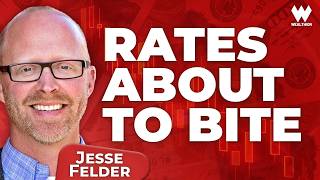
What to Invest in During High Inflation? Jesse Felder
Key Takeaways Felder believes the Fed has started a new, sustained rate-hiking cycle. He points...
Enjoyed This? Get More Insights
Expert insights and curated opportunities, delivered to your inbox.
Ready to Position for What's Coming?
Whether you're still learning or ready to act, your next step starts here.
- Independent
- Macro-Informed
- Real Asset Focused

The Wealthion Network
By subscribing, you agree to receive Wealthion emails. Unsubscribe anytime.
Network Discussion
Sign in to share your thoughts and connect with other readers.
Join the Wealthion Network to Comment