

Will Gold Price Drop? Mike McGlone
Key Takeaways
McGlone thinks gold and silver may have peaked for years, or longer. "I think we've put in peaks this year in gold and silver that might last years, and if history's a guide, decades," he says, citing gold's volatility at 2.2 times the S&P 500, a level he calls a warning rather than a reason to buy.
He calls gold, silver, copper and Bitcoin "stock puppets." All four, he argues, have become so correlated with US equities that "we're all complete stock puppets," meaning a stock-market decline could hit them simultaneously rather than act as a hedge.
He expects a "post-inflation deflationary cycle." Energy prices, led by diesel (up 160% over the past year, a record), are set to "cycle back down" as high prices choke demand and spur more supply, in his view, the same pattern that has always followed a price spike.
His Bitcoin call is bearish: a possible return to $10,000. He has held this view since Bitcoin traded near $109,000, arguing the asset has "already flunked the main test this year," down on the year while the S&P 500 is up.
Grains are the one corner he sees as genuinely uncorrelated. Corn, soybeans and wheat move more on weather and Brazilian supply than on the stock market, he says, making them unusual among the assets he covers.
Key Moments
00:00 - Is a deflationary cycle coming? McGlone's opening case for why peaks, not persistent inflation, are the bigger risk.
01:06 - Bond yields, inflation and the Fed's next move Why he reads rising yields as an inflation-expectations story, not a pure debt story.
05:22 - Why oil and diesel prices could crash The record diesel spike he expects to reverse, the same way it always has.
12:14 - Gold and silver: have prices already peaked? The four-decade-high gold-versus-bonds signal he calls a warning.
17:00 - Why gold is acting like a risk asset The unprecedented correlation between gold and the S&P 500.
26:44 - "We're all stock puppets" His framing for why metals and Bitcoin now move with equities, not against them.
32:19 - Bitcoin to $10,000? McGlone's bearish crypto call The call he made near Bitcoin's highs and has stuck with since.
44:04 - Why McGlone still sees deflation ahead His closing case, tied to China's ultra-low bond yield and global deficit spending.
Will Gold Price Drop? Mike McGlone on Why Gold, Bitcoin and Copper Are "Stock Puppets"
Gold has pulled back from its highs, and the obvious question is whether that pullback has further to run. Mike McGlone, senior commodity strategist at Bloomberg Intelligence, gave Wealthion an unusually direct answer: yes, and not just gold, he thinks silver, copper and even Bitcoin have become so tied to the stock market's fortunes that a real correction anywhere could hit all of them at once. This is his attributed, deliberately contrarian analysis, offered as a counterweight to more bullish takes on hard assets, and not investment advice.
Will gold price drop further?
McGlone thinks the bigger moves may already be behind us, at least for a while. "I think we've put in peaks this year in gold and silver that might last years, and if history's a guide, decades," he says. His case rests on volatility, not sentiment: gold's annualized 260-day volatility has reached 2.2 times that of the S&P 500, a level he says should make investors cautious rather than eager to buy, since "store of values don't trade at a higher vol, higher risk than beta, the stock market," and the last time gold's volatility reached a comparable extreme relative to stocks was 2007. He is careful to frame this as a shift in his own long-standing view: "I've been bullish gold literally for decades, and I stopped this year" once the metal topped $5,000 an ounce before pulling back to around $4,100. For the opposing, more constructive view on gold's pullback, see Wealthion's piece on why gold corrected from its record.
Why does McGlone call gold, silver, copper and Bitcoin "stock puppets"?
Because, in his analysis, their price behavior now tracks the S&P 500 far more than it tracks their own supply and demand fundamentals. He cites a specific data point: gold's 100-day correlation with the S&P 500 reached about 0.65 in August, which he calls "the highest in its entire history with the stock market going up," since gold has typically shown zero or negative correlation to stocks. He applies the same lens to copper (trading at roughly twice the volatility of the index while increasingly lagging it) and to Bitcoin, concluding bluntly: "we're all complete stock puppets." The practical implication, in his view, is that these assets may not provide the diversification investors expect from them if equities fall.
Is a deflationary cycle coming?
McGlone argues yes, framing it as the natural next stage of the cycle rather than something unusual. "This is potentially the beginning of a postinflation deflationary cycle," he says, pointing to record-high diesel prices (up 160% over the past year, by his account the most in the index's history since 1987) as exactly the kind of spike that historically chokes demand and pulls in new supply, then reverses. He notes the US has shifted from a net energy importer to a net exporter, a structural change he believes most past-cycle comparisons overlook. He also flags natural gas, down roughly 20% year-to-date even as crude oil rose about 60%, as a leading indicator pointing the same direction. Related reading: what an oil shock does to inflation and the Fed and why are bond yields rising.
Could oil and diesel prices crash?
McGlone thinks the setup is classic, and larger than usual. He expects diesel, which he says hit roughly $6.50 a gallon, a record, to reverse the way the 2008 gasoline spike to around $4 a gallon did, when prices fell back to roughly $2 by year-end. His reasoning leans on the shift in US energy status: the US and Canada's combined surplus of crude oil and liquid fuels is approaching 9 million barrels a day next year, by his estimate, compared with a roughly 10 to 11 million barrel-a-day deficit when oil peaked near $147 in 2008. He also ties the current price spike partly to the conflict involving Iran, calling the geopolitical premium likely temporary, and notes that Gulf oil exports have already returned to roughly 80% of their prior total, a detail he says is underreported.
What would a 10% stock-market drop do to commodities?
A serious one, in McGlone's framework. He estimates that a position in the Bloomberg All Metals Index, under a standard value-at-risk model, could lose roughly 20% if the S&P 500 fell 10%, a direct consequence of how correlated and volatile these assets have become. He puts specific numbers on the exposure: a 10% move in the S&P 500 equates to about 25% of GDP given the market's current size relative to the economy, which he calls the highest such ratio on a 100-year basis. His conclusion is that US equities, not the Federal Reserve alone, have effectively become the single most important variable for every other asset he tracks, including gold, copper and Bitcoin. For a different read on recession risk, see Wealthion's piece on what the recession callers keep missing.
Is Bitcoin headed to $10,000?
McGlone's Bitcoin view is firmly bearish, and dated. He says he made the call in the first quarter of 2024, when Bitcoin first traded near $109,000, arguing it was likely to "lose a zero and go back to 10,000," a view he says he has held through Bitcoin's subsequent rise toward $126,000 and its pullback to around $83,000 at the time of the interview. His core objection is supply: unlike gold, he argues Bitcoin's ecosystem has proliferated into "millions of cryptocurrencies," undermining the original scarcity thesis, and he wants to see a year in which Bitcoin clearly outperforms the S&P 500 before revising his view; so far this year, he notes, Bitcoin is down while the index is up. He frames this as one of several recent "pump then dump" patterns he has flagged across silver, platinum, iron ore and steel, with copper next on his watchlist. For contrasting views on digital assets, see Wealthion's piece on gold and Bitcoin as answers to different questions.
What is McGlone watching that isn't correlated to stocks?
Grains, primarily. He singles out corn, soybeans and wheat as unusually independent of equity-market moves, driven instead by weather and global supply, especially from Brazil, which he says now accounts for roughly 44% of global soybean production, nearly double its share two decades ago. He notes current prices sit well above both countries' production costs, which he expects will eventually draw out more supply and cap further gains barring a serious weather disruption. As always on Wealthion, this is McGlone's attributed, contrarian analysis, not investment advice; gold, silver, Bitcoin and copper are volatile assets, and other Wealthion guests hold substantially different views.
What Investors Should Watch
- Gold and silver's volatility relative to the S&P 500: McGlone's primary signal, currently at multi-decade extremes.
- Diesel and natural gas prices: his leading indicators for whether the broader energy-driven inflation spike is reversing.
- The S&P 500 itself: in his framework, the single variable that most determines whether gold, copper and Bitcoin rise or fall together.
- Copper's correlation to the index: the metal he flags as next in line for a possible "pump then dump."
- Fed rate-hike pricing: markets were pricing roughly four more hikes at the time of the interview, a path he considers unlikely to hold.
FAQ
Will the gold price drop further? Mike McGlone thinks it could, or at least stay range-bound for an extended period. He points to gold's volatility reaching 2.2 times the S&P 500's, a level he associates with prior market warnings rather than buying opportunities, and says he turned cautious on gold this year after it topped $5,000 an ounce.
Why does McGlone call gold, silver, copper and Bitcoin "stock puppets"? Because their price moves, by his analysis, have become unusually correlated with the S&P 500, including a record correlation for gold. He argues this reduces their value as portfolio diversifiers if stocks decline.
Is deflation coming? McGlone believes a "post-inflation deflationary cycle" is underway, pointing to record energy prices that he expects to reverse as they choke demand and draw in new supply, consistent with past commodity cycles.
Is Bitcoin going to crash? McGlone has held a bearish target of roughly $10,000 for Bitcoin since early 2024, arguing the proliferation of cryptocurrencies undermines its scarcity narrative and that it has underperformed the S&P 500 this year. This is his attributed forecast, not a certainty.
What does McGlone see as unaffected by the stock market? He points to grains, corn, soybeans and wheat, as the clearest example of assets driven by weather and global supply (especially from Brazil) rather than equity-market sentiment.
Which expert and interview does this article reference? This article draws on Wealthion's interview with Mike McGlone, senior commodity strategist at Bloomberg Intelligence: "Deflation Is Coming, And Gold, Bitcoin & Copper Could All Get Hit."
If you want a professional read on how exposed your portfolio is to this kind of cross-asset correlation, and how real assets might fit regardless of which way this cycle breaks, you can request a free portfolio review from an advisor who understands real assets at wealthion.com/advisors.
Full Transcript
Speakers: Maggie Lake (Wealthion host) and Mike McGlone (senior commodity strategist, Bloomberg Intelligence). ASR errors corrected (names, terms, figures) and filler removed; meaning preserved. A mid-interview Wealthion membership message has been noted rather than reproduced. A few personal characterizations of political figures have been softened to their market-relevant point.
Mike McGlone (cold open): This is potentially the beginning of a post-inflation deflationary cycle. We're all complete stock puppets. So, I think we've put in peaks this year in gold and silver that might last years, and if history's a guide, decades.
Maggie Lake: Hi, Mike. It's great to have you back on again.
Mike McGlone: Well, hello Maggie. Thanks for having me.
Maggie Lake: Higher stock markets are inflationary. Government spending shows no sign of slowing down. The AI spend is deflationary. Reshoring is inflationary. Why do you see deflation coming?
Mike McGlone: Because it's typically what happens near peaks, and this is part of the selling when they're yelling. It's also based on a couple of books, boom and bust; I think the author was Edward Chancellor, "The Price of Time." It's the way cycles always work, but people need to remember what stage we're at. The deflation we had was the most significant buying opportunity, at the onset of COVID. Crude oil went negative and that bond yield got to half a percent, 50 basis points. That was your deflation. Now we're getting toward severe inflation, and it'll cycle back down.
Maggie Lake: The bond action has been disturbing to some. The bond volatility index, the MOVE index, has had a big jump in the last week. What's the bond market telling you?
Mike McGlone: I think that's what the green reflects. Yields are going up. It's telling me it's part of a market that's being broken initially by energy. And what it says to me is you're getting that 10-year note above 5%, becoming pretty significant, equity-like returns. That's the highest in almost a quarter century. Also the highest in almost a quarter century is US stock market capitalization, near $82 trillion, versus public debt near $40 trillion. People use that unstoppable debt spending as a reason bond yields are going up. Really, big picture, it's inflation expectations. The number one source for inflation is the stock market going up. And right now, we have most central banks on the planet hiking rates in the midst of an energy crisis, and most energy crises are basically their own worst enemy, they spike things, break things, and go back down. It's going to be lose-lose, I think, for inflation and energy price spikes. But right now, as we speak, this is the end of September, September 28th, most futures are priced for the Federal Reserve to hike four more times over the next year, to get near 5%. There are only two major forces that'll make that stop, I think: crude oil collapsing, energy prices collapsing, or the stock market going down a little bit. Gosh, help us if that's what helps us.
Maggie Lake: There's a lot of crosscurrents there, and we'll dig into them. Can commodity prices and bond yields both go up?
Mike McGlone: They are now, but the key thing is they're both significantly autocorrelated; when they go up, they become their own worst enemy. What's really gone up this year in commodities? Most people focus on energy, but as we speak, WTI crude is $92 a barrel, a level first traded in 2007 and '08, almost 20 years ago. What's really going up is refined products: anybody buying gas, diesel or heating oil knows we just hit record highs. That's just a matter of time before it cycles back down, squashing demand and bringing on supply, particularly from the world's largest energy producer and net exporter, the US. But bond yields are part of that too, mainly inflation expectations. I think that's the next big opportunity for investors, partly because gold's price is the highest versus a Treasury long-bond index in four decades, you have to go back to 1987. Central banks, most notably ours, are hiking on the back of things that are usually transitory; energy spikes don't really last, and most past energy spikes happened when the US was a net importer. Now we're a net exporter.
Mike McGlone: A key part of what's happening right now is based on the decision of one man. President Trump made the decision; the war in Iran is, in that sense, his. It's a matter of time before that gets alleviated and Iran's offensive capability is curtailed; it's already happening, we're back to almost 80% of total Gulf exports, though you're not hearing that in the broad media. There's a bit of invention kicking in out of necessity. But right now I think it's more of a short-term spike, similar to 1987: the bond market broke first, then the stock market mattered. With the S&P 500's total return still up about 13 to 14% on the year, that's your number one source of overall inflation, 2.5 times GDP at year-end, the highest since 1928. I also mention how high it is versus debt, because people keep focusing on the debt issue as the reason bond yields are rising. Don't ignore the asset side; the number one real-time measured asset on the planet is US stock market capitalization. A lot of its rise comes from debt spending, but to me this is part of the endgame: Fed tightening, rising bond yields, and still-elevated equity markets.
Maggie Lake: Taking oil first, when you say it comes crashing down, does this follow the traditional cycle, elevated prices for long enough kill demand, the cure for high prices is high prices?
Mike McGlone: Absolutely, and worse so, more than in the past. Look at the Bloomberg heating oil index, really diesel. On a one-year basis it's up 160%, the most in its history since 1987, and it always goes back down. Remember, the US is a net exporter of diesel with a surplus with Canada, and our combined crude and liquid-fuels surplus is approaching 9 million barrels a day next year. For context, in 2008 when crude peaked at $187, there was a deficit of nearly 11 million barrels a day. We're also a net producer of about five million barrels of diesel a year and only use about three-fifths of it domestically; the rest is exported. So you hear about diesel export bans, but that's just part of this abundance. The question is whether that abundance accelerates or reverses, and it's accelerating. We're the world's largest energy producer, in the middle of the Western Hemisphere's new price-maker bloc with Canada and Argentina. Meanwhile China, the largest consumer, has rolling-over crude imports and, even before this war, rolling-over total auto sales, with a growing share now EVs. That's incentivized replacing fossil fuels with technology, and they're exporting that technology everywhere; I've traveled in London recently and BYDs are everywhere.
Mike McGlone: So I think this will be a normal cycle, but accelerated by the paradigm shift of the US becoming a net energy exporter. Both the US and China have a vested interest in lower prices, and the party in power here, which has a vested interest in the war, risks getting hurt in the elections if prices don't come down soon. We also have a key indicator, US natural gas, the main measure of heat, electricity and fertilizer here. Year-to-date, natural gas is down about 20%, versus crude up about 60% and diesel up almost 130%. Natural gas was a good indicator after Russia's invasion of Ukraine in 2022, and it's heading lower now too. I think everything follows that example.
Maggie Lake: There are arguments we're in a fractured world economy, resource nationalism and deglobalization are back, and that argues inflation stays high and supply chains stay stressed, so prices won't come down. But you're looking at natural gas as an indicator that doesn't support that.
Mike McGlone: Not at all, but that's the kind of thing you hear near peaks, there's nothing like a lot of selling when they're yelling. I heard similar enthusiasm about Bitcoin a year ago, and about gold and silver just six months ago, and you're hearing it again now. The difference is we're talking about one of the most elastic sectors there is, being rapidly replaced: there's a paradigm shift of technology replacing fossil fuels. My EV is 12 years old, and the fact that the US has 100% tariffs on those cheap EVs from China tells you what's going on. This is potentially the beginning of a post-inflation deflationary cycle; it's just a question of when. The bottom-line measure for all of it is the US stock market, which has to keep going up for any kind of sustained inflation; if it drops 10%, that's 25% of GDP for a 10% move, the most on a 100-year basis. That's how expensive things are now, and it's really much more about that than about debt. Betting that this inflation is enduring pushes back against classic human nature and what necessity and invention tend to produce, which is already happening in the Gulf.
Mike McGlone: I enjoyed writing about this in 2022: back then China's total EV sales were around 10% of its market and auto sales were taking off; now auto sales there have rolled over and about 62% of ours are EVs. People driving old combustion-engine cars compared with cheap BYDs and EVs are, in effect, driving buggies. That's how fast it's shifting. On food and grains: corn and soybean prices bounced this year partly because energy rose, but this year's low was the first time since 1974's "great grain robbery," when the Soviet Union imported a lot of US grain. Prices don't stay up; corn is around 523 on the screen against an average production cost near $4.50 for the world's largest producer, so they'll make good money planting more. Soybeans just dipped back below 13, against a roughly $10-a-bushel production cost in the US and Brazil. When prices get well above production cost, more supply comes on. We're heading into US harvest season in October and Brazil's planting season; Brazil is now about 44% of global soybean production, nearly double its share 20 years ago, and that keeps growing unless there's a bad weather event. The only sector that stays up over time is metals, the only one making new highs this year.
Maggie Lake: That's why we love talking to a commodity expert, because there's always a "this time is different" narrative. Our audience, worried about global debt and equity valuations, finds something real like a commodity appealing for diversification, but you can't forget cycles and price. If I've got this right, high prices hurt demand and spur the technology that brings more supply.
Mike McGlone: Unfortunate as it is for a commodity strategist to say, I have to point out the facts. At Bloomberg we have the All Metals Index; the head of our index team, Alan Campbell, once told me metals are the only sector that goes up and stays up over time. If you want physical-asset exposure, nothing beats metals like gold. The problem is gold just reached its highest level versus its own 60-month moving average, and versus the Treasury bond market its highest in 40 years, since 1987. That's not an environment to be buying in, that's "sell when they're yelling." Gold is back down to about $4,100 an ounce after topping $5,000; long term it's always been a great store of value, and I've been bullish on it for decades, but when gold gets exciting, investors should be cautious. Its annualized volatility is 2.2 times the S&P 500's; a store of value shouldn't trade at higher risk than the stock market itself, and the last time that happened was 2007. Same with silver, which got too expensive; people cite tight supply and central-bank buying, but that's been true for years, prices just got too high. When silver's price moved exponentially, the highest-velocity move since the 1980 peak, it shifts supply and demand with a lag. I think we've put in peaks this year in gold and silver that might last years, and if history's a guide, decades. People point to debt, $40 trillion is a real problem, but that's a liability; the number one asset on the planet, the roughly $82 trillion US stock market, is the highest ratio versus that debt in almost a quarter century. That's part of why I'm not simply bullish gold and Bitcoin here, those store-of-value assets are now more correlated to the stock-market asset than to the debt liability. We're also heading into October, volatility season, and it's rare to see this much extreme volatility in gold (twice the S&P 500) and silver (five times, the most since 1980) without it trickling up into the stock market.
[Wealthion membership message noted.]
Maggie Lake: So you don't read gold's move as a shift in sentiment, more people recognizing they're underexposed and buying? You see it more as correlated with risk assets right now?
Mike McGlone: That's right. I've been bullish gold for decades, and I stopped this year once it gave that high-velocity move above $5,000, which is expensive versus the stock market. I try to look behind the screens rather than repeat the obvious: gold's 100-day correlation with the S&P 500 reached about 0.65 in August, the highest in its history with stocks rising; historically that correlation is zero or negative. The Bloomberg All Metals Index's volatility versus the S&P 500 also reached its highest ever. Copper, the metal I'm most worried about, looks due for a normal pump-then-dump. Value-at-risk models show high correlation and high volatility across these; when an asset's volatility is much higher than the stock market's, it tends to fall further when stocks fall. That's gold's situation now. For portfolio diversification, the biggest headwind for gold, copper and Bitcoin is simply the roughly 5% yield on the 10-year and 2-year notes; don't fight the Fed, which is priced for four hikes. Only two things really stop that: the stock market going down, which would stop it immediately, or crude oil collapsing back toward its roughly $55-a-barrel production cost, where it was right before the Iran conflict began.
Maggie Lake: If there's a resolution in Iran that looks durable, how quickly does that war premium get priced out of oil?
Mike McGlone: I wish I knew exactly; I was talking with a trader today, and the honest answer is you have to be fast, a single tweet can move crude 10% either way. What's really happening is that the Iran conflict will accelerate the normal tendency for commodities to revert to production cost, especially crude. The move in distillates, diesel, is genuinely striking, up to about $6.50 a gallon, the highest ever on a one-year velocity basis, but it resembles 2008's $4 gasoline, which fell back to about $2 by year-end. Back then the US was a net importer and there wasn't a contentious midterm election tied to the party seen as responsible for the war. Now there's real pressure to de-escalate and bring down inflation ahead of the midterms, and afterward I'd expect more effort to leverage the US's position as a major net energy exporter. Given that, I'd expect diesel's roughly 160% one-year gain to be substantially unwound, maybe down 40% a year from now, a normal cycle from that kind of high.
Maggie Lake: Could we see an export ban?
Mike McGlone: We could; I think we're approaching the point of real policy urgency. When a large direct payment to households was floated, that struck me as a sign of how badly the administration needs to improve its standing given how costly the current environment has become for voters. Whether that pressure leads to action before or after the midterms is the question, but if the current trend continues, it risks hurting the governing party badly, not just this cycle but the next presidential election too. You can't analyze commodities today without also factoring in geopolitics; the first book I read after the 2024 election was Robert Lighthizer's "No Trade Is Free," and before that General McMaster's "At War With Ourselves," which anticipated a loyalist-only governing style, something we're now seeing fracture somewhat. For the bond market, the key is that there will likely be real pushback against continued heavy spending. From an energy standpoint, left alone, the normal cycle is: crisis breaks things, including the bond market, then brings more supply and curtails demand. My own EV is 12 years old and I may need a new one soon, which is its own small data point. To close that out: we've had a 20-year range in crude with higher highs and higher lows since the 2008 peak near $147, and nearly every low has coincided with a stock-market swoon, which is notably absent this year. If the normal cycle resumes, crude easing and stock-market volatility ticking up could make today's above-5% 10-year yield look, in hindsight, like a gift.
Maggie Lake: Many feel the market is ahead of reality on Fed hikes, and that a growth scare could make four hikes unlikely. Does that feel like overkill to you?
Mike McGlone: I fully think it's overkill. As of now, markets price about a 70% chance the Fed chair, appointed by President Trump to cut rates, hikes instead just a week before the midterms, which would be a real surprise. I think the next big moves from the Fed will actually be a series of cuts, driven by the number one factor for everything now, the US stock market, which is effectively the economy at 2.5 times GDP; a 10% drop there is 25% of GDP. We're already seeing consumer sentiment hit hard by food and energy costs, and a response from leadership, especially the president, that hasn't landed well with the public. People vote their pocketbooks. I've twice now compared President Trump's timing to Herbert Hoover's, he needs some luck, because a falling stock market is historically the clearest recession signal and the top reason a governing party loses power.
Maggie Lake: So you don't think the administration could withstand a 10% stock-market decline that stuck?
Mike McGlone: Correct, it's just too important to the system now. We're up about 13% on the year as we speak; compare that with 1987, which ended up only about 2% for the year, people forget that. We're extremely reliant on this wealth-creation machine. I used to work at a hedge fund where every position in copper, crude and bonds ran through a value-at-risk model tied to the stock market; if it's up 10%, that matters most, if it's down 10%, that matters most. We're all complete stock puppets now, and the most significant stock puppets are the metals: copper made record highs this year but is lagging stocks, gold is a stock puppet, and crypto, Bitcoin, is a complete stock puppet. Forget GDP, even versus debt (now about $40 trillion), the stock market trades at 2.1 times that, and debt spending is part of what's propping the market up. As a final data point, copper is around $3.63 a pound now after reaching nearly $6.63 this year, almost entirely on the back of the stock market, its highest-ever 100-day correlation to the S&P 500, with much higher volatility and hedge funds very long the trade.
Maggie Lake: It sounds like that's also about transit and disruption in supply chains, and critical minerals, which exist but aren't always in the right place.
Mike McGlone: Always fixable, in my view, never underestimate human innovation. Remember when COVID vaccines were projected to take two years and came in around five months? Or when Houthi strikes on Saudi pipelines to the Red Sea were expected to take six months to repair, and it took a couple of weeks. Profit and incentive drive that kind of speed.
Maggie Lake: It is striking how much sway the stock market has over everything else. Are you saying these sectors are essentially too big to fail, because they're all stock puppets reliant on an ever-higher US equity market?
Mike McGlone: Essentially, yes. As a metals strategist, our All Metals Index value-at-risk model suggests that if the stock market drops 10%, a position there could lose roughly 20%, a function of correlation and higher volatility. The same applies to copper, Bitcoin and crude oil, which has historically swooned alongside stock-market declines. For bond traders, the biggest risk to a short position is the stock market falling, since that's what would most likely stop the Fed from tightening further and let yields drift down, consistent with the post-inflation deflation pattern described in "The Price of Time." Right now, though, rising crude supports higher yields, and a rising stock market reinforces the Fed's tightening bias, that's the dominant force across almost every market right now.
Maggie Lake: On steel, there's talk of a roughly $15 billion domestic plant investment. Realistic, political headline, or genuine reshoring, and does it matter?
Mike McGlone: I appreciated Robert Lighthizer's point that certain capacities matter for national security, so building some domestic surplus or reducing import dependence makes sense; part of the prior shift toward offshoring, closing plants in the industrial heartland for cheaper imports, went too far. On metals and iron ore specifically, we've seen pump-then-dump patterns across several major commodities this year, Bitcoin, gold, silver, platinum, iron ore, steel, all up earlier and down now. Copper could be next; if it follows, that's a bad sign more broadly, since the industrial metals index is up about 12% year-to-date, nearly identical to the S&P 500, another stock puppet.
Maggie Lake: I appreciate that you don't just stay permanently bullish or bearish on a sector, you follow the price. On Bitcoin, there was enthusiasm it was exiting its winter despite bond-market concerns, supposedly the start of a new bull cycle. You sound skeptical.
Mike McGlone: Very. As a commodity strategist I have to rein in enthusiasm I see from perpetual bulls in spaces that don't stay up forever, gold being the main exception; silver taught some of us a hard lesson near $50 in 2011, and we're still only up a few percent since. Bitcoin's best moment, when I was genuinely bullish, was 2020, the biggest monetary stimulus in history, with Bitcoin under $10,000 and the 10-year yield near half a percent; that was the signal to sell bonds and buy Bitcoin, the fastest horse in the race alongside gold. Now the 10-year is ten times that yield level, well above real yields and inflation, while Bitcoin is up roughly tenfold. My concern is supply: there was one Bitcoin in 2009, now there are millions of cryptocurrencies, Bitcoin Cash, Bitcoin SV, Bitcoin Gold, which undercuts the scarcity story. I think the space needs a broad purge; something like Dogecoin, launched as a joke, still trades $14 billion in volume. I called, in the first quarter of 2024 near $109,000, that Bitcoin would likely lose a zero and revisit $10,000; it later ran to about $126,000, making me look wrong for a while, and now sits around $83,000, down about 17% from that prior high. I see nothing yet to abandon that call. This year Bitcoin is down about 4% while the S&P 500 is up about 3%, which to me is a failed test of genuine independent strength; I'd need to see a year where Bitcoin clearly outperforms stocks before changing my view. I think of Bitcoin as one of a large flock, millions of tokens, maybe a hundred that matter, and I was among those who pushed for the creation of the Bloomberg Galaxy Crypto Index to track them. With the Fed near 5% and priced for more hikes, the rule holds across all of these higher-volatility, stock-correlated assets: don't fight the Fed.
Maggie Lake: That'll be painful for crypto fans to hear. You mentioned similar mini pump-and-dump patterns in silver and iron ore, and think copper could be next. Is this a new market feature or something more temporary?
Mike McGlone: Part of our job as strategists is recognizing buying panics and selling panics as they form, rather than just following the crowd; I flagged this early in Bitcoin and in gold and silver last year, sometimes too early, but it played out, and I'm now seeing similar signs in copper. The macro story, electrification, AI-driven demand, is real and something I wrote about five years ago, and there have been genuine supply disruptions, but on the numbers copper looks fragile: highly correlated to stocks, trading at roughly twice the volatility, and essentially tracking the S&P 500 one-for-one for a decade if you strip three zeros off the index level. Since 2023 stocks have pulled ahead while copper lags, even while making new highs, and hedge-fund positioning is heavily long, with managed-money net positions around 25 to 30% of open interest. As a former hedge-fund risk manager, I'd flag that a trade lagging the benchmark while carrying twice the volatility isn't obviously attractive, the same critique applies to Bitcoin, which has lagged stocks for roughly five years at much higher volatility. China matters here too: its 10-year yield is about 1.67%, reflecting real estate-driven deflationary pressure, and China is the single largest source of copper demand, a dynamic I think is only now showing up in copper's relative weakness. If stocks fall 10%, I'd expect copper to fall closer to 20%.
Maggie Lake: Is there anything you watch that isn't a stock puppet, not correlated with or dependent on US equities?
Mike McGlone: Crude oil is usually correlated (it typically falls when equities fall), but the most genuinely uncorrelated group is grains, corn, soybeans and wheat, though right now they've been more tied to crude's move than usual, especially soybeans, where weather has played a large role. I used to own a farm in Indiana; this year's heavy July and August rain in the corn belt, something that hadn't happened before, caused nitrogen runoff that hurt yields, a surprise even to me. Soybeans are the largest component of the Bloomberg Agriculture Index through meal and oil, and the pricing power that used to sit with the US has shifted to Brazil, now about 44% of global production and still expanding. Both US and Brazilian production costs sit well below current prices, so more supply is likely unless weather intervenes; stocks-to-use for soybeans are already above their five-year average. A third of the US soybean crop now goes to biodiesel and a third of corn to ethanol, and prices there have run well above production costs too. None of this is highly correlated to stocks, but a sustained 10% equity decline would still pressure virtually everything, that's simply a scenario, not a forecast.
Maggie Lake: We had a farmer on recently who argued the US is growing the wrong crops, too much soybean given the supply dynamics you've described, maybe the same for corn, with subsidies entrenching it. Does the US need to rethink what it grows?
Mike McGlone: The corn-soybean rotation the US has perfected over 50 years works agronomically, corn draws heavily on nitrogen, soybeans (a legume) replenish it, so rotating them is close to ideal, and Brazil doesn't rotate the same way. The real constraint has been demand growth; before this cycle's price pickup, the main conversation at ag conferences was how to grow demand, with biofuels, like a move toward E15 and more biodiesel, as the leading answer, though that's easier discussed than implemented, and ultimately rests on individual farmers chasing profit. I remember a year our farmer planted oats simply because he'd pre-sold them at a good price; that's the whole logic. Right now, planting soybeans and corn remains more profitable than cattle, which is part of why some land use shifts (sometimes framed as deforestation) are really about relative profitability, and that will rotate again once prices dictate.
Maggie Lake: Circling back, you said we're entering a deflationary period while many argue we're still in an inflationary one. What's really happening?
Mike McGlone: Most central banks remain vigilant and are hiking, with one major exception, China, whose 1.67% yield reflects the planet's most significant deflationary force. We're seeing crude's rise bring on more supply and curb demand, and I expect bond yields to ultimately reflect that. The number one requirement for sustained inflation, on a 1-to-10 scale, is a rising stock market; if it falls, that becomes the primary deflationary force instead. I do feel for investors who stayed bullish precious metals without taking profits near the highs; sharp run-ups like this often mark multi-year peaks. Ironically, even if you're right that inflation persists, gold is already at a 40-year high versus the bond index, so the best case may just be breakeven, while a stock-market decline would be a clear negative catalyst, and we're heading into the seasonally more volatile part of the year. If equities drop 10% and stay down, expect bond yields to fall, Fed-easing expectations to return, and real headwinds across most metals.
Maggie Lake: As we close out the year, do you think the Fed can thread the needle, trim inflation and cool the market at the margin for a soft landing, or does the move in yields suggest something more serious could break?
Mike McGlone: I lean toward the latter. Twenty-year-high gold volatility versus the S&P 500 was my key signal back in 2007, a function of unusually low stock-market volatility at the time, and these imbalances don't last. On deficit spending, China's running near 300% of GDP with a 1.67% yield, a severely deflationary, export-dependent economy; Japan's debt-to-GDP is around 200% with yields near 2%. We're at a point where elevated valuations meet a Fed that has to hike into what's usually a transitory energy shock, which risks making things worse. There's also a political dimension: we have an unusually market-focused president whose fortunes are closely tied to stock-market performance, and poor timing here could echo Herbert Hoover's. That roughly 5% 10-year yield may, in hindsight, prove to be a gift if the alternative is a deeper and more persistent equity drawdown that eventually pulls yields back from 5% toward 3%, which is what "normal" has historically looked like once the stock market stops being the only thing that matters.
Maggie Lake: Well put, Mike, fantastic conversation, really useful to get into the substance of what's actually happening in commodity markets. Thank you for your time today.
Mike McGlone: Thank you for having me. Looking forward to next time.
This article is educational and is not investment, tax, or legal advice. It does not recommend any security. Advisory services are provided by Greylock Peak Investments, LLC, a subsidiary of Wealthion. Wealthion is compensated for advisor introductions; see the Solicitor's Disclosure Document, ADV Part 2A and Form CRS. That arrangement does not influence editorial coverage.
What Serious Investors Are Watching
Dive into expert interviews, market analysis, and long-form content built to help serious investors think long-term.
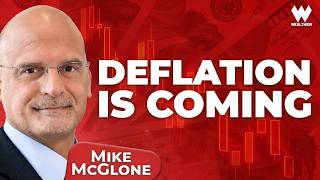
Will Gold Price Drop? Mike McGlone
Key Takeaways McGlone thinks gold and silver may have peaked for years, or longer. "I...
What Is a Trump Account for Kids? Brandy Maben
Key Takeaways Eligible children can get $1,000 from the government, tax-deferred. Maben explains a Trump...
What to Invest in During High Inflation? Jesse Felder
Key Takeaways Felder believes the Fed has started a new, sustained rate-hiking cycle. He points...
Enjoyed This? Get More Insights
Expert insights and curated opportunities, delivered to your inbox.
Ready to Position for What's Coming?
Whether you're still learning or ready to act, your next step starts here.
- Independent
- Macro-Informed
- Real Asset Focused

The Wealthion Network
By subscribing, you agree to receive Wealthion emails. Unsubscribe anytime.
Network Discussion
Sign in to share your thoughts and connect with other readers.
Join the Wealthion Network to Comment